loch
noun loch
lɑːk,lɑːx
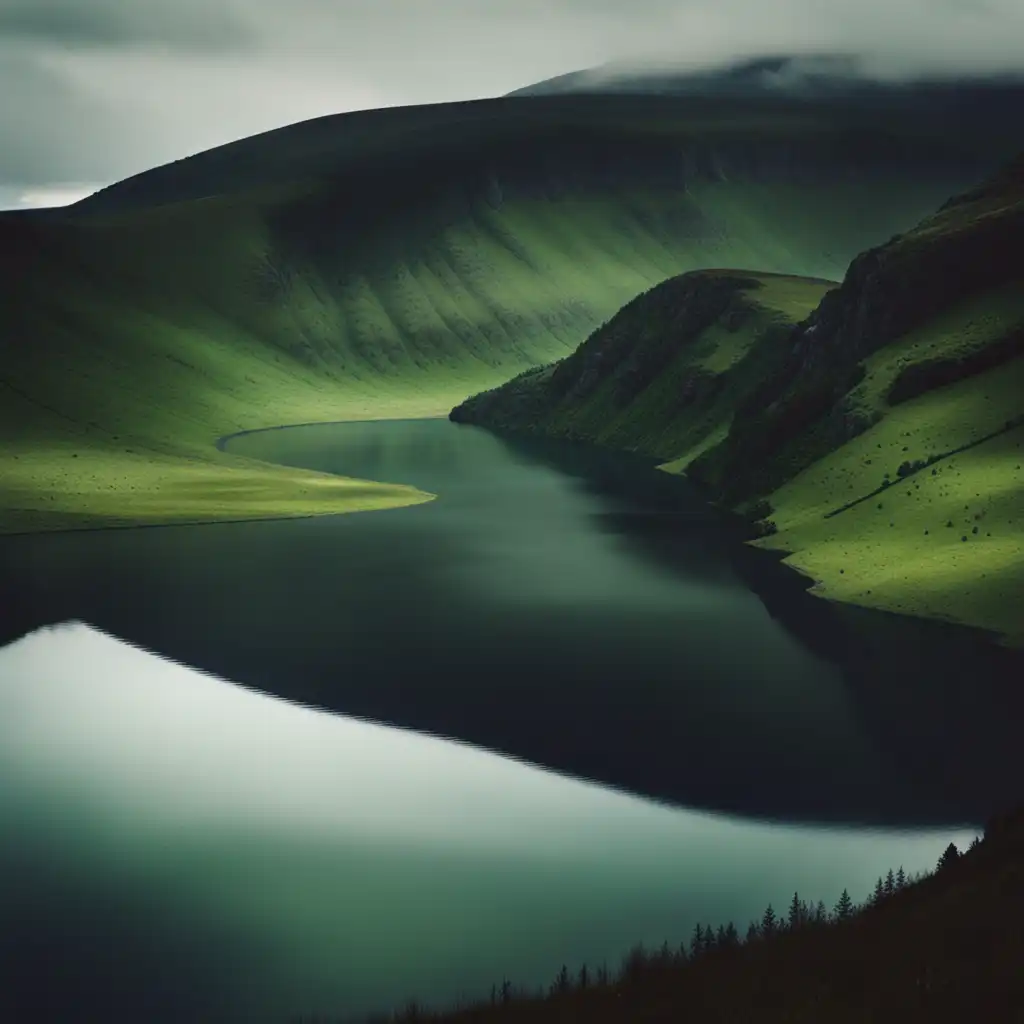
A lake or an inlet of the sea in Scotland.
The Loch Ness Monster is a famous creature said to inhabit Loch Ness, a large, deep lake in Scotland.
loch
lɑːk,lɑːx
Đang tải…
lɑːk,lɑːx
A lake or an inlet of the sea in Scotland.
The Loch Ness Monster is a famous creature said to inhabit Loch Ness, a large, deep lake in Scotland.

lɑːk,lɑːx
A channel in a welded structure.
The welder secured the loch by adding more metal to the area.
Không tải được âm thanh. Vui lòng thử lại sau.
The word 'loch' is typically used in Scotland to refer to a lake or a body of water. This word is not commonly used in other parts of the world, so it's important to take note of this context when travelling or reading about Scotland. If you hear someone say 'loch', they are most likely talking about a lake or body of water in Scotland, so be aware of this when communicating or planning your trip.
Bayou and loch are both words used to describe bodies of water, but they have different origins and geographic applications.
A bayou is a term primarily used in Southern United States to describe a slow-moving, marshy or swampy body of water that usually runs parallel to a larger river or stream.
Bayous are typically found in flat, low-lying areas, and are important habitats for wildlife such as alligators, snakes, and birds.
Bayous are usually associated with Louisiana and are commonly featured in Cajun culture.
The main difference between the words bayou and loch is their origin and geographic application. While bayous are primarily found in the Southern United States and are associated with marshy or swampy environments, lochs are predominantly found in Scotland and are typically deep, narrow lakes surrounded by mountains or hills.
Mở từ: Bayou →A lagoon is a shallow body of saltwater separated from the ocean by a reef or sandbank.
A loch is a Scottish word used to describe a lake or a sea inlet. Generally, lochs are freshwater while lagoons are saltwater.
A lagoon is applicable in places where there is a separation of saltwater and freshwater due to a reef, sandbank or other physical barrier, while a loch is applicable in Scotland to describe bodies of freshwater.
Mở từ: Lagoon →The main difference between the words lake and loch is the region where they are used. Lake is generally used in North America and other parts of the world, while loch is mainly used in Scotland.
A lake is a large body of water surrounded by land, which can be either natural or artificial. They are usually found in a variety of environments, including mountains, forests, and deserts, and can support a diverse range of flora and fauna.
It usually describes a body of freshwater that is larger than a pond but smaller than a lake. Lochs are typically found in the Scottish Highlands and Islands.
In summary, both words refer to bodies of water, but lake is a more general term that is used globally, while loch is a specific term that is mainly used in Scotland.
Mở từ: Lake →Loch is a Scottish term used to refer to a type of body of water, which essentially means 'lake' in English. Mere is an English term used to refer to a small, shallow lake, usually formed when a river or a spring flows into a depression in the ground.
Both words can refer to bodies of water, but their usage is largely defined by regional or cultural differences. Lochs are more commonly found in Scotland, while meres are more common in England.
Mở từ: Mere →Loch and pond are both words used to describe bodies of water, but they differ in terms of their geographical location, size, and origin.
A pond is a small, shallow body of water that is typically man-made or formed naturally by rainwater. Ponds are often found in parks or gardens and can be used for recreational purposes such as fishing, boating, or swimming.
Loch refers to a large, deep, natural body of water usually found in Scotland, while pond refers to a small, shallow, often man-made body of water used for recreational purposes.
Mở từ: Pond →Pool refers to a small, shallow body of water, typically one that is formed naturally.
A pool can be located anywhere, such as in a river, on a beach or in a backyard.
Loch describes a large, deep body of water in Scotland, whereas pool refers to a smaller, shallow water body that can be found anywhere.
Mở từ: Pool →A reservoir is a man-made lake that is created by building a dam across a river or a valley. Its primary purpose is to store and supply water for domestic, industrial, or agricultural use.
Reservoirs are usually seen in semi-arid or arid areas where there is a shortage of water.
In summary, lochs are natural lakes found in Scotland, while reservoirs are man-made lakes built to store water for various purposes.
Mở từ: Reservoir →Tarn, on the other hand, is an English word that describes a small mountain lake or pool.
Loch is used more commonly in Scotland and tarn is used more commonly in England.
Mở từ: Tarn →into the lochs of the highlands of Scotland, while I was tasked with urban wildlife, so I thought I was stuck with pigeons and rats. But I was wrong. I found out that you can have a wildlife experience in a city in the urban jungle that is just as wild,
Xem trên YouTube ↗If you're trout fishing in the lochs of Scotland, your catch may end up like this: batter-crusted with that ubiquitous Scottish staple, oats; and served beside a generous mound of stovies, Scottish slang for stove-roasted potatoes.
I'm just about to move to a place that you can only get there by rowing a boat across a loch, which I'm thoroughly looking forward to it. It's not got electricity or anything.