thimbleful
noun thimbleful
ˈθɪmblfʊl
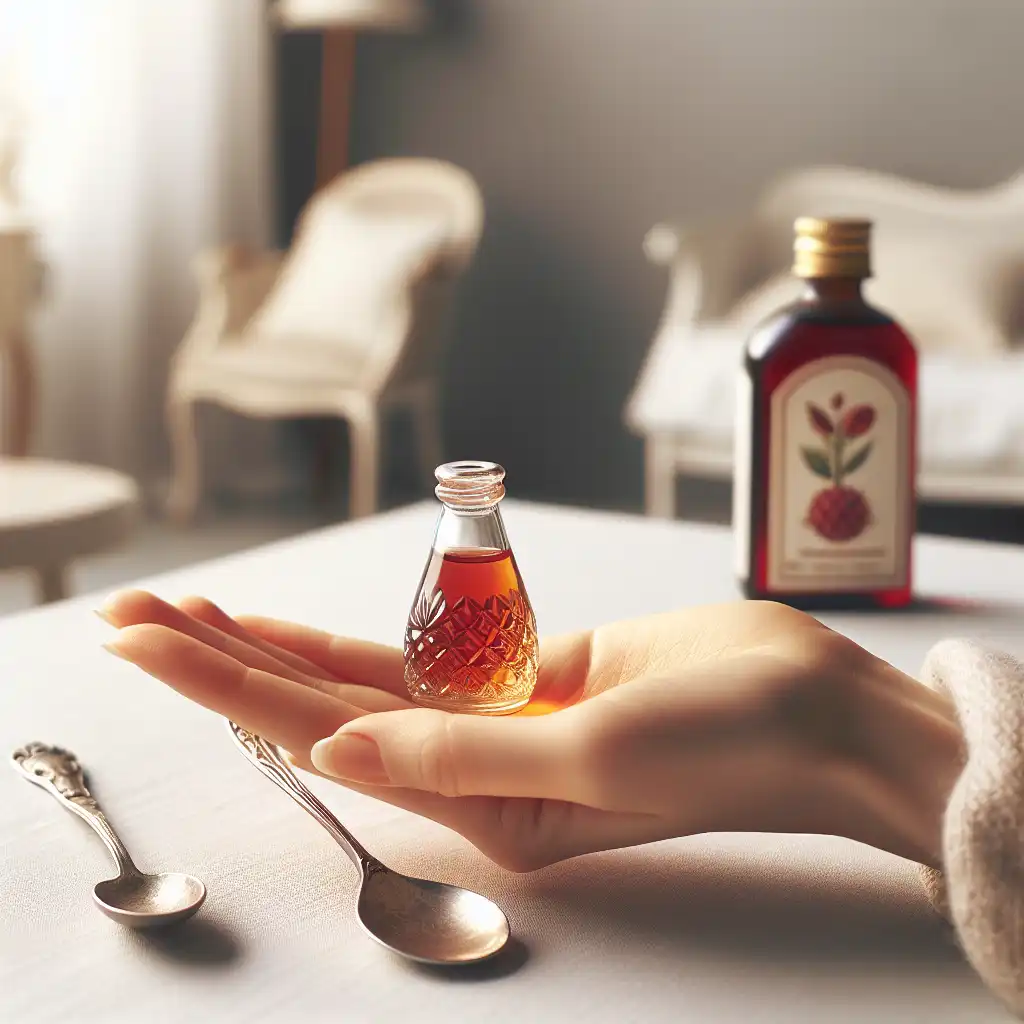
A very small amount of a liquid, same as the amount that a thimble can hold.
She took a thimbleful of cough syrup.
thimbleful
ˈθɪmblfʊl
Chargement…
ˈθɪmblfʊl
A very small amount of a liquid, same as the amount that a thimble can hold.
She took a thimbleful of cough syrup.

ˈθɪmblfʊl
A small amount of something, not just liquid.
He has a thimbleful of common sense.
Impossible de charger l’audio. Réessayez plus tard.
Thimbleful is a word used to describe a very small amount of liquid. It's like the amount of liquid that can fit in a thimble, which is a small tool used to protect the fingers while sewing. You might hear someone say "I only need a thimbleful of milk for my tea" or "I took a thimbleful of medicine this morning". So basically, you use the word thimbleful when you want to describe a tiny amount of liquid, such as in cooking or taking medicine.
Dab and thimbleful are both words used to describe small quantities of something, but they have slightly different meanings.
A dab is generally used to describe a small amount of something that is applied or spread onto a surface. For example, you might dab a bit of glue onto a piece of paper to stick something down, or dab a bit of perfume onto your wrists.
A dab is a small amount of something that is applied or spread onto a surface, while a thimbleful is a small amount of something that is measured or consumed, usually a liquid.
Ouvrir le mot: Dab →Dash refers to a small amount of liquid that is added to a larger mixture or recipe, usually through a quick pour or shake from a bottle.
It is commonly used in cooking and bartending. For example, a recipe may call for a dash of salt or a dash of bitters in a cocktail.
Dash is used in the context of cooking or bartending for a small amount of liquid, while thimbleful describes an even smaller amount, often used in literature.
Ouvrir le mot: Dash →Drop refers to a small amount of liquid that falls from a container or dropper. It is applicable when measuring small quantities of liquid, such as in cooking or medicine.
In essence, drop is a more general and versatile term, while thimbleful is a more specific and informal term for a very small amount of liquid.
Ouvrir le mot: Drop →A modicum refers to a small amount or quantity of something, often used in the context of an abstract concept such as a modicum of truth or a modicum of hope.
It can also refer to a small amount of a physical substance, such as a modicum of oil.
So, while both words refer to small amounts, modicum is more versatile and can be used in a wider range of contexts, while thimbleful is specific to a small amount of liquid in a thimble.
Ouvrir le mot: Modicum →Particle refers to a very small piece of matter or substance. It is applicable in scientific contexts, such as in physics, chemistry, and biology, when describing the smallest components of matter.
Particle refers to a small piece of matter, while thimbleful refers to a small quantity or amount of something, usually liquid.
Ouvrir le mot: Particle →Pinch and thimbleful both refer to small amounts of something, but they are used in different contexts. Pinch is more commonly used to describe the action of gripping something with your fingers, such as when you pinch a piece of salt to add it to your food.
It can also describe a small amount of an ingredient that you add to a recipe, like a pinch of sugar.
It is not typically used to describe a small amount of a dry ingredient like pinch does.
Pinch describes a small amount of something dry, while thimbleful describes a small amount of liquid.
Ouvrir le mot: Pinch →Speck refers to a tiny particle or a small amount of something, while thimbleful refers to the quantity of liquid that can be held in a thimble, which is a small sewing tool.
If someone says there's a speck of dirt on your shirt, it means a small particle of dirt.
Speck describes small-sized things or amounts, while thimbleful describes small quantities of liquid.
Ouvrir le mot: Speck →Trace refers to a faint or small amount of something.
It can describe a small amount of a substance or a lingering presence of something. For example, you might say that there is a trace of garlic in a dish, meaning that you can taste it but it's not overpowering.
Ouvrir le mot: Trace →