mechanization
noun mechanization
ˌmekənəˈzeɪʃn
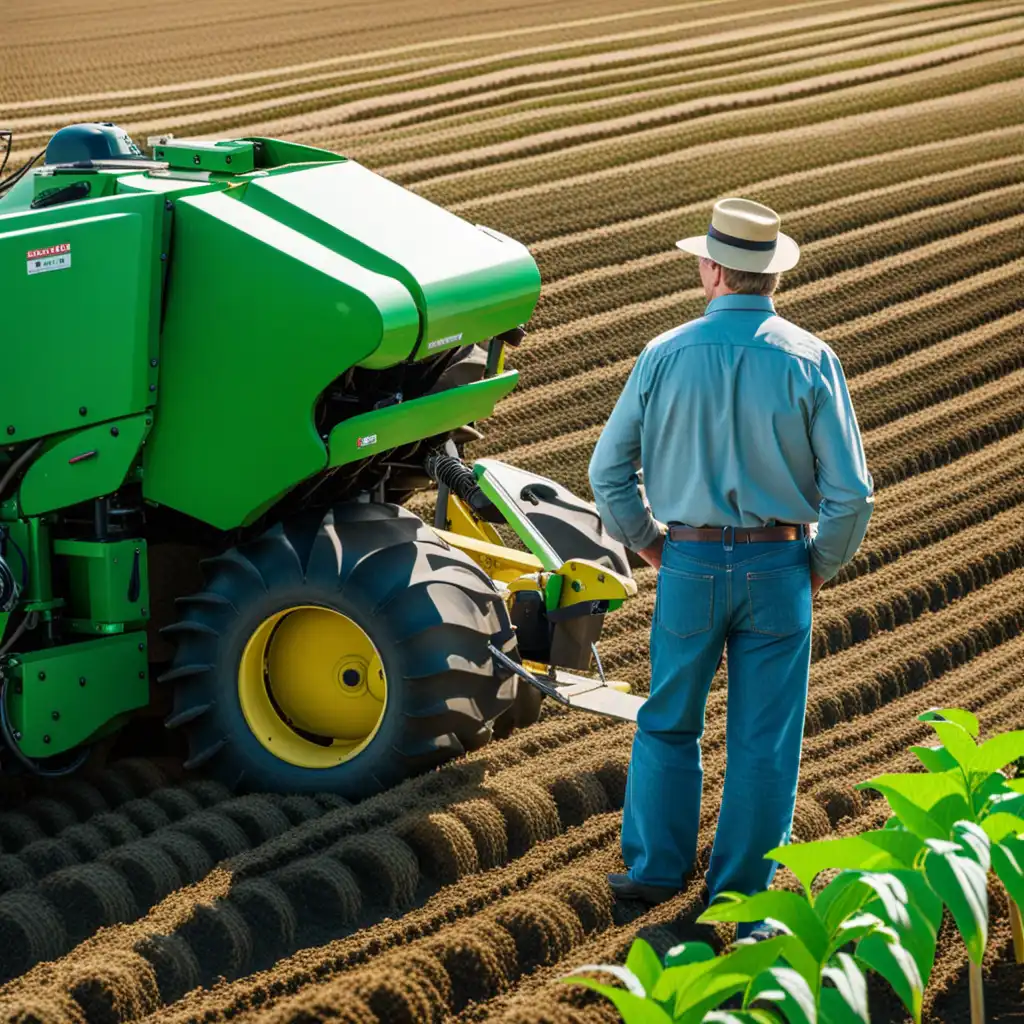
The process of using machines to do work that was previously done by hand.
The mechanization of farming has greatly increased crop production.
mechanization
ˌmekənəˈzeɪʃn
लोड हो रहा है…
ˌmekənəˈzeɪʃn
The process of using machines to do work that was previously done by hand.
The mechanization of farming has greatly increased crop production.
ˌmekənəˈzeɪʃn
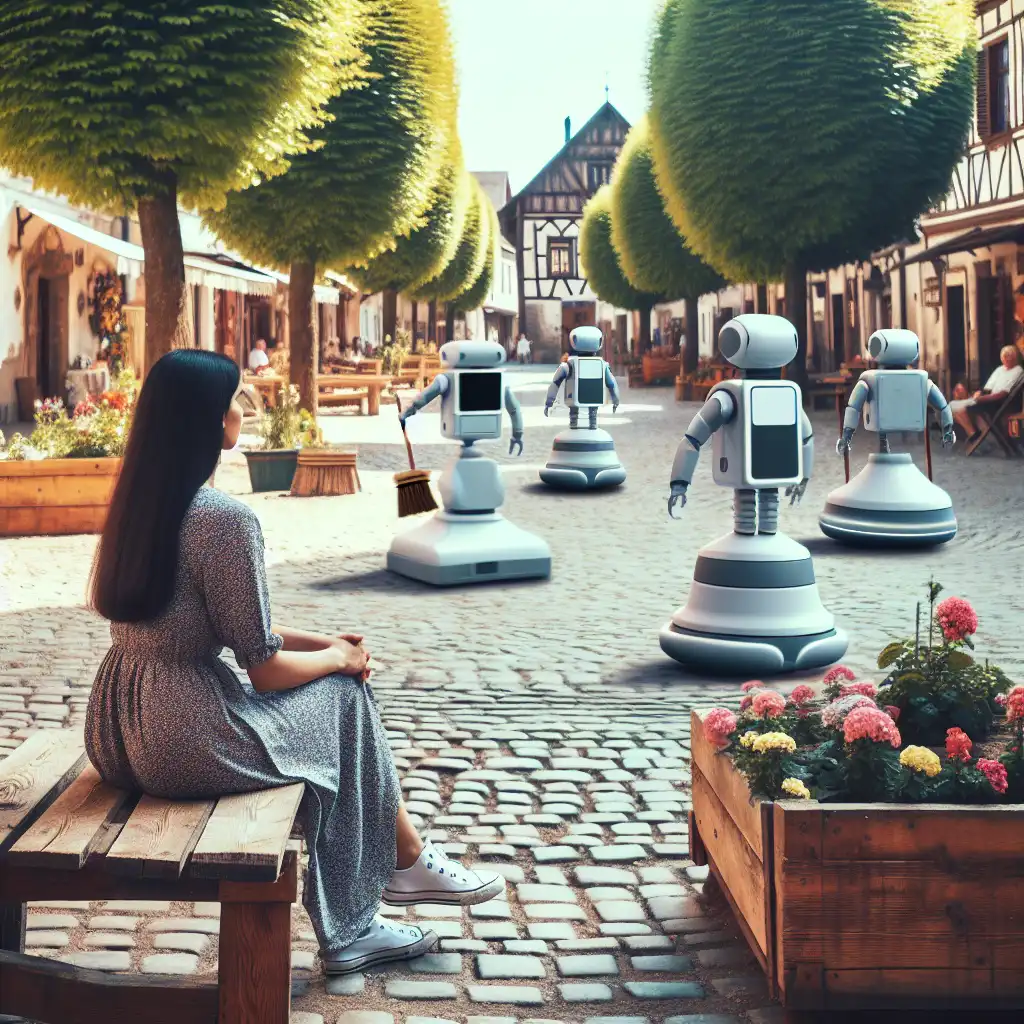
The state of being mechanical or functioning in an automatic way.
He criticised the mechanization of modern life and yearned for a simpler time.
ऑडियो लोड नहीं हो सका। कृपया बाद में फिर कोशिश करें।
Mechanization refers to the process of using machinery or automated equipment to perform tasks that were previously done by humans. This can happen in various industries like agriculture, manufacturing, and transportation. For example, a farmer who used to use manual labor to plow their fields can now use a tractor to mechanize the task. Mechanization can improve efficiency, speed, and productivity in various sectors.
Automate refers to the process of using machines or technology to perform tasks that were previously done by humans.
This can involve programming software to complete repetitive tasks or designing machinery to handle complex processes. For example, a company may automate its payroll system by using computer software to calculate and distribute employee salaries.
Overall, automation focuses on using technology to improve or streamline existing processes, while mechanization focuses on replacing human labor with machines.
शब्द खोलें: Automate →An engineer is a person who uses scientific and mathematical principles to design and build machines, structures, and systems.
While engineers design and build machines and systems, mechanization is the process of incorporating those machines into a system or operation.
Engineers are involved in the initial development of machines and systems, while mechanization involves the implementation of those machines to improve the efficiency of a process.
An engineer is a person who designs and builds machines and systems, while mechanization refers to the process of introducing those machines into a system or operation.
शब्द खोलें: Engineer →Industrialization is the process of developing industries in a country or region, especially on a large scale, with the aim of improving the economy.
Both industrialization and mechanization are important for economic growth and development, but they are not the same thing.
Industrialization requires mechanization to be more efficient and effective, but mechanization does not necessarily require industrialization.
Industrialization is more applicable to countries or regions that are seeking to grow an economy through the establishment of industries, while mechanization is more applicable to industries seeking to improve their production efficiency through the use of machines.
शब्द खोलें: Industrialization →Mechanism refers to a system of parts that work together to accomplish a particular task, while mechanization refers to the process of making a system or process automatic or using machines to do tasks that were previously done by humans.
Mechanisms can be found in everyday items like clocks, cars and other machines, while mechanization is most commonly used to refer to industrial processes such as manufacturing, farming or mining.
Mechanisms are applicable when discussing the structure of machines or systems, while mechanization is applicable when discussing the use of machines to increase efficiency and productivity.
शब्द खोलें: Mechanism →Systematization refers to the process of organizing something in a systematic way. This could mean creating a specific process for completing a task or arranging things in a particular order.
Mechanization is applicable in situations where machines can improve efficiency and reduce labor costs. Systematization is applicable in situations where there is a need for consistency and structure in a process or system.
शब्द खोलें: Systematization →A healthy economy should...
YouTube पर देखें ↗If you ask an economist what's driven economic growth, it's been major advances in things that mattered - the mechanization of farming, mass manufacturing, things like that. The problem is, our society is not organized around doing that.
Ed Kashi: The Changing...
YouTube पर देखें ↗Even as the population doubled from three to six billion, we managed to race ahead with all kinds of technological and scientific events in agriculture - from using more fertilizers to mechanization to advanced plant breeding.
How to rebuild the world...
YouTube पर देखें ↗During the last two centuries, there have been many deflations throughout the world. Almost all of them have been good ones precipitated by technological innovation, rising productivity, global capital flows, and sustained economic growth. If farm mechanization cuts the price of wheat, you get a rising living standard. This is good.
Mechanization best serves mediocrity.
Besides black art, there is only automation and mechanization.
People have long feared that mechanization might cause mass unemployment. This never happened because, as old professions became obsolete, new professions evolved, and there was always something humans could do better than machines. Yet this is not a law of nature, and nothing guarantees it will continue to be like that in the future.
In the past, war was confined for the most part to men in uniform, but with increased mechanization of armies and the introduction of air forces, there is an increased dependence on the home country, and eight to ten people working at home are now required to keep one man in the fighting line.
A lot of the critique of our growing mechanization was actually at its strongest, and arguably at its most perceptive, during the late '60s.
The industrial revolution that defined the first half of the 20 century marked the start of modern business, typified by high-volume, large-scale organizations. Mechanization created a culture of business derived from the capabilities and needs of the time.
Industrial technologies that allowed for increased mechanization in 19th-century armed forces also spurred Frederick Winslow Taylor to develop his 'Scientific Management' doctrine in Philadelphia steel mills.