provenance
noun provenance
ˈprɑːvənəns
The place where something was created or where it came from
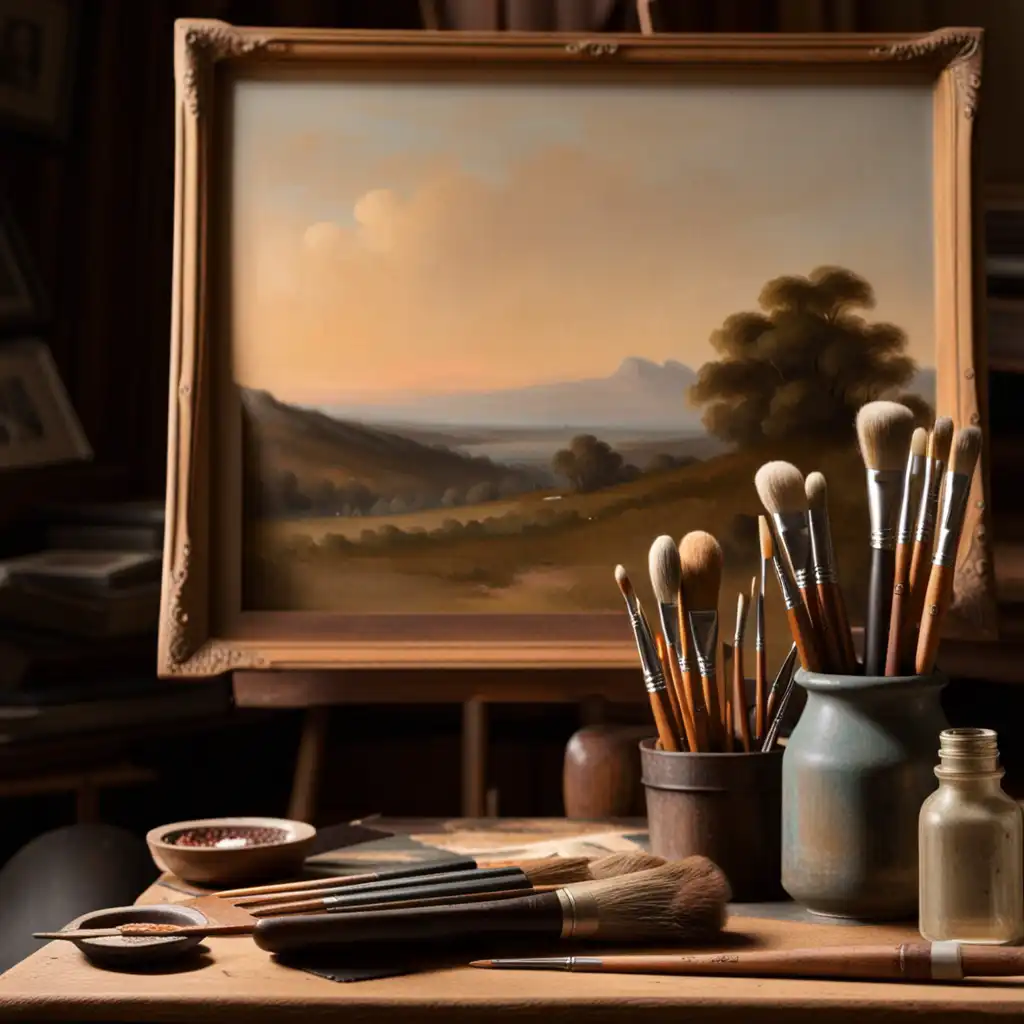
The provenance of the painting has been traced back to the 19th century.
provenance
ˈprɑːvənəns
Cargando…
ˈprɑːvənəns
The place where something was created or where it came from
The provenance of the painting has been traced back to the 19th century.

ˈprɑːvənəns
The history of ownership of a valuable object or work of art
The provenance of the antique desk was finally found out after years of research.

ˈprɑːvənəns
In computing, the documentation that provides detailed information about the relative data
The provenance of the code was checked to see if there was any infringement.
No se pudo cargar el audio. Inténtalo de nuevo más tarde.
Provenance refers to the history or origin of something, especially an object. It is used to describe where something came from and how it got to where it is now. For example, if you're interested in buying a piece of artwork, knowing its provenance can help you determine if it is authentic and valuable. In everyday language, you could use it to refer to the history of something like a piece of clothing or antique furniture.
An ancestor is someone who came before you in your family tree, like your great-grandparents or even earlier generations.
Ancestor describes people who are related to us by blood and who came before us in our family tree.
So, ancestors are related to us and are part of our family history, while provenance is about the history and origins of objects or works of art.
Abrir palabra: Ancestor →Background refers to the general information or context surrounding a particular topic or situation. For instance, if you are learning about a historical event, the background would be information about the time period, political climate, and other related events that occurred.
Background is broader and more general than provenance, which is a specific term used when talking about the origin and history of a particular object or artifact.
Abrir palabra: Background →Heritage refers to the cultural or historical background of something or someone. It refers to the tradition or customs passed down from generation to generation.
For example, a country's heritage can include its history, art, architecture, and festivals.
Heritage is applicable in defining a group or society's unique way of life, such as music or cuisine, while provenance is essential in determining the authenticity of a historical artifact or valuable object.
Abrir palabra: Heritage →History refers to a broad range of events, people, and ideas that have happened over time, while provenance is more specific and refers to the origin and ownership history of a particular object or artifact.
For example, the history of a country may involve wars, revolutions, and cultural developments, while the provenance of an artwork may be concerned with who owned it and where it has been displayed throughout its history.
History is applicable to a wide variety of fields such as politics, culture, and economics, while provenance is more relevant to the art world and antique market.
Abrir palabra: History →Lineage refers to a series of ancestors in a family or descendants of a particular person or group.
For example, if someone is researching their family history, they would be interested in their lineage. If an art curator is researching the history of a painting to determine its authenticity and ownership, they would be interested in its provenance.
In simpler terms, lineage is about who you come from, and provenance is about where something came from.
Abrir palabra: Lineage →Origin refers to the beginning or source of something.
It describes where something comes from, where it started, or how it began. For example, the origin of a word might be traced back to its earliest known use in a particular language or culture.
Origin describes where something came from, while provenance describes its ownership history.
Abrir palabra: Origin →Pedigree refers to the ancestry of a person or animal, often showing the line of their parents, grandparents, etc. It is commonly used in relation to pets, livestock and racing horses.
Pedigree is applicable for animals and sometimes humans while provenance is applicable for items and objects.
Abrir palabra: Pedigree →Source refers to where something originally comes from, such as a document, quote, or information.
In simpler terms, provenance is about the history of ownership and authenticity while source is about the origin of something.
Abrir palabra: Source →Redefining the...
Ver en YouTube ↗Scotch beef, salmon and shellfish are recognised the world over for their excellence and Scottish provenance. People recognise the Scottish brand. They associate the country with quality food and drink, and clearly other Scottish sectors, such as dairy, can benefit from that, too.
Shipwreck From Explorer...
Ver en YouTube ↗Con artists specialize in finding what people need, and Trump knows the media craves variety, scandal, secrets, and he-said-she-said stories, even of the most dubious provenance.
Erin McKean: The joy of...
Ver en YouTube ↗I offer detailed but mostly invented narratives about the provenance of my books.
Justice for gem miners ...
Ver en YouTube ↗Anecdotes are factoids of questionable provenance, burnished to a high gloss, often set in gilded venues and populated with familiar names as background atmosphere, purged of ambiguity in the interest of keeping the narrative flowing smoothly.
When I was a student, the laws of physics were regarded as completely off limits. The job of the scientist, we were told, is to discover the laws and apply them, not inquire into their provenance.
The accent in England can change literally from street to street, and people have this sort of feudal tribalism whereby you can identify somebody's provenance by their voice.
We are 'nuclear waste' from the fuel that makes stars shine; indeed, each of us contains atoms whose provenance can be traced back to thousands of different stars spread through our Milky Way.
When I started in the comic book business, 'Art Of' books were strictly the provenance of the greats, like Rembrandt and Da Vinci. But times change, and so do attitudes. Now the comic is considered an art form, and I hope 'A Life in Words and Pictures' contributes a little to that art form's history.
Los Angeles is such a great meritocracy. Where can someone with my background - don't have the right family background, the right religion, the right provenance or whatever you want to call it - I come here and I'm accepted. The city's been good to me. And I want to give back.
I was born in Australia and am proud of my Australian provenance, but I am now an American. Like so many naturalized citizens, I felt that I was an American before I formally became one.