
blasphemy
noun blasphemy
ˈblæsfəmi
The act of disrespecting or insulting god or a religion.
He was accused of blasphemy for his disrespectful comments about the Church.
blasphemy
ˈblæsfəmi
読み込み中…
ˈblæsfəmi
The act of disrespecting or insulting god or a religion.
He was accused of blasphemy for his disrespectful comments about the Church.
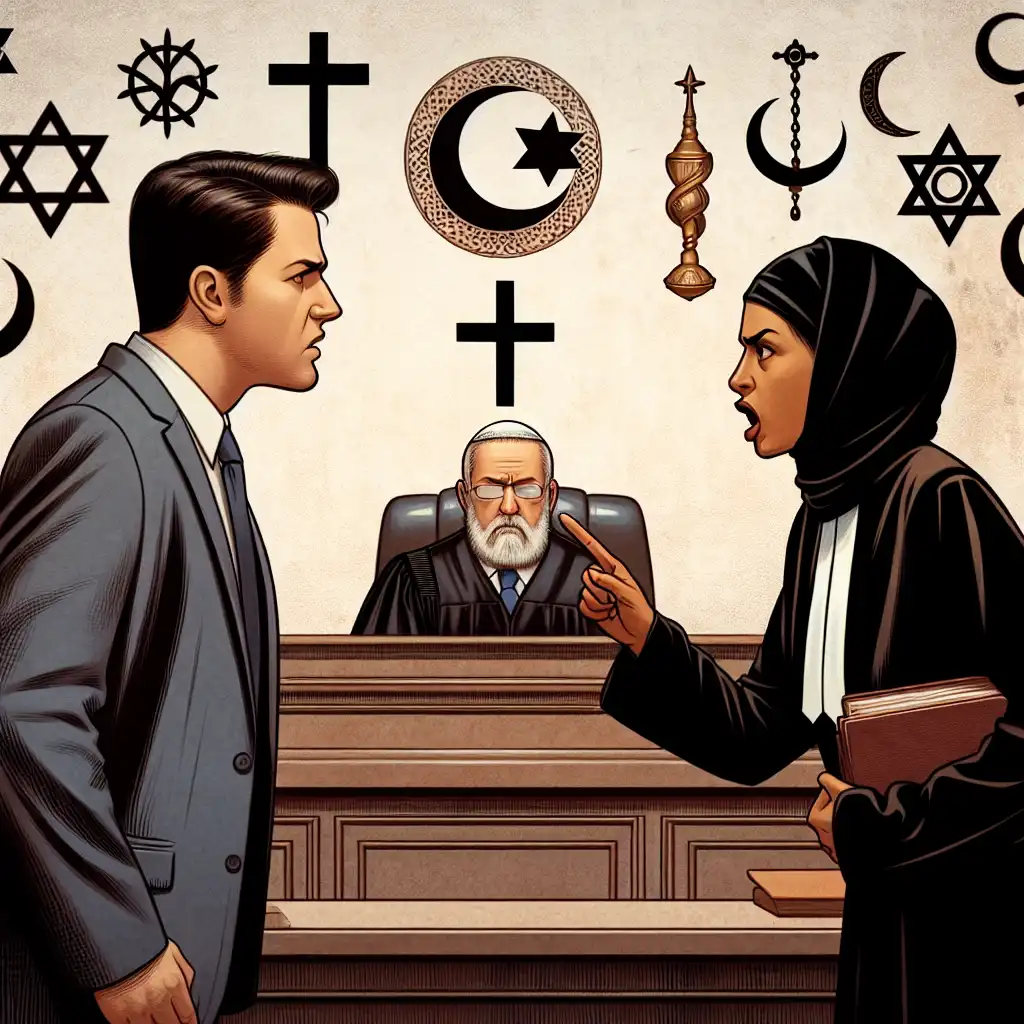
ˈblæsfəmi
Something you say or do that shows you do not respect god or a religion.
His blasphemous remarks in public led to legal action under blasphemy laws.
音声を読み込めませんでした。しばらくしてからもう一度お試しください。
The word 'blasphemy' is used to describe something that shows extreme disrespect or insult to religion or God. It is typically used when someone says or does something that is considered offensive or sacrilegious to a particular religion. It is important to be careful when using this word, as it can be offensive to those who hold religious beliefs. It is typically used in a formal and serious context, such as discussions about religious beliefs or in legal cases involving religious freedom.
Apostasy is when someone renounces or abandons their religion or beliefs. This usually means they used to believe in something, but they don't anymore.
The main difference between apostasy and blasphemy is that apostasy is about abandoning a belief system or religion altogether, while blasphemy is specifically about disrespecting that religion or its beliefs.
Apostasy might be seen as more of a personal choice or decision, while blasphemy is seen as an attack on the religion itself.
単語を開く: Apostasy →Desecrate means to treat something that is holy or respected with disrespect. It is an act of vandalizing, damaging or disrespecting something that is considered sacred.
For example, if someone tells a joke about a religious figure, it could be considered blasphemy. If someone scribbles graffiti on the walls of a church, it is considered desecration.
Blasphemy is more about words or ideas that are offensive to religious beliefs, while desecration is the physical act of disrespecting something sacred.
単語を開く: Desecrate →Heresy refers to holding beliefs that go against the official teachings or doctrines of a religion. It is a deviation from accepted religious beliefs or the questioning of religious authority.
Blasphemy is disrespect towards God or sacred things, while heresy goes against official religious doctrine.
Blasphemy can apply to any religion, while heresy is specific to religions with defined teachings or beliefs.
単語を開く: Heresy →It is often used in a religious context and can be seen as a serious offense by believers. Impiety is the lack of respect or reverence towards religious or moral principles.
Impiety can be applicable in a broader range of situations beyond just religious ones.
単語を開く: Impiety →Blasphemy refers to speaking or doing something disrespectful towards a religion or a religious figure. Irreverence means being disrespectful towards something that is generally considered serious or sacred.
Both are considered disrespectful, but blasphemy is specifically directed towards religious belief, while irreverence can apply to anything that is considered serious or sacred.
Blasphemy is disrespect towards religion or religious figures, while irreverence is disrespect towards anything that is considered serious or sacred.
単語を開く: Irreverence →Profanity refers to rude or vulgar language that is considered taboo or unacceptable in polite society. It is applicable in situations where someone is cursing or using foul language that would be considered inappropriate in a formal setting.
In essence, blasphemy is disrespectful towards religious beliefs or practices, while profanity is disrespectful towards societal norms and language conventions.
単語を開く: Profanity →Sacrilege is when someone desecrates something that is respected or sacred, such as a holy place, an object, or a person.
Blasphemy is disrespect toward religion, while sacrilege is disrespect toward anything sacred or holy.
単語を開く: Sacrilege →for crimes such as homosexuality, adultery blasphemy idolatry talking back to your parents -- and picking up sticks on the Sabbath. Well let's click the zoom lens down one order of magnitude and look at the century scale.
YouTube で見る ↗All great truths begin as blasphemies.
infrequently blasphemy is what I don't like I spend most of the day teaching children and obviously swearing just does not come into it worse word that they use is probably the word pants pants are you kidding me these tight
YouTube で見る ↗We have no blasphemy laws these days but with that freedom comes the responsibility which should always attend the exercise of free speech: truth, courtesy and an awareness of impact. It is the last of these which is so neglected by so much modern comedy.
I'm ashamed to admit this, but I didn't read a novel all the way through until after high school. Blasphemy, I know. I'm an author now. Books and words are my world.
Is it not a species of blasphemy to call the New Testament revealed religion, when we see in it such contradictions and absurdities.
One man's blasphemy doesn't override other people's free-speech rights, their freedom to publish, freedom of thought.
Now 'South Park' - they are interested in blasphemy. They're interested in creating offence for its own sake.
In this manner, I continued with Satan for ten days. His answer and blasphemy were too shocking to pen; till I was worn out with rage and malice against him, I could not bear myself.
To say that you can kill in the name of God is blasphemy.
Preacher' - what it's saying is not just blasphemy and good, fun violence. It's asking, 'Where is God?' If he is there, what's he doing?
The writers of the French enlightenment had deliberately used blasphemy as a weapon, refusing to accept the power of the Church to set limiting points on thought.