augustan
adjective augustan
ɔːˈɡʌstən
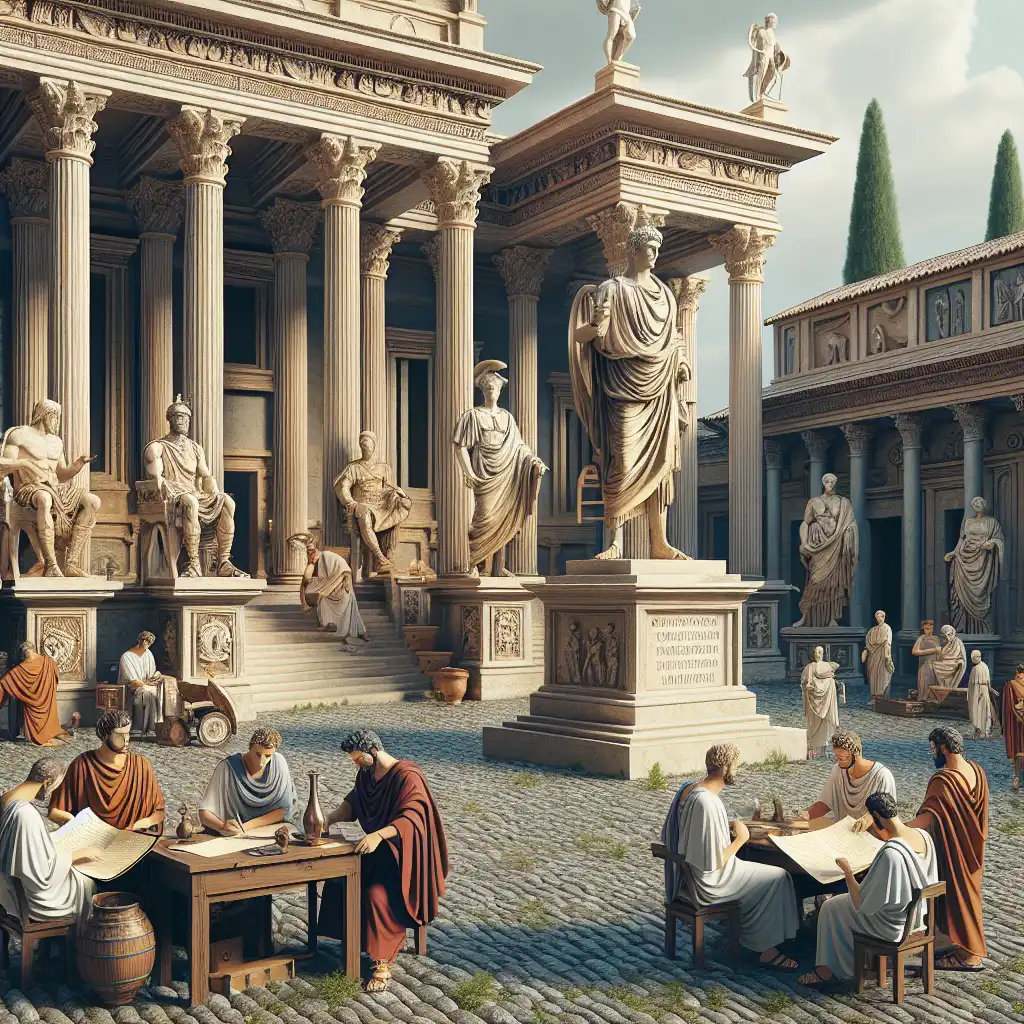
Related to the time in Ancient Rome when Augustus was in power.
The Augustan period was known for achievements in literature and arts.
augustan
ɔːˈɡʌstən
Loading…
ɔːˈɡʌstən
Related to the time in Ancient Rome when Augustus was in power.
The Augustan period was known for achievements in literature and arts.

ɔːˈɡʌstən
Referring to the style of literature and art that was popular during the rule of Augustus.
His work is often compared to that of Augustan poets such as Virgil.
Audio could not be loaded. Please try again later.
The word "augustan" is used to refer to a time period in ancient Rome called the "Augustan Age". This was a time when the Roman Empire was at its most powerful and cultured. Today, the word "augustan" is used to describe writing or art that is reminiscent of this time period. It can also be used to describe someone who has a regal or dignified manner.
Classical usually refers to ancient Greece and Rome, and pertains to literature, art, and culture that was created during that time period.
So, in the context of literature, a classical piece of work would be one that has withstood the test of time and is still revered today.
During this time, there was a great revival of classical culture and art, and many works of literature and art were produced that are still considered to be among the greatest works of all time.
Open word: Classical →Culture, on the other hand, refers to the shared beliefs, values, behaviors, and artifacts that distinguish a group or society.
Culture can encompass everything from language and food to religion and art.
In other words, Augustan is a specific term referring to a historical period and artistic style, while culture is a broader term that can refer to any aspect of a society's way of life.
Open word: Culture →Elegant describes things that are stylish, tasteful, and refined.
Augustan has a more specific and historical connotation, while elegant is a more general and modern term for things that are pleasing to the senses and display a certain level of sophistication.
Open word: Elegant →Formal refers to something that is done in a serious or official manner, typically involving a set of rules or procedures.
So, while augustan is limited to the time period of ancient Rome, formal is more general and can be applied to a broader range of situations where a certain level of formality is required or expected.
Open word: Formal →Polish refers to the act of improving or refining something to make it better or more attractive. This term is commonly used to describe the process of making something look shiny, smooth, and flawless.
Augustan is applicable when referring to a particular historical period and its cultural characteristics, while polish is applicable when referring to the process of improving or refining something.
Open word: Polish →Refine means to improve or purify something by making it more polished or perfect.
It can refer to refining a skill or refining a material like oil or sugar.
In short, Augustan is a term used to refer to a specific historical period, while refine refers to the act of improving or perfecting something.
Open word: Refine →Sophisticated refers to something that is refined, cultured, and educated. It is applicable to various aspects of life, such as fashion, cuisine, music, art, and behavior.
In simpler terms, augustan refers to a specific time period in history, while sophisticated refers to a general sense of refinement and education.
Open word: Sophisticated →Traditional refers to something that has been passed down through generations and generally refers to customs, beliefs, or practices that are long-established and widely accepted.
In terms of applicability, augustan is highly specialized and is only used to describe works from the Augustan period. Traditional can be applied to a wide range of things, such as music, art, dress, language or food, that have been passed down from one generation to another.
Open word: Traditional →