
quaver
verb quaver
ˈkweɪvər
To let your voice shake or tremble, usually because you are nervous or afraid.
His voice quavered slightly while giving the presentation due to nerves.
quaver
ˈkweɪvər
Chargement…
ˈkweɪvər
To let your voice shake or tremble, usually because you are nervous or afraid.
His voice quavered slightly while giving the presentation due to nerves.

ˈkweɪvər
A shaking sound in a person's voice, often due to fear or nervousness.
She heard a quaver in his voice, which hinted at his nervousness.
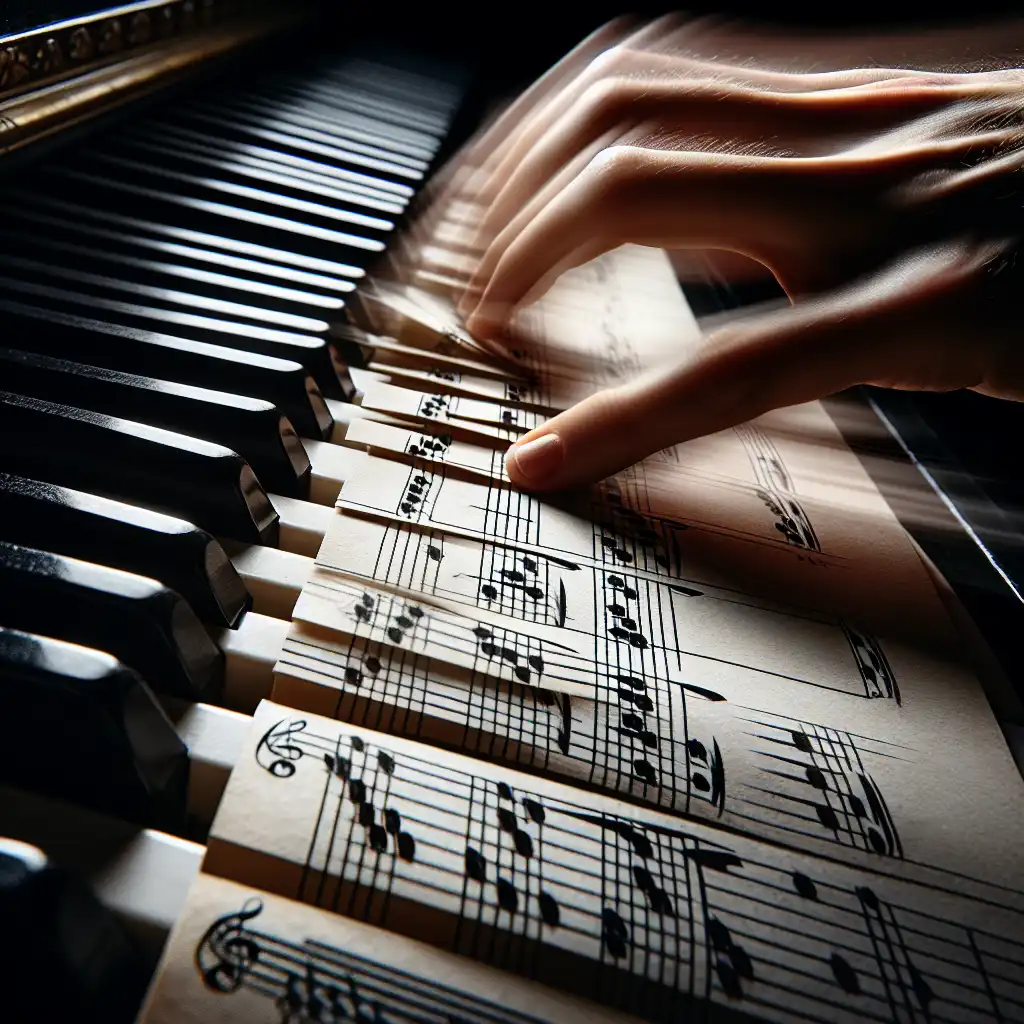
ˈkweɪvər
In music, a note that is played for a 1/8 of the duration of a whole note.
The piece included a series of rapid quavers.
Impossible de charger l’audio. Réessayez plus tard.
The word 'quaver' is used in music to describe a musical note or sound that is shaky or trembling. It can also be used to describe a person's voice or body when they are nervous or scared. For example, "She sang the high note with a quaver in her voice" or "He walked with a quaver in his step as he approached the haunted house".
The words falter and quaver both mean to shake or tremble, but they are used in slightly different contexts. Falter is used when someone is hesitating or stumbling while speaking or doing something.
For example, "He started to falter in his speech when he saw the crowd."
Falter refers to hesitation or stumbling, while quaver refers to a shaky or trembling voice.
Ouvrir le mot: Falter →Fluctuate means to constantly go up and down, like the price of a stock or the temperature outside.
Fluctuate is used more to describe things that change over time, while quaver is used more to describe the way someone speaks in a specific moment.
Ouvrir le mot: Fluctuate →Hesitate means to pause or be indecisive before doing something. It is applicable when someone is unsure or uncertain about taking action or making a decision.
Hesitate is about being uncertain before taking action, while quaver is about the physical manifestation of emotions in speech.
Ouvrir le mot: Hesitate →Quiver means to tremble or vibrate rapidly, often with slight sound. It is applicable when an object or a person's body trembles due to excitement, fear, or cold weather.
In simpler terms, quaver is related to shaky voices, while quiver is related to shaky things.
Ouvrir le mot: Quiver →Both quaver and shake are terms used to describe movement or vibration.
Quaver refers to a trembling or wavering movement, usually in sound. For example, when a person's voice is shaking while speaking, it is said to be quavering.
Shake refers to a back and forth or up and down movement, usually involving physical objects. For example, when a person shakes a toy to make it move, it is said to be shaking.
Quaver is applicable when referring to sounds, particularly those that are shaking or trembling. Meanwhile, shake is applicable when referring to physical movements or vibrations.
Ouvrir le mot: Shake →Shiver refers to a sudden, involuntary shake or trembling of the body, often caused by coldness or fear.
Quaver is an adjective used to describe the unsteady quality of music or voice, and shiver is a verb used to describe the involuntary shaking of the body due to certain stimuli.
Ouvrir le mot: Shiver →Both quaver and tremble refer to a shaking or vibrating movement, but they differ in their context and degree of intensity.
Tremble is a more intense and pronounced shaking movement that can be caused by fear, cold, or excitement. For example, one might tremble when they're frightened or shivering in the cold.
It can also describe a feeling of anxiety or unease, as in "I was trembling with anticipation before the big game."
Quaver is a more subtle form of shaking that is usually associated with the voice or music, while tremble is a stronger, more intense shaking that can be caused by a variety of factors.
Ouvrir le mot: Tremble →It can also mean a musical note that is played for a quarter of the duration of a whole note. Waver typically means to go back and forth between two choices or opinions, to hesitate or falter in one's decision or action, or to shake or quiver in a larger way.
For example, someone might waver between ordering pizza or pasta for dinner, or their confidence might waver when giving a speech in front of a large audience.
Quaver is usually associated with small and rapid movements or music, while waver is usually associated with indecision or larger movements.
Ouvrir le mot: Waver →The Price of Adventure %\PIPE%...
Voir sur YouTube ↗Those who are not trained singers will find that their voice quavers. That should not happen. The quaver should be used only where necessary and not because a singer cannot hold a note or a tune.