evidence
noun evidence
ˈevɪdəns
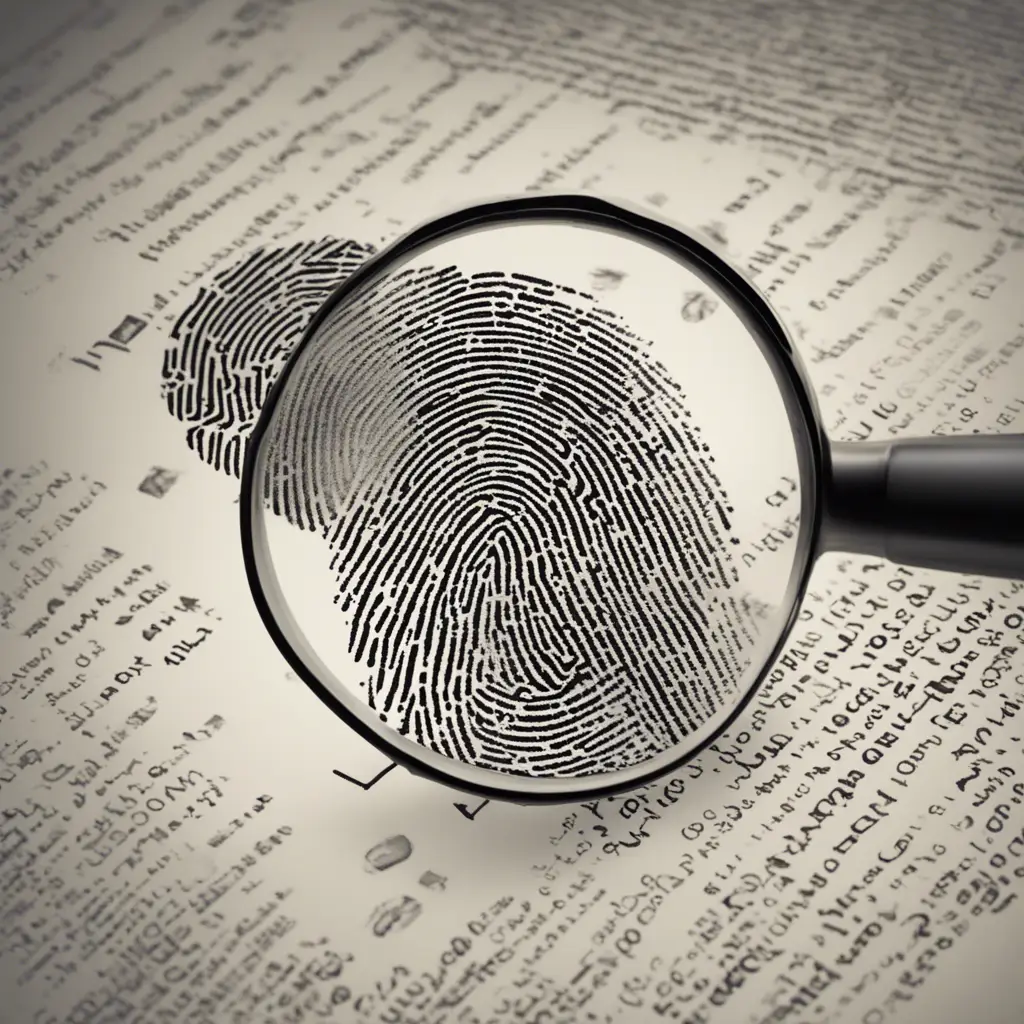
Information or proof that someone uses to show that something is true
The police have found evidence that links him to the crime.
evidence
ˈevɪdəns
Loading…
ˈevɪdəns
Information or proof that someone uses to show that something is true
The police have found evidence that links him to the crime.
ˈevɪdəns
To show something clearly or support a fact or claim
The report evidences the benefits of a balanced diet.
ˈevɪdəns
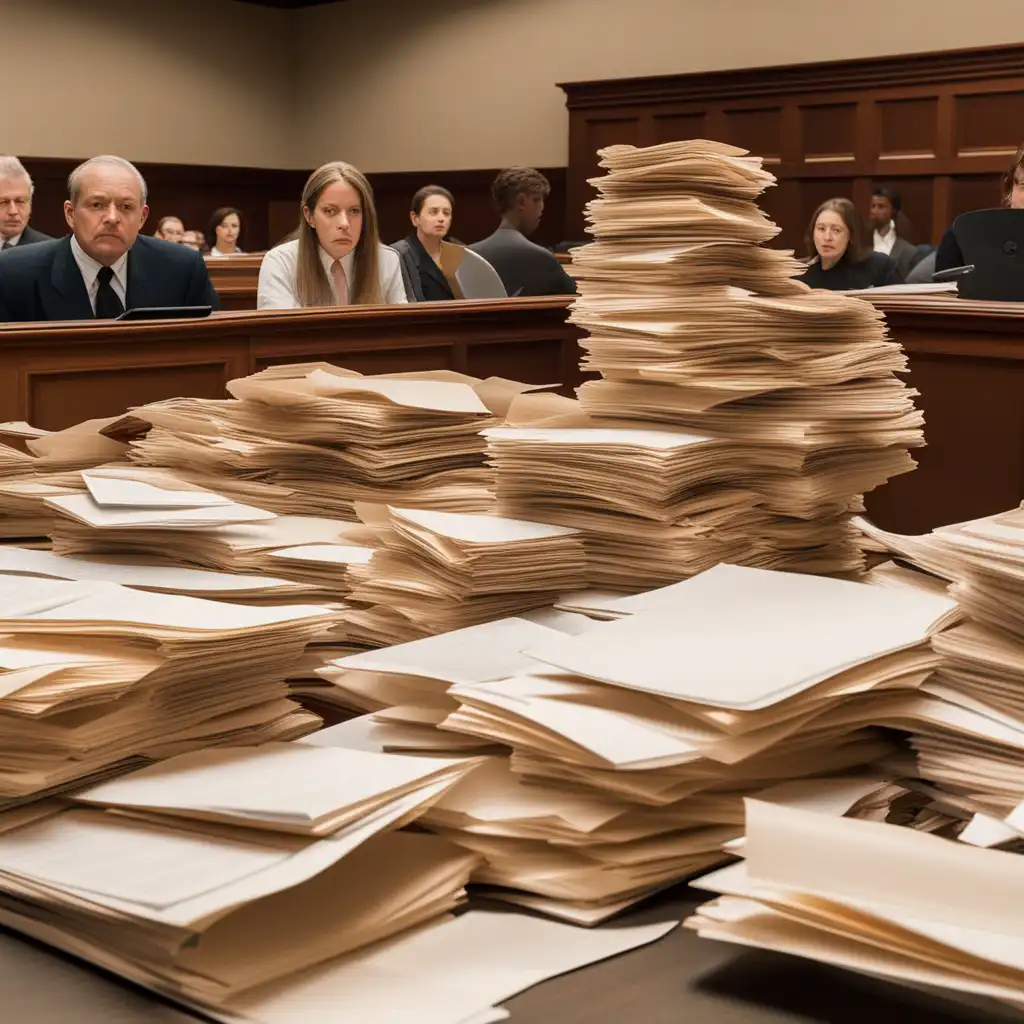
The available body of facts or information indicating whether a belief or proposition is true or valid
The jury has to consider the evidence before a verdict can be reached.
ˈevɪdəns
Something that gives a clear sign or reason to believe something
There is strong evidence to support the theory of evolution.
Audio could not be loaded. Please try again later.
The word 'evidence' is used to describe facts or information that help prove or support a claim or statement. It is used in legal proceedings to present proof of a case, in scientific research to support a hypothesis or theory, and in everyday conversations to back up an argument or point of view. For example, a detective may use evidence such as fingerprints or DNA to solve a crime, or a student may use evidence from a textbook to support their essay on global warming. So, if you want to convince someone of something, you will need to provide evidence to support your claim.
Confirmation and evidence are both related to proving the truth or validity of something, but they are different.
Confirmation means to verify or establish the truth of something that is already believed or presumed to be true. It is a way of making sure that what you believed was actually correct.
Confirmation is mostly applicable in situations where a belief or assumption has been made, and there is a need to establish its validity.
In other words, confirmation is used to verify what you already know or believe, while evidence is used to help establish what you do not yet know or believe.
Open word: Confirmation →Indication refers to something that suggests or points to a possibility or probability.
It may be used in a wide range of contexts, from medical diagnoses to economic trends to weather forecasting. Indications are often based on subjective assessments or interpretations and may not always be reliable or conclusive.
Evidence is something that proves or supports a claim, while an indication is something that suggests a possibility. The former is more objective and reliable, while the latter is more subjective and tentative.
Evidence is more useful in proving something whereas indication is always not reliable.
Open word: Indication →Proof refers to evidence that conclusively establishes a fact or confirms a belief.
It is used when there is no doubt left, for example when a scientist provides conclusive proof of their theory through repeated experiments.
Evidence is used to support a claim, while proof is used to definitively confirm a claim.
Open word: Proof →Sign refers to an indication or clue that suggests the presence, existence or occurrence of something.
It is often used in situations where there is a need to detect or identify something. For example, a sign of a good restaurant might be a long waiting list or positive reviews.
Evidence is used to prove or disprove something while a sign is used to indicate or point to something.
Open word: Sign →It can be a fact, statement, or physical object that supports an argument. For example, a scientific study may provide evidence that a certain medication is effective in treating a disease.
Support means to lend aid or assistance to something.
It can refer to emotional or practical help, as well as providing evidence. For example, a friend may offer support to someone going through a tough time by being there for them and listening.
Evidence is used to prove or disprove something, while support is used to assist or help something.
Evidence is often used in research or legal proceedings, while support is used in everyday life to show encouragement or assistance to others.
Open word: Support →Testimony is the spoken or written statement given by a witness in a court of law under oath. It is the personal account of an individual who has experienced or observed an event.
Testimony is subjective and influenced by the witness's personal beliefs, emotions, and biases.
Evidence is something that can be observed or analyzed objectively and is used to prove or disprove a claim, while testimony is the personal account or perspective of a witness that may be influenced by their biases or perceptions.
Evidence is applicable in scientific and legal proceedings, while testimony is mainly used in legal proceedings.
Open word: Testimony →Verification refers to the process of checking, testing or proving that something is true or accurate.
Evidence provides support for a claim, while verification ensures that a claim is true or accurate. Evidence is applicable in various contexts, including legal cases and scientific research.
Verification is applicable in fields where accuracy and reliability are important, such as engineering and quality control.
Open word: Verification →A witness is a person who can provide testimony or give an account of what they have seen, heard, or experienced. They can be eyewitnesses who saw or heard something first hand or experts who have specialized knowledge or experience that can help in clarifying a situation.
Witnesses provide their observations or their version of events and can offer critical insight into a case, but they do not provide any physical proof.
Evidence is a proof that supports or disproves a claim or argument, while a witness provides an account of what they observed or experienced in a situation.
Evidence is typically used in a court or legal setting to prove guilt or innocence, while a witness can provide testimony to clarify or corroborate evidence.
Open word: Witness →that humanity has ever seen. Somewhere out there in that vast universe there must surely be countless other planets teeming with life. But why don't we see any evidence of it?
Watch on YouTube ↗There is no force like success, and that is why the individual makes all effort to surround himself throughout life with the evidence of it; as of the individual, so should it be of the nation.
Now something I've got very interested in is different kinds of laughter, and we have some neurobiological evidence about how human beings vocalize that suggests there might be two kinds of laughs that we have. So it seems possible that the neurobiology for helpless involuntary laughter,
Watch on YouTube ↗Growth is the only evidence of life.
it's our job to protect the animal an animal now becomes evidence and that evidence is under our care these baby parrots are the lucky ones
Watch on YouTube ↗There's no evidence that I'm aware of that guns protect liberty.
found and that the wallace hoax claim is in itself a hoax fifty years later footprints remains some of the most important evidence for sasquatch
Watch on YouTube ↗Pain is life - the sharper, the more evidence of life.
and the widespread reaches of the internet people all around the world saw that talk and reached out to me with excitement and curiosity about spoken word poetry and it is without an ounce of exaggeration that I say my whole world changed probably the most substantial evidence is the way that
Watch on YouTube ↗I have a box of evidence that's going to a certain person should anything happen to me, so if you top me off, it's still going to that person, and the truth will come out.
gave way to the self-esteem movement and a rise in materialism. More recently social media has multiplied the possibilities for self-promotion, though it's worth noting that there's no clear evidence that social media causes narcissism.
Watch on YouTube ↗It's possible that there is a guiding intelligence in our universe. I don't see a lot of personal evidence for an interventionist-on-an-individual-basis-deity. I have friends who very much do believe in that. But I don't.
Probably not. There's no evidence he did, and some of the brands mentioned are too recent. But the logic here is not so different from what you'd use to solve equations with multiple variables, even those describing the nature of the universe.
Watch on YouTube ↗Poetry is just the evidence of life. If your life is burning well, poetry is just the ash.
Additionally mounting evidence suggests we'll need to figure out how to eradicate cancer stem cells. These are rare but seem to have special properties that make them resistant to chemotherapy and radiation.
Watch on YouTube ↗Background checks will never stop every criminal from getting their hands on a gun and every single act of gun violence - but the evidence is clear that it's the single most effective policy to help keep guns out of dangerous hands and save lives.
but all you need is reliable evidence about three of the four paths. The fourth you can figure out using the process of elimination. Of course none of this matters if you're lucky enough to find the exit yourself, but otherwise putting everything together leaves you with three possibilities. If each group gives a consistent answer,
Watch on YouTube ↗What I look for in any book is an argument, based on evidence, that changes the way I think about something important.
When we consider all this evidence, along with the fact that elephants are one of the few species who can recognize themselves in a mirror, it's hard to escape the conclusion that they are conscious intelligent and emotional beings. Unfortunately humanity's treatment of elephants does not reflect this,
Watch on YouTube ↗I can't see any great evidence that humans have any ability to access anything other than the material world. Beyond that, who knows, but there's no good evidence that would take me to any particular belief.