
passive
adjective passive
ˈpæsɪv
Not reacting visibly to something that might be expected to have influence.
She was passive during the entire discussion.
passive
ˈpæsɪv
Loading…
ˈpæsɪv
Not reacting visibly to something that might be expected to have influence.
She was passive during the entire discussion.

ˈpæsɪv
Accepting or allowing what happens, without active response.
He's too passive to confront his boss.

ˈpæsɪv
In grammar, a form that shows that something is done to the subject of the sentence.
'The cat was chased by the dog' is an example of a passive sentence.
ˈpæsɪv
Not participating readily or actively.
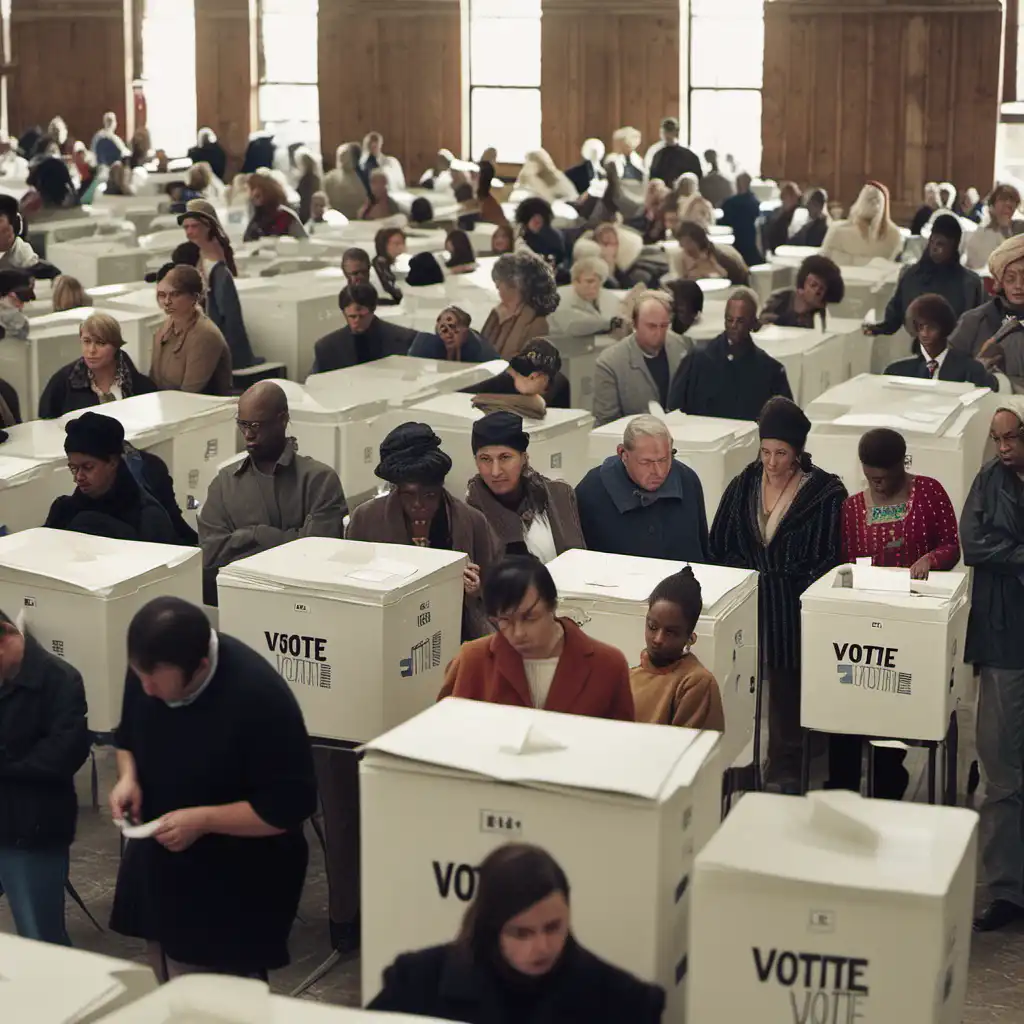
Voters who are passive can be influenced by strong leaders.

ˈpæsɪv
In electronics, referring to components not capable of amplifying signals.
A resistor, capacitor or inductor is considered a passive component.

ˈpæsɪv
Relating to financial income that requires little or no effort to maintain it.
Rental income is often considered passive income.
Audio could not be loaded. Please try again later.
The word 'passive' can be used to describe someone who is not taking action or making decisions. For example, if you are in a group project and one person is not doing any work, you could say they are being passive. In grammar, 'passive' is used to describe when the subject of a sentence is not doing the action, but instead the action is being done to them. For example, "The cake was baked by my mom" is a passive sentence because the subject (cake) is not doing the action (baking), but instead the action is being done to them by my mom. It's important to understand the context in which 'passive' is being used so that you can use it correctly in your own speech and writing.
Compliant means that someone follows rules or requirements willingly and without resistance, usually because they believe it is the right thing to do.
In short, being compliant means following rules willingly, while being passive means taking little action and letting others make decisions for you.
Open word: Compliant →Docile means easily taught, trained or managed. It is applicable to situations where someone or something is obedient and can be trained or managed easily.
For example, a docile student is one who pays attention in class and follows the teacher's instructions.
Docile refers to being obedient and easily trainable, while passive refers to being inactive and not taking an active role in something.
Open word: Docile →Inactive means not active, not engaged in any activity or not doing anything. It implies that a person or something is not currently involved in any action or process.
The word passive means being inactive or not taking an active role in something. It implies that a person or thing is not actively participating or taking control of a situation.
In simpler terms, inactive means not doing anything, while passive means not actively participating.
Open word: Inactive →Malleable means something can be easily shaped or molded. It usually applies to physical objects like metal or clay. For example, a piece of clay is malleable because you can easily shape it into different forms.
Malleable describes a physical property, while passive describes a behavioral or attitudinal property.
Open word: Malleable →Meek refers to someone who is gentle, submissive or humble in nature, but not necessarily weak or lacking in assertiveness.
In summary, while meek and passive may sound similar, they have a different connotation and are applicable in distinct situations.
Being meek shows grace and respectful, while being passive shows a lack of initiative and a willingness to let others take control.
Open word: Meek →Placid describes something or someone who is calm and peaceful, often used to describe a body of water or a person's demeanor.
For example, a lake with smooth water is described as placid or a calm and relaxed person is also described as placid.
Passive refers to a lack of action or resistance, while placid refers to a calm demeanor or situation. The usage of each word depends upon the situation or context.
Open word: Placid →Submissive means to be ready to obey or to give in to authority or someone else's desires. It implies that someone is actively allowing someone else to take control or make decisions for them.
For example, if someone is submissive in a relationship, they may let their partner make all the decisions.
Being submissive can be appropriate in situations where someone has more authority or expertise, and it is appropriate to defer to them.
However, it is important to recognize that being too passive or too submissive can be problematic if it means not standing up for oneself or allowing others to take advantage.
Open word: Submissive →Uninvolved refers to someone who is not connected or engaged in a situation, such as being uninvolved in a group project or not being emotionally invested in a conversation.
Both terms can be applicable in different contexts, but passive tends to refer more to action/inaction while uninvolved refers more to interest/disinterest.
Open word: Uninvolved →and two passive parts listening and reading. While a balanced bilingual has near equal abilities across the board in two languages, most bilinguals around the world know and use their languages in varying proportions.
Watch on YouTube ↗Acceptance looks like a passive state, but in reality it brings something entirely new into this world. That peace, a subtle energy vibration, is consciousness.
in better understanding the passive and active nature of rest we can more easily approach life with calm clarity and ease
Watch on YouTube ↗Our obligation is to give meaning to life and in doing so to overcome the passive, indifferent life.
comparable to how muscles work in the calf region. This bionic propulsion is very important clinically to patients. So on the left you see the bionic device worn by a lady, on the right a passive device worn by the same lady, that fails to emulate normal muscle function,
Watch on YouTube ↗I feel I should never do passive characters. They don't work for me.
we can be part of the solution as opposed to passively saying just let it happen i don't find that to be acceptable we can do things without necessarily stopping all the things that are important we can't open the economy
Watch on YouTube ↗I'm passionate about what I do. I'd be naive to be passive.
frustrated so we're trying to use wireless technology to help the visually impaired navigate safely through buildings so how we do it is we have passive RFID tags radio frequency
Watch on YouTube ↗Women are not inherently passive or peaceful.
it's no wonder our messages sometimes turn into a mush of miscommunication. But luckily there are some simple practices that can help us all navigate our daily interactions for better communication. recognize that passive hearing and active listening are not the same.
Watch on YouTube ↗My dad always told me that, as far as he's concerned, I can do whatever I choose in life as long as I'm happy and can handle the consequences of bad decisions. He only ever said that when he thought I was doing the wrong thing. I would employ similar passive aggression.
that's a pretty compelling sign of life. Or what if instead of a structure that passively soaked up all the star's energy, like a plant, an alien civilization built one that actively sucked the energy out of the star
Watch on YouTube ↗My life is good because I am not passive about it. I invest in what is real. Like real people, to do real things, for the real me.
But the only way your brain can do that is that it has to, instead of generating a perception of the way the world was when light hit your retina, it has to do something fancier. It can't passively respond and create a best guess,
Watch on YouTube ↗Mental events, it is said, are not passive happenings but the acts of a subject.
That's what happens along a concentration gradient, as substances shift passively from a high, or squashed concentration, to a lower more comfortable one. How does this relate to ocean currents and thermohaline circulation? Thermo means temperature, and haline means salt because in the real world scenario of the sea,
Watch on YouTube ↗One of the nice things about books as opposed to television and movies to some extent is it's not a passive entertainment. People really do get involved, and they do create, and they do have their own visions of what different characters look like and what should happen. It's great - it means their brains are working.
So how did they accomplish this feat? Until recently marine biologists thought of larval fish as largely passive drifters, dispersed by ocean currents to distant locales. But in the last 20 years new research has suggested that larvae may not be as helpless as they seem,
Watch on YouTube ↗The question I'm always asking myself is: are we masters or victims? Do we make history, or does history make us? Do we shape the world, or are we just shaped by it? The question of do we have agency in our lives or whether we are just passive victims of events is, I think, a great question, and one that I have always tried to ask.