
transmigration
noun transmigration
ˌtrænzmaɪˈɡreɪʃn
The movement of a soul into another body after death.
Some people believe in transmigration, so they think we live many lives in different bodies.
transmigration
ˌtrænzmaɪˈɡreɪʃn
Loading…
ˌtrænzmaɪˈɡreɪʃn
The movement of a soul into another body after death.
Some people believe in transmigration, so they think we live many lives in different bodies.
ˌtrænzmaɪˈɡreɪʃn
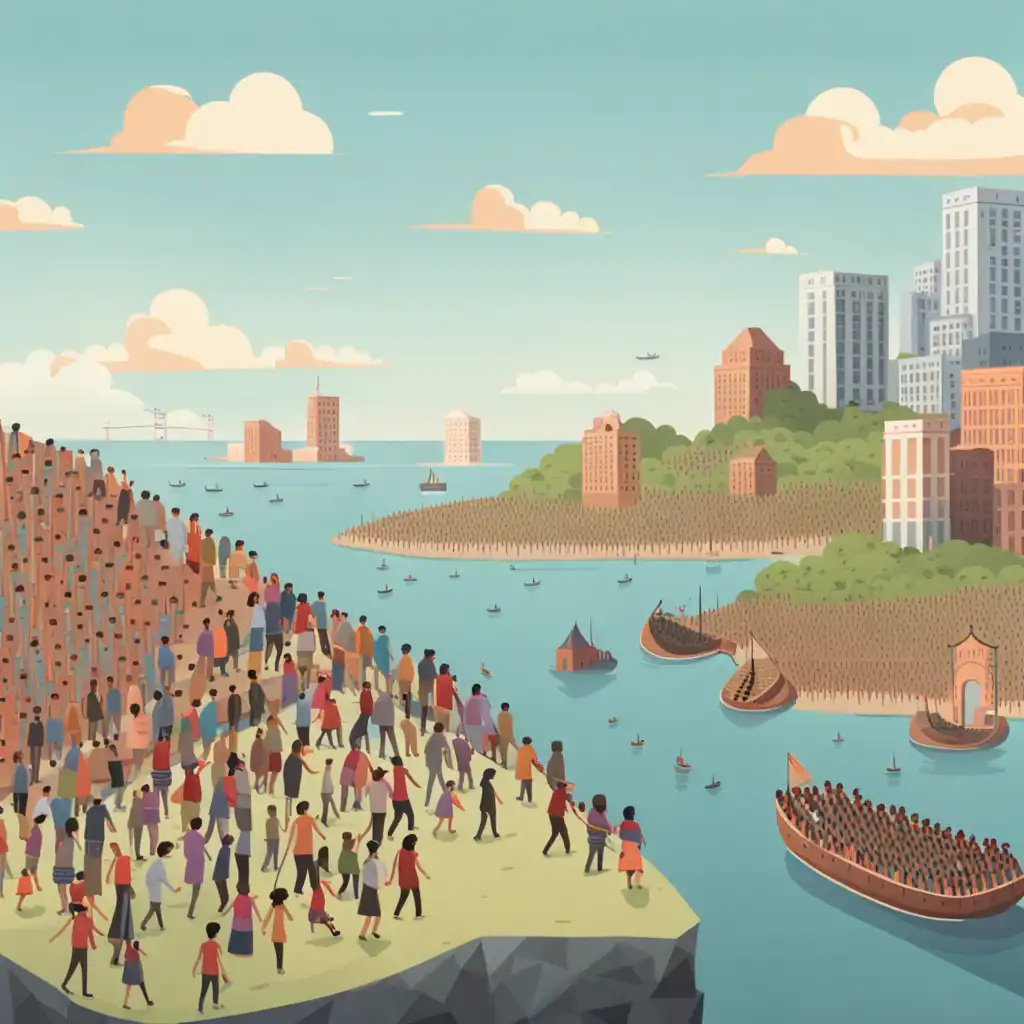
The action or process of moving from one place to another.
The government facilitated the transmigration of people from crowded to less populated islands.
Audio could not be loaded. Please try again later.
Transmigration refers to the movement of something from one place to another. It is often used to describe the movement of a soul or spirit from one body to another after death, according to certain religious beliefs. Additionally, it can refer to the movement of people or animals from one region or country to another.
Reincarnation and transmigration are both concepts related to the idea that a soul can be reborn into a new body after death, but they differ in their specific meanings.
Reincarnation generally refers to the belief that a soul will be reborn into a new body after death, but the new body may not necessarily be of a different species.
The term reincarnation is more commonly used in the context of religious and spiritual beliefs, such as Hinduism and Buddhism.
Reincarnation refers to the rebirth of a soul into a new body, while transmigration specifically refers to the rebirth of a soul into a new species.
Open word: Reincarnation →Hesitation before birth. If there is a transmigration of souls then I am not yet on the bottom rung. My life is a hesitation before birth.
The true nature of soul is right knowledge, right faith and right conduct. The soul, so long as it is subject to transmigration, is undergoing evolution and involution.
If there is a transmigration of souls then I am not yet on the bottom rung. My life is a hesitation before birth.