simulation
noun simulation
ˌsɪmjuˈleɪʃn
The act of copying or imitating something
The flight simulator gives a very realistic simulation of flying a plane.
simulation
ˌsɪmjuˈleɪʃn
Chargement…
ˌsɪmjuˈleɪʃn
The act of copying or imitating something
The flight simulator gives a very realistic simulation of flying a plane.
ˌsɪmjuˈleɪʃn
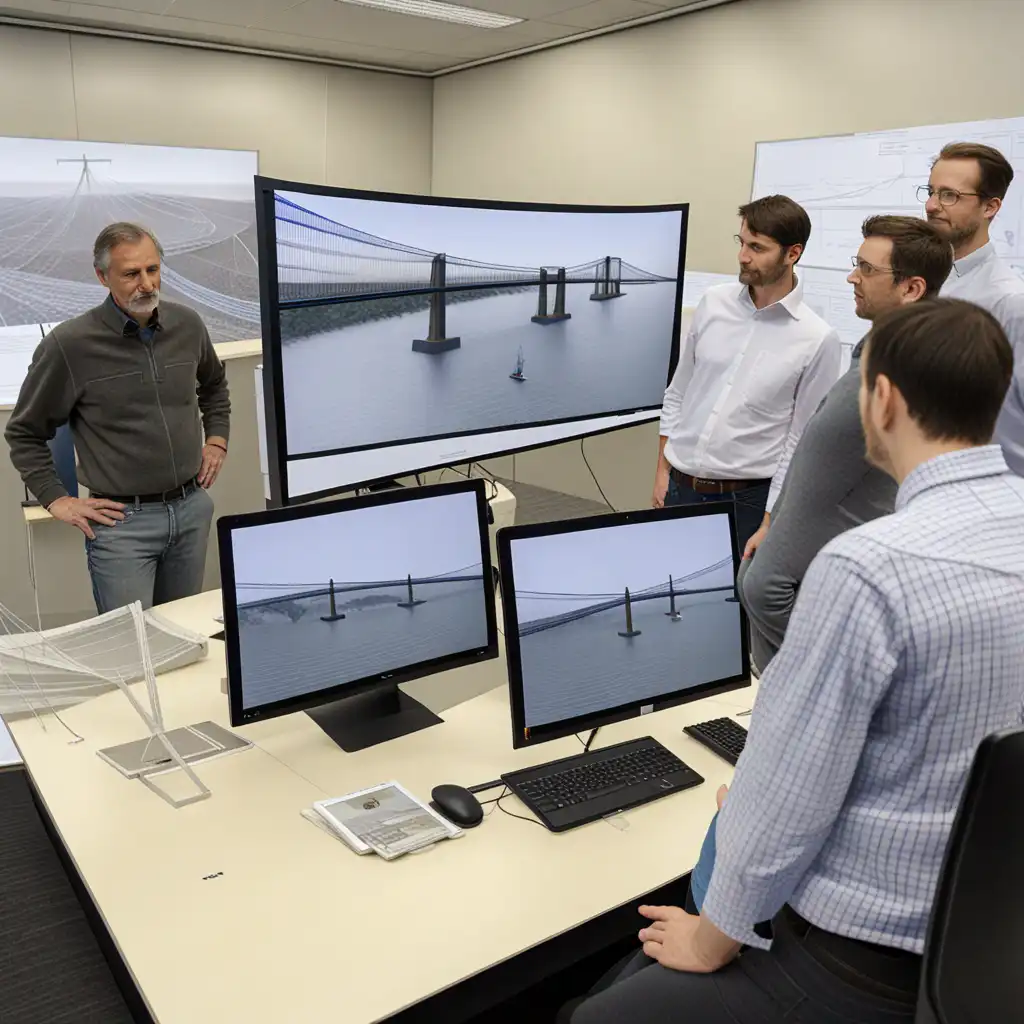
In computing, a process or program that tries to reproduce the behavior of a system or situation
The engineers used a simulation to test the new bridge's resistance to wind.
ˌsɪmjuˈleɪʃn
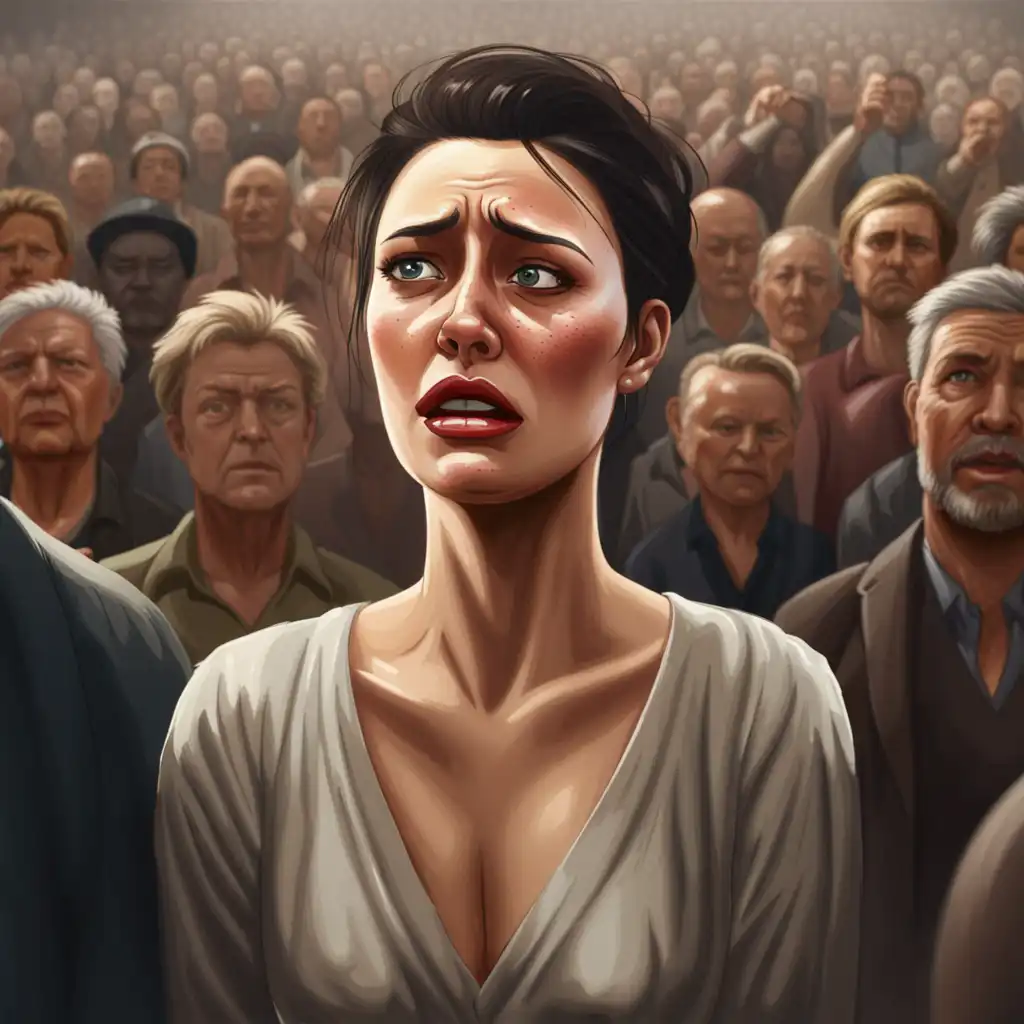
A false display, a faking or feigning
Her tears were just a simulation to get sympathy.
Impossible de charger l’audio. Réessayez plus tard.
Simulation is when you create an experience that imitates or imitates a real situation. It is often used in situations where it is either too dangerous or too expensive to create the real thing. For example, pilots train in flight simulators which recreate the experience of flying a plane. Similarly, doctors use simulations to practice surgeries before they perform them on actual patients. So, simulation is a way to practice skills and gain experience in a safe and controlled environment.
A clone is an exact copy of something or someone, while a simulation is a model created to mimic or replicate the behavior of something in real life.
Clones are applicable in situations where an exact replica of something is needed, often in scientific or medical contexts.
For example, scientists might clone a plant to study its genetics or clone an animal for preservation purposes.
Ouvrir le mot: Clone →Copy means to create an exact duplicate or replication of something that already exists. For example, making a copy of a document or duplicating a piece of artwork.
A simulation is not necessarily an exact copy, but rather an approximation or representation of something. For example, a flight simulator used to train pilots, or a computer simulation of a natural disaster to help emergency responders prepare.
Both terms have different applications: Copy is typically used when an exact replication is needed, while simulation is used when creating a representation or approximation is sufficient.
Ouvrir le mot: Copy →Emulate means to imitate or copy the action or behavior of someone or something else.
In short, emulation is used to mimic the actions of something else, while simulation is used to create a virtual model of something for testing or observation.
Ouvrir le mot: Emulate →Imitation refers to copying or replicating something, while simulation refers to creating a model or virtual representation of something.
Imitation can be applicable in art or fashion, where individuals may try to recreate famous works or styles. In everyday life, it can refer to mimicking someone's behavior or actions.
Imitation is about copying something that already exists, while simulation is about creating something new that mimics or represents something else.
Ouvrir le mot: Imitation →Mimicry refers to the act of imitating or copying someone or something else. This is usually done through behavior, language, appearance, or other characteristics.
Mimicry is often used in nature, where animals may mimic other animals to protect themselves or gain an advantage.
Mimicry is about copying something real, while simulation is about creating something artificial that imitates reality.
Mimicry is applicable in nature, social situations, and entertainment, while simulation is applicable in technology, education, and research.
Ouvrir le mot: Mimicry →A model is a representation of a real-world object or phenomenon. It usually contains simplified versions of the object's features or characteristics.
Models can be physical or abstract, and they help us understand complex systems by simplifying them.
A simulation is a process of running a model to see how it behaves under different conditions.
A simulation can be a physical or computer-based model, and it usually involves making assumptions about the environment or system being modeled.
Models are used to represent real-world objects or phenomena, while simulations are used to study and test models under different conditions.
For example, a model of the human heart might help doctors understand how it works and how it can be treated, while a simulation of a plane crash might be used to test safety features and improve design.
Overall, models and simulations are both useful tools for understanding complex systems and testing ideas before implementing them in the real world.
Ouvrir le mot: Model →A replica is an exact copy of something, while a simulation is a representation of something.
For example, a replica of the Eiffel Tower would be an exact physical copy of the actual tower in France.
Replicas are typically used for display or educational purposes, while simulations are commonly used in video games, scientific research, and training simulations (such as flight simulators).
Ouvrir le mot: Replica →Replicate means to make an exact copy or duplicate of something, while simulation means to create a model or imitation of a real-life situation, process, or system.
Replication is applicable when we want to recreate an object or experiment exactly as it is, with the same materials and conditions.
For example, scientists might replicate an experiment to see if they get the same results as the original experiment, which helps ensure the original results were not a fluke.
In summary, replication is used to create an exact copy, while simulation creates a model of something that can be tested without doing the real thing.
Ouvrir le mot: Replicate →In one survey about 90% of respondents said that it's okay to flip the switch, letting one worker die to save five, and other studies including a virtual reality simulation of the dilemma, have found similar results.
Voir sur YouTube ↗I'm not a fan of simulations. Where, 'Oh, we'll go play a simulation of world peace and figure out how to make peace' and then somehow magically that will get translated into the real world. No, that's not the kind of games that I make.
I hear it operating. I probably smell it operating." But in between that we're going to do a simulation. Babbage himself wrote he said, as soon as the analytical engine exists, it will surely guide the future course of science. Of course he never built it because he was always fiddling
Voir sur YouTube ↗We often mistake the artificial chemical and psychological thrill of fake edges for the real. In fact we often seek them out as a substitute for the reality of change, growth and exploration. Our minds and bodies help us in this, as they react much the same to this simulations as to the real world.
easier to create a simulation than it is to create a real universe I mean how you going to create a real universe so if you wait long enough they're going to be many many more simulated universes and there are real ones so any sentient being if they're rational would think
Voir sur YouTube ↗The most important application of quantum computing in the future is likely to be a computer simulation of quantum systems, because that's an application where we know for sure that quantum systems in general cannot be efficiently simulated on a classical computer.
graduate students to do sophisticated simulations the meat of what we have been working on this what most of the team's been working on is really the interactive platform our mission is a free world-class education for anyone anywhere and we think that doesn't happen unless you get deep practice you
Voir sur YouTube ↗I've seen descriptions of advanced TV systems in which a simulation of reality is computer-controlled; the TV viewer of the future will wear a special helmet. You'll no longer be an external spectator to fiction created by others, but an active participant in your own fantasies/dramas.
how does dark energy affect the universe at the largest scales? Depending on how strong it is, maybe structure forms faster or slower. Well the problem with the large-scale structure of the universe is that it's horribly complicated. Here is a computer simulation. And we need a way to simplify it.
Voir sur YouTube ↗Life in zero gravity is hard to simulate. We practice on the ground what we call 'the day in the life' simulations, but it's just practicing some of the tests. It can't prepare you for the fact that all of your tools float if you don't pay attention to where they are! If you don't Velcro things down, they're gonna float away.
and how those constraints could lead to detectable signs in the world. So where might we look for those glitches? One idea is that as a simulation runs, it might accumulate errors over time. To correct for these errors
Voir sur YouTube ↗Being booked for simulation is never good.
Similarly a digital wind tunnel with digital wind flowing from right to left -- not that remarkable in a sense; we didn't invent the mathematics. But if you displayed that on a CRT or flat panel display, it would be meaningless to hold up an arbitrary object, a real world object in that. Here the real world merges with the simulation.
Voir sur YouTube ↗A forecasting game is a kind of simulation, a kind of scenario, a kind of teleconference, a kind of artifact from the future - and more - that enlists the participants as 'first-person forecasters.
fundamental truths that drive the universe it's like a deep curiosity about what this universe is why we're here simulation why not you know we don't have time to go into that but i mean it's you're just deeply curious about what this is for what this is this whole thing yes i mean i think the why the why
Voir sur YouTube ↗The computer is not, in our opinion, a good model of the mind, but it is as the trumpet is to the orchestra - you really need it. And so, we have very massive simulations in computers because the problem is, of course, very complex.
And the important thing to remember is that this simulation is a good one. It's believable it's tactile. You can reach out -- things are solid. You can move objects from one area to another. You can feel your body.
Voir sur YouTube ↗Music is a simulation of something, but language is the greatest thing we possess.
So in our simulations, we pretend a black hole looks like astronomical non-black hole objects, as well as everyday images like the elephant in the center of our galaxy. When the results of our algorithms on the bottom look very similar to the simulation's truth image on top, then we can start to become more confident in our algorithms.
Voir sur YouTube ↗Learning by doing, peer-to-peer teaching, and computer simulation are all part of the same equation.