pastiche
noun pastiche
pæˈstiːʃ
A work of art that imitates the style of another artist, genre or period.
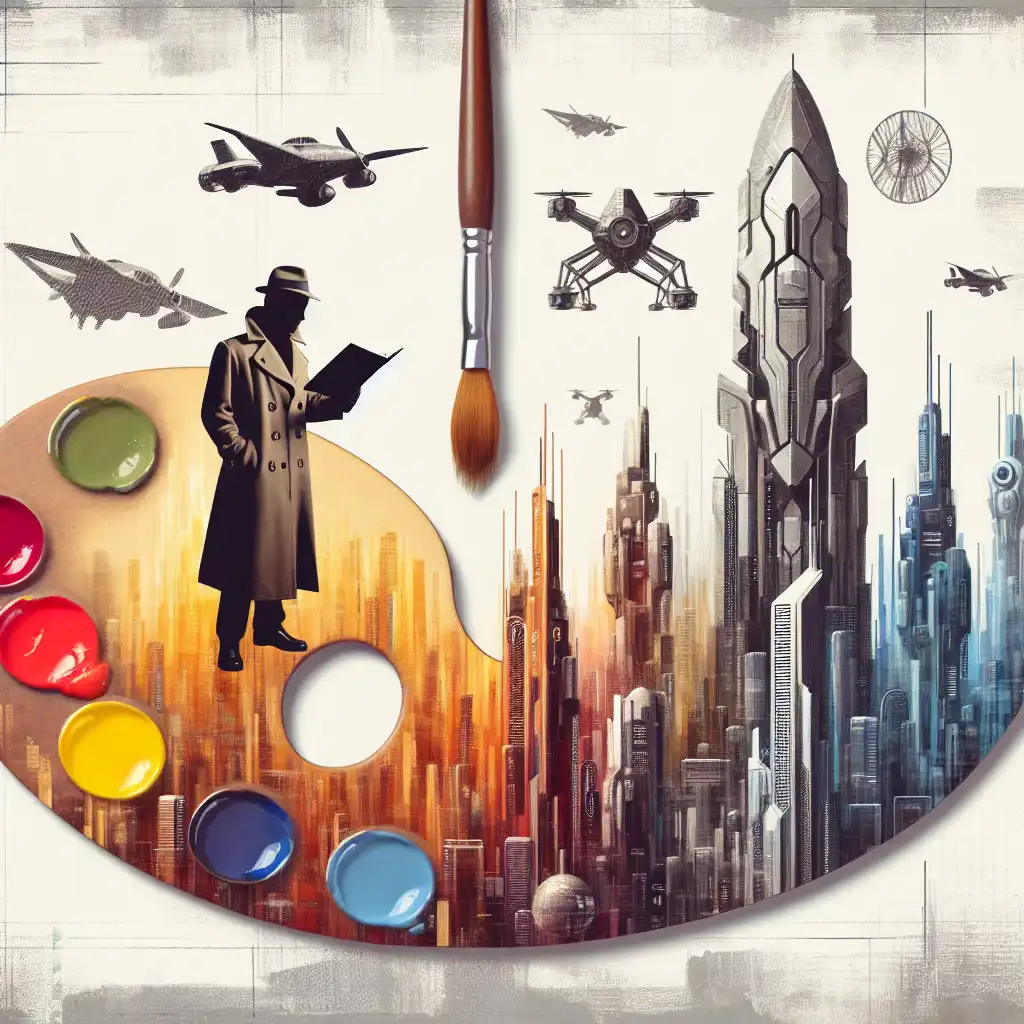
The movie is a pastiche of science fiction and detective genres.
pastiche
pæˈstiːʃ
Đang tải…
pæˈstiːʃ
A work of art that imitates the style of another artist, genre or period.
The movie is a pastiche of science fiction and detective genres.

pæˈstiːʃ
An imitation or replication that has hodgepodge aspects or is considered a combination of different elements.
His house is an eclectic pastiche of differing architectural styles.
Không tải được âm thanh. Vui lòng thử lại sau.
The word "pastiche" means a piece of art or literature that imitates the style of another artist or writer. For example, a pastiche of a Shakespeare play might be a new play written in a similar style to Shakespeare's works. It is often used to describe something that is inspired by or copied from an earlier work, but is not original itself. This word is commonly used in the world of art, literature, and music.
Copycat refers to someone or something that imitates or copies the work or behavior of another person or thing, often without innovation or originality.
Unlike copycat, pastiche is intentionally created as a tribute or homage to another artist, and often incorporates elements of humor and irony.
Copycat refers to a negative imitation of someone or something, while pastiche refers to a creative imitation that is intended as a tribute or homage to another artist or period in history.
Mở từ: Copycat →Emulate means to imitate someone or something in order to match or surpass their achievements. Pastiche means a work of art that imitates the style of another artist, often in a humorous or mocking way.
Emulate is usually used when someone is trying to learn from and improve upon a particular skill or accomplishment. For example, a basketball player may try to emulate the style and success of Michael Jordan.
Emulate is about learning from someone else's success, while pastiche is about imitating someone else's style for artistic effect.
Mở từ: Emulate →Imitation means copying or recreating something that already exists or has been done before. Pastiche means a work of art, literature or music that imitates the style of another artist or period, but without a clear intention of copying.
For example, if someone painted a picture that looks very similar to a famous painting by Vincent Van Gogh, it would be called an imitation.
Imitation is applicable when someone wants to copy something exactly, while pastiche is used to create something new that pays homage to existing works or styles.
Mở từ: Imitation →Mimicry refers to the act of imitating someone or something, often for the purpose of making fun of them or to pay homage to them.
In simpler terms, mimicry is like copying someone's behavior or speech for fun, while pastiche is like creating a new artwork that is inspired by something from the past.
Mở từ: Mimicry →A parody is a work that imitates or mocks another work, often for comedic effect. It takes something familiar and makes fun of it.
For example, a movie parody might use characters or plot elements from another popular film and turn them into a silly or absurd version.
A parody pokes fun at something while a pastiche pays tribute to it. Parody is applicable in situations where humor is the primary goal, while pastiche is applicable to situations where an artist seeks to emulate a specific style or capture a particular mood.
Mở từ: Parody →Replicate means to create an exact copy or duplicate of something.
Pastiche is used to imitate a style or period in order to pay homage or make a statement, while replicate is used to create an exact copy of something.
Mở từ: Replicate →Satire is a type of humor or irony that uses exaggeration, ridicule, or sarcasm to criticize a person, group, or society.
Pastiche is an imitation of style, while satire is a form of criticism through humor.
Mở từ: Satire →A spoof is a humorous or satirical imitation of something, intended to mock or parody it. It is done with an intent to criticize or make fun of the original.
A spoof often exaggerates or distorts the original, and may include elements that are absurd or ridiculous.
Both pastiche and spoof involve imitation, but pastiche is respectful and celebrates the original, while spoof is critical and satirical.
Pastiche is used to pay homage to something or create something new by combining various elements, while spoof is used to mock or criticize something by imitating it in a humorous way.
Mở từ: Spoof →How sampling transformed...
Xem trên YouTube ↗Making a film is like making a mixtape. You're collecting all this stuff and putting your favorite stuff into it: you have actors that you like, characters that you're interested in, moments you want to explore, themes you want to deal with, music that you want to put in. It's a pastiche of all these things that deal with how you see the world.
I dislike pastiche; it attracts attention to the language only.
Drag is pastiche and parody and satire. Drag queens are never meant to be stars. We make fun of stars. Drag queens are the people that 'point' at the star.
I want my buildings to take root and look as if they've always been there. It isn't about pastiche or adapting what's already there. It's about trying to blend the future and the past.
A typical 'Larry King Live' is a pastiche whose absurdism defies parody. Wearing his trademark suspenders and purple shirts, he looks as if he's strapped to the chair with vertical seat belts, unable to eject.
This is a universal, unique movie, it has potential to cross barriers. But we never thought about that on set, when we were doing the film. We knew that in making a silent movie, we were doing something a little bit under the wire, a bit interdit. It's a pastiche, but for the French taste, you would have thought.
I was a good college kid, all-American and baseball-playing, living in the dorms with a million barbarians. I did not expect to be claimed by Fitzgerald hook, line, and sinker. 'This Side of Paradise' - that sweet, sophomoric pastiche of notes, scenes, poetry, and plays - I felt like he'd written the book just for me.
In terms of the film itself, there was nothing much very new about 'Star Wars.' 'Star Wars' was a trailblazer for the kind of monumentalist pastiche which has become standard in a homogeneous Hollywood blockbuster culture that, perhaps more than any other film, 'Star Wars' played a role in inventing.
I want to do something that is not just a pastiche of drag that's come before but is really authentically me. I try to tune out all the drag that's out there and tap into the drag that I was doing when I was a little kid - when I didn't even know the word 'queer' or that gay people were out there.
The fact that the 1984 cold war film 'Red Dawn' has been remade is more than just another sign of Hollywood declining into pastiche and repetition. It shows that, in a moment of deep capitalist crisis, the Red Peril is back.