taxidermy
noun taxidermy
ˈtæksɪdɜːrmi
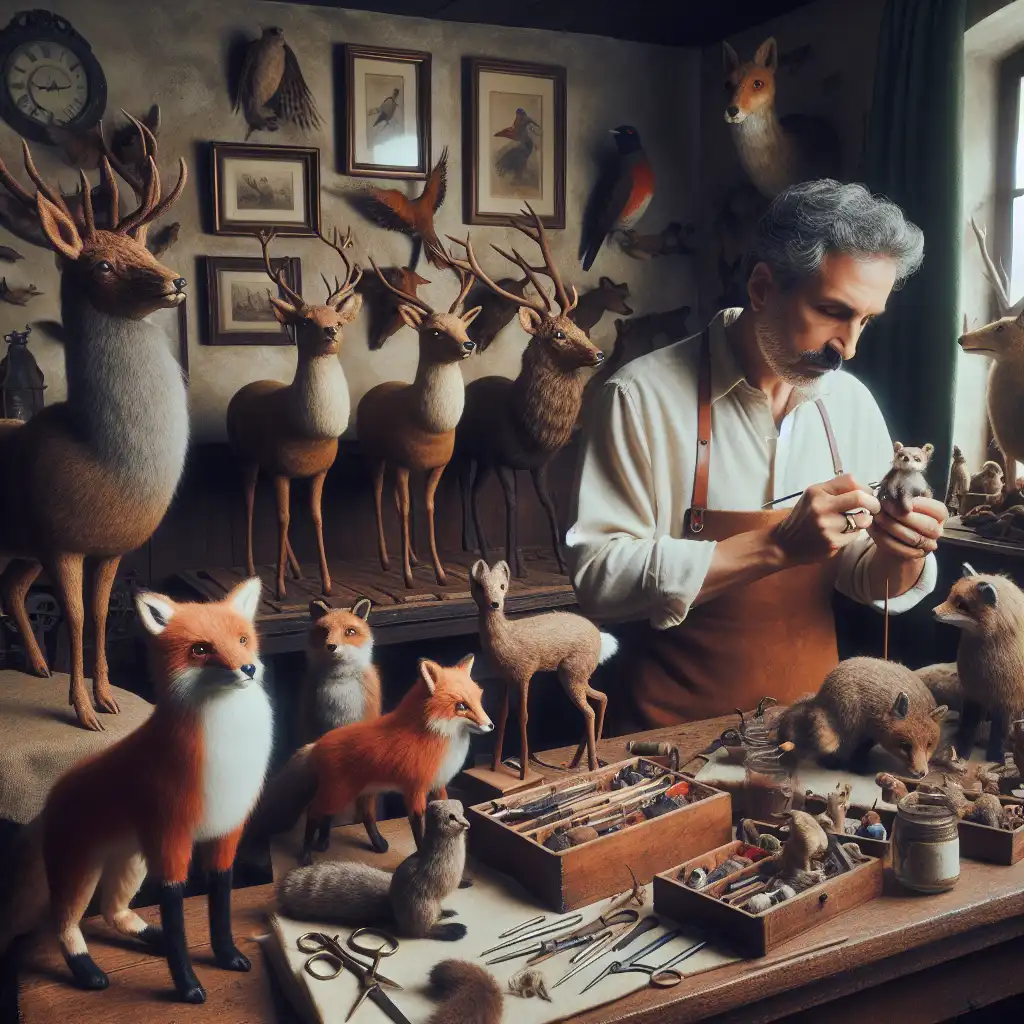
The art of preparing, stuffing, and mounting the skins of animals to look like they are still alive
He learned taxidermy so he could preserve the animals he hunted.
taxidermy
ˈtæksɪdɜːrmi
Đang tải…
ˈtæksɪdɜːrmi
The art of preparing, stuffing, and mounting the skins of animals to look like they are still alive
He learned taxidermy so he could preserve the animals he hunted.
Không tải được âm thanh. Vui lòng thử lại sau.
Taxidermy is a way of preserving animals after they have died, so that they appear lifelike. It involves removing the skin and stuffing it with materials to create a realistic-looking animal. Taxidermy is often used to display animals in museums, at natural history exhibits, or as decorations in homes. However, it is important to note that many people find taxidermy disturbing or unethical, as it involves killing animals solely for the purpose of display.
Mount and taxidermy are related to the preservation of animals, but they have different meanings.
Mount refers to the process of mounting an animal's skin onto a mannequin or frame to create a lifelike display of the animal in a natural pose.
Taxidermy is the broader term for the practice of preparing, stuffing, and mounting animal skins for display or study. This may include creating lifelike mounts, but it can also refer to the creation of smaller taxidermy pieces, such as specimens preserved in jars or mounted on plaques.
Mount is specifically about the process of creating a lifelike display of an animal, while taxidermy encompasses the broader practice of preserving and displaying animal specimens.
Mở từ: Mount →Preservation refers to the act of keeping something in its original state or condition. It involves methods of minimizing damage or decay to an object by controlling the environment in which it is stored or displayed.
Preservation can be applicable to a range of objects, including documents, artworks, and historic buildings.
Taxidermy refers specifically to the preservation of animal remains, usually for display purposes. Taxidermy involves removing the skin from an animal and preserving it through chemical treatments or other methods.
Preservation refers to the act of maintaining an object's original state, while taxidermy is a specific type of preservation process that applies only to animals.
Mở từ: Preservation →Stuff is a general term for items or things in a broad sense.
It can refer to anything that is tangible or physical, and usually does not have any specific meaning or function. For example, you might use the word stuff when talking about your belongings, or when describing a room that is full of things.
Taxidermy is the art of preserving the skin of an animal so that it can be displayed or mounted. It involves removing the internal organs and other soft tissue from the animal, and then filling the body with a material such as sawdust or stuffing.
Stuff is a general term for things, whereas taxidermy specifically refers to the process of preserving and mounting an animal for display.
Mở từ: Stuff →Turning Roadkill Into...
Xem trên YouTube ↗I love taxidermy. I collect taxidermy. I'm fascinated by the art of taxidermy. But on a more artistic level, I look at taxidermy as pulling something from the wild and taming it, and posing it in a style of your own personal pleasure that will last forever, and ever, and ever.
Gabriel Barcia-Colombo:...
Xem trên YouTube ↗I find people interesting. People trying hard are interesting. People with a passion are interesting - whether it's old cars or taxidermy or knitting.
When taxidermy is done well it's an amazing piece of art.
My room is like an antique shop, full of junk, and weird stuff. There's a big sword in there. And a taxidermy bird, and a couple of birdcages. And a lot of newspaper cuttings. I used to have a weird thing about cutting out morbid headlines from newspapers, and collecting them. I was fascinated with drowning, which is kind of strange.
I wasn't even aware that there are different styles of taxidermy, traditional and rogue. I wound up really liking the rogue stuff the most, just because it is more artistic and people can go anywhere with it. That stuff I really liked. Honestly, I would have liked to buy some of those pieces.
I'd be perfectly happy living anonymously on a ranch in Kentucky, where the only time someone mentioned me was to discuss the crazy lady up the road with all the taxidermy and jerky.
ReadyMade's first three issues dished out instructions for all sorts of kitschy crafts and odd projects: homemade wallets, Adirondack chairs, even taxidermy.
I'd love to have a room full of taxidermy. I'd be devastated if my cat, Archimedes, ever died. I was debating the other day with a friend whether I should stuff him, but don't know whether he would end up looking like himself. I'd be really sad if he looked strange.
I've started collecting taxidermy: I've got a red squirrel, called Steve. I made sure he came with certificates so we know he wasn't just killed for stuffing.
I love prints of skulls and bones and have some taxidermy - a crow and a rabbit - to remind me of home. I like art and have a big portrait of Bjork.