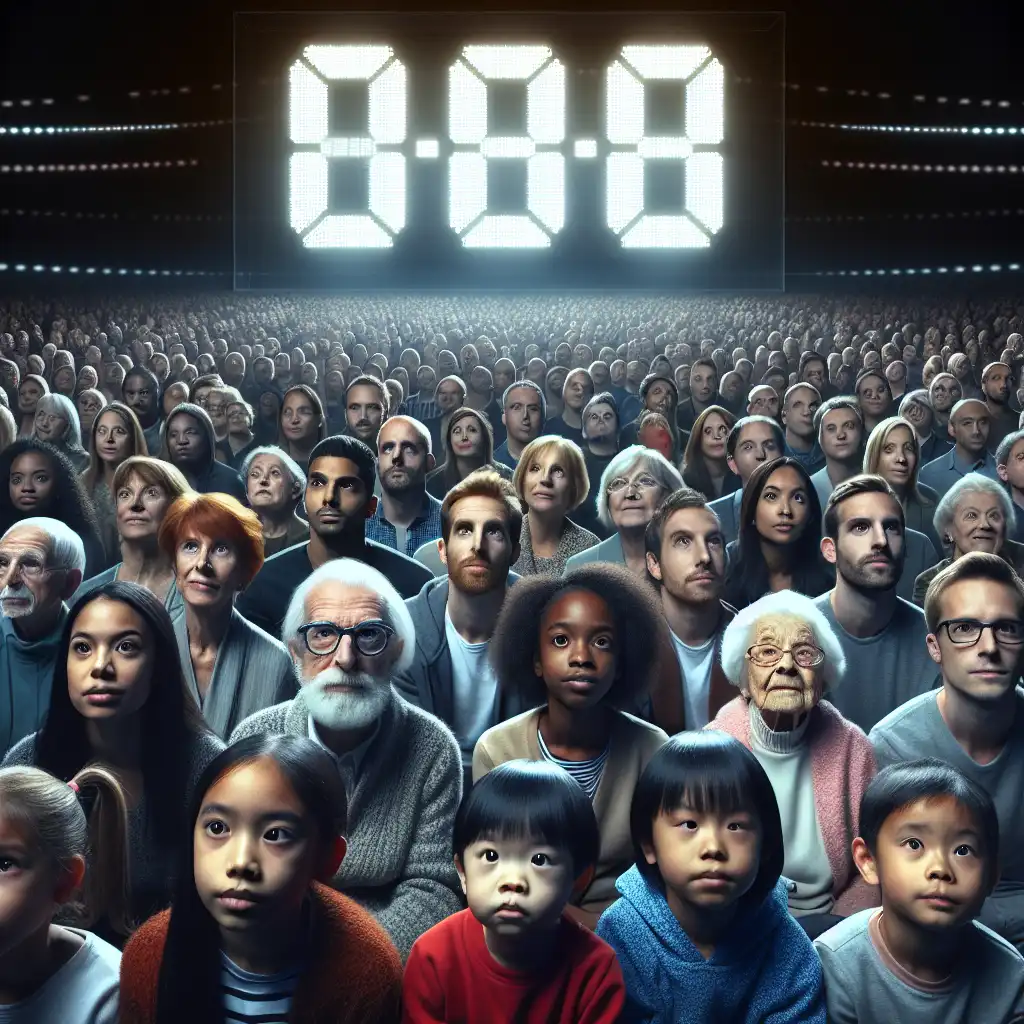
The period of time counting down towards some important event, usually displayed as numbers that decrease in a sequence like 10, 9, 8, 7 and so on in seconds or minutes to zero.
With only a 10-second countdown left, everyone was holding their breath.
Audio could not be loaded. Please try again later.
How to use
Countdown is a word that is used to describe the process of counting down to a specific event or deadline. For example, if you are waiting for an important exam or a holiday, you can use countdown to describe the number of days or hours left until that event. Countdown can also refer to a sequence of numbers or words that are counted backwards to help people keep track of time. This is often used in sports events, where the countdown is used to mark the end of a period of play or the start of a new one. In general, countdown is used in situations where people need to keep track of time and plan accordingly.
An hourglass (or sand timer) is a device used to measure a specific amount of time. It consists of two glass bulbs connected vertically by a narrow neck that allows sand (or other granular material) to pass through from the upper bulb to the lower one.
Once the upper bulb is empty, the hourglass is flipped to start the opposite process.
In summary, countdowns are used to mark time left until something happens while hourglasses are used to measure a specific amount of time.
Countdowns involve counting down to zero while hourglasses measure a specific amount of time by allowing sand to pass through from one bulb to another.
It is used to measure the amount of time it takes to complete a task or event. For example, a stopwatch can be used to time a race or a cooking process.
A countdown is used to count down from a specific amount of time to zero, while a stopwatch is used to count up from zero to measure the duration of an event or task.
A ticker is a device that tracks the movements of stocks or other financial instruments. It shows the current price of the stock as well as any changes that have occurred in real-time.
Tickers are mainly used by investors to keep track of their investments and make informed decisions on buying or selling stocks.
In summary, countdowns are used for tracking time until a big event while tickers are used to track the price changes of stocks or other financial instruments in real-time.
A timepiece refers to any device that tells the time, such as a watch or clock. It is an object that tells you what time it is, without necessarily indicating how much time is left until a specific event occurs.
So, countdowns are applicable for specific events in which we want to keep track of time left, while timepieces are useful for everyday use to keep track of time.
A timer is a device or tool used to measure time intervals, while a countdown refers to the act of counting down to a specific event or deadline.
For example, a kitchen timer can be used to keep track of the baking time for a cake, while a countdown could be used to countdown the days until a special event, such as a wedding or holiday.
A timer is a device used to measure time, while a countdown is the act of counting down to a specific event or deadline.
When does money run out of time? The countdown begins when investable assets pose too much risk for too little return; when lenders desert credit markets for other alternatives such as cash or real assets.
White man get money - stay rich, kids get rich. Black man get money - it's the countdown till, 'When is this brother gonna go broke?' I'm not going broke.
I am 55 years old now. It takes three years to write one book. I don't know how many books I will be able to write before I die. It is like a countdown. So with each book I am praying - please let me live until I am finished.
Countdown came about at a time when we'd just had our first baby, and, if I'm entirely honest, it looked like an income - a salary - something I'd never had before.
The countdown reached ten seconds and I could almost hear an invisible crescendo of stirring background music. 'Anchors aweigh!' Five, four, three, two, one... and we had ignition!