herbage
noun herbage
ˈɜːrbɪdʒ,ˈhɜːrbɪdʒ
The grass and green plants that are found in fields or meadows.
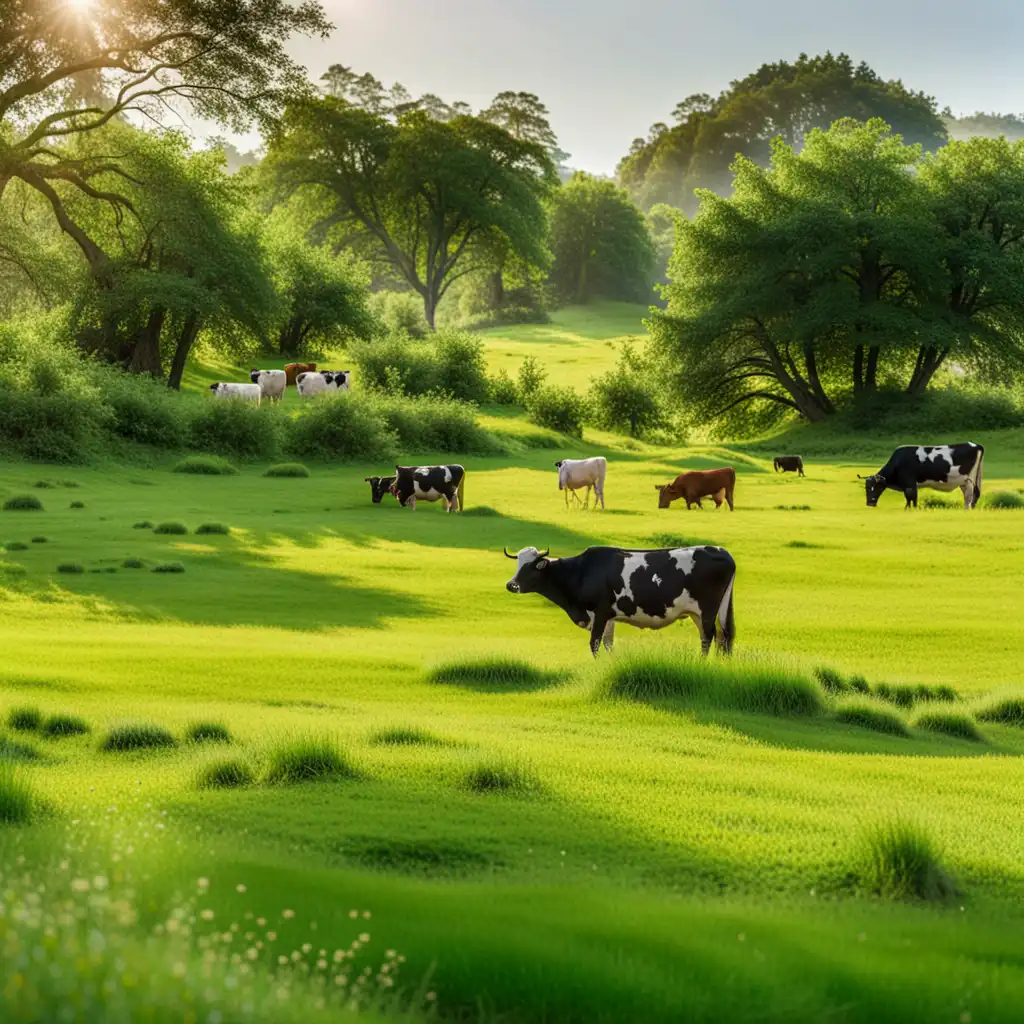
The cows were grazing on the lush herbage.
herbage
ˈɜːrbɪdʒ,ˈhɜːrbɪdʒ
लोड हो रहा है…
ˈɜːrbɪdʒ,ˈhɜːrbɪdʒ
The grass and green plants that are found in fields or meadows.
The cows were grazing on the lush herbage.
ऑडियो लोड नहीं हो सका। कृपया बाद में फिर कोशिश करें।
The word 'herbage' refers to the vegetation, particularly the green plants and grasses, in a particular area. It generally describes the plants that are used for grazing or as food for livestock such as cows, sheep, and horses. For example, a farmer might say that their fields have good herbage for their animals to eat. In everyday conversations, 'vegetation' or 'plants' can be used as simpler alternatives to 'herbage'.
Flora refers to the variety of plants growing in a particular area, including trees, shrubs, and other plants. It is a more general term and applies to all the plant life in an area.
Flora is a broader term and encompasses all plant life in an area, while herbage is a more specific term that refers to the types of plants that are typically used as animal feed.
शब्द खोलें: Flora →Foliage refers to the leaves and branches of a plant or tree, while herbage refers to the green grass or plants that animals eat.
Foliage can describe the greenery on trees or plants like a forest or garden, while herbage describes the field of grass that cows or horses might eat.
In simpler terms, foliage is the leaves and branches of a plant or tree, and herbage is the grass that animals eat.
शब्द खोलें: Foliage →Grass refers specifically to the plants that have narrow leaves and grow in tufts or clusters. Herbage, on the other hand, refers to all the green plants growing in a particular area, including grasses, but also other types of plants like clover, alfalfa, or wildflowers.
If you are talking specifically about the types of plants that are grasses, then you would use the word "grass."
शब्द खोलें: Grass →Both greenery and herbage refer to plants and vegetation, but the main difference is in their usage.
Greenery describes any type of green plants or foliage, whether they are wild or cultivated, while herbage usually refers specifically to the plants and vegetation that are grown for their leaves, stems or flowers which can be used as food for animals or humans.
For example, a park with lush trees, bushes and grass would be described as having plenty of greenery, while a farmer would talk about the herbage in their field, referring to the grasses, clovers and other plants that they grow specifically to feed their livestock.
शब्द खोलें: Greenery →A shrub is a woody plant that is characterized by multiple stems and typically grows to a height of less than 6 meters.
Shrubs are often used in landscaping, gardening, and horticulture.
Herbage refers to a general type of plant material, while a shrub is a specific type of plant with distinct characteristics.
शब्द खोलें: Shrub →Undergrowth refers specifically to the low-growing vegetation or smaller plants that grow beneath the taller plants or trees.
The undergrowth would refer to any low-lying plants, shrubs, or ferns growing beneath the tall grasses.
Herbage is more commonly used when referring to larger areas of vegetation, such as in pastures or fields, while undergrowth is used more specifically to describe the smaller plants that grow in forests or wooded areas.
शब्द खोलें: Undergrowth →Herbage refers specifically to the green parts of plants that are used for grazing or as animal feed. Vegetation refers to all types of plants living in a particular area.
While herbage is best used in the context of farming or animal husbandry, vegetation can be more generally applied to plants in any context, such as in a forest or a park.
शब्द खोलें: Vegetation →Verdure refers to the green growth of plants, particularly in reference to a landscape. It is applicable in the context of nature, gardening and landscaping, and refers to the lush greenery that covers a landscape.
शब्द खोलें: Verdure →