dam
noun dam
dæm
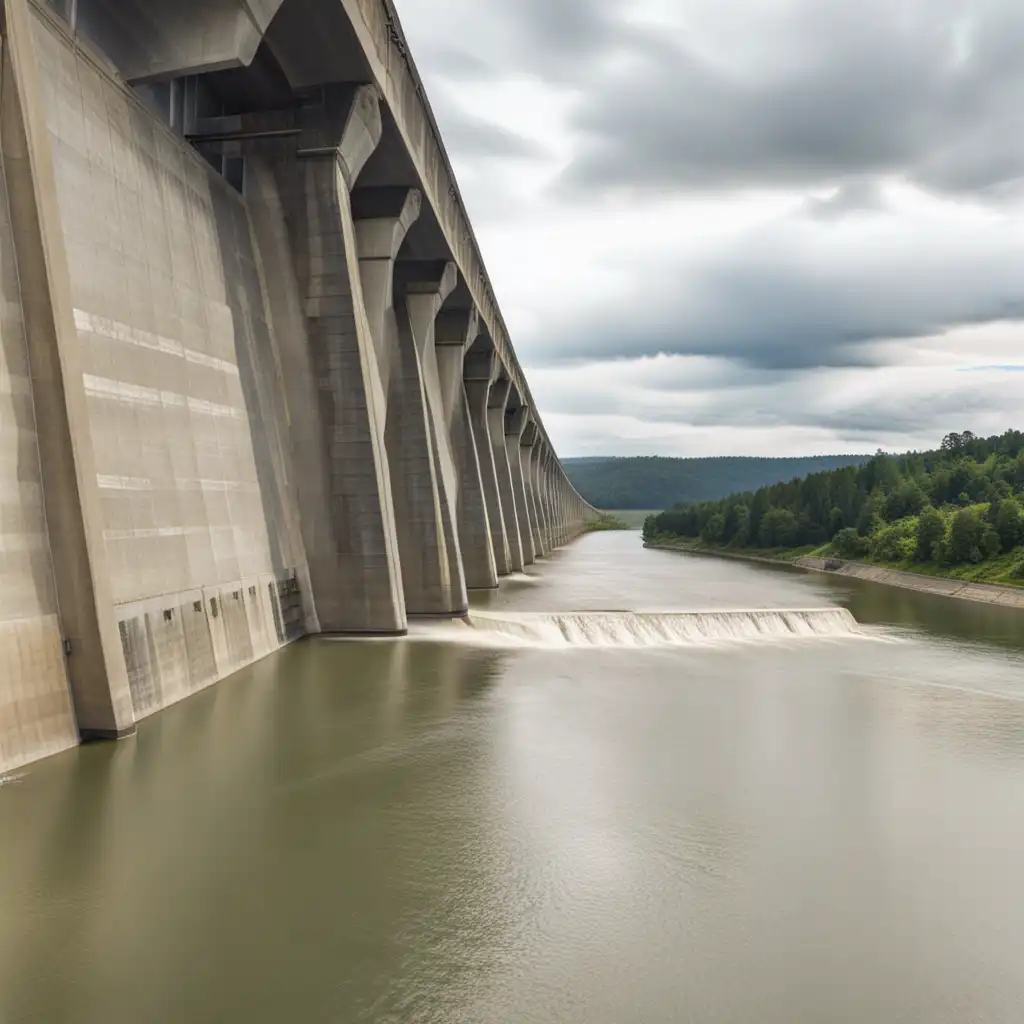
A structure built across a river to stop the water flow
The beavers built a dam to make a pond for themselves.
dam
dæm
Chargement…
dæm
A structure built across a river to stop the water flow
The beavers built a dam to make a pond for themselves.
dæm
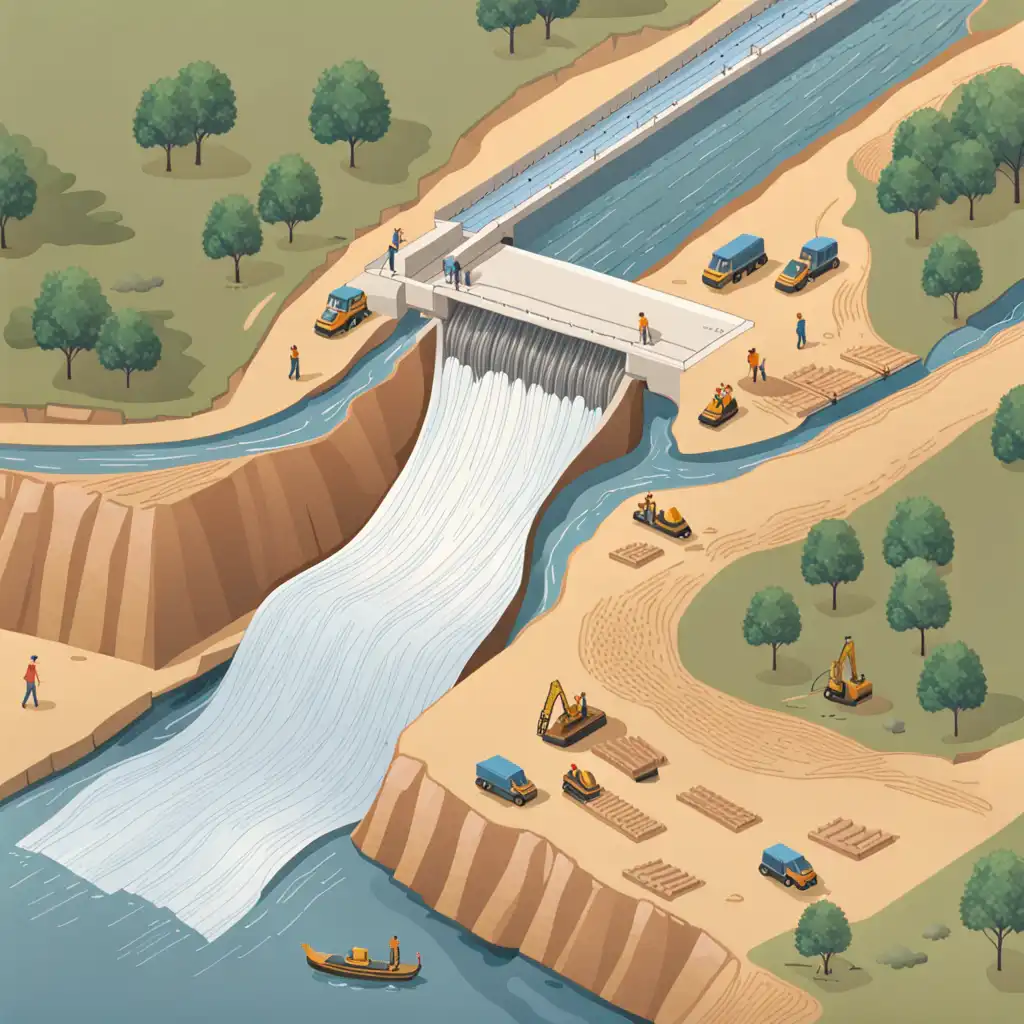
To build a dam in a river to stop the water flow
The government decided to dam the river to generate hydroelectric power.

dæm
In reference to a female parent of an animal especially horses and rabbits
The pedigree of a horse usually lists both the sire and the dam.
dæm
A barrier or obstruction in an process or progress
There are several dams in the process of policy implementation.
Impossible de charger l’audio. Réessayez plus tard.
The word "dam" refers to a barrier constructed across a river or other waterway in order to increase water storage and control its flow. Dams can be used to generate hydroelectricity or to supply water for irrigation, drinking, and other uses. They are typically constructed using concrete or earth and can vary greatly in size, from small dams that block streams to massive structures that span entire valleys. The word "dam" can also refer to a mother animal's offspring, such as a beaver dam or a duck dam.
A barrage is a series of large guns or the heavy fire from them. But in civil engineering, a barrage is a dam built across a river or other watercourse to create a reservoir of water.
A dam is a barrier or structure built across a river or other watercourse to hold back and control the flow of water. Dams are also used for the same purposes as barrages but are usually larger and may be used to create hydroelectric power.
So, while both barrages and dams are used to manage water flow, a barrage is generally smaller and used more for irrigation, while a dam is larger and may be used for hydroelectric power generation.
Ouvrir le mot: Barrage →A barrier is usually something that prevents or limits movement from one side to the other. It could be a fence, a wall, a barricade, or even a psychological barrier like fear or prejudice.
Barriers are often used to make environments safer or to separate things that don't belong together, like keeping people away from an area that is dangerous or protecting crops from animals.
A dam can be used to store water, generate electricity, or prevent flooding. Unlike a barrier, which is meant to keep things apart, a dam is used to control the flow of water and can be opened or closed to regulate the amount of water that flows through.
Ouvrir le mot: Barrier →Dyke (also spelled "dike") refers to an embankment or wall built to hold back water and prevent flooding. It is also used as slang to refer to a lesbian woman.
Dam describes a large water barrier, while dyke describes a smaller barrier such as an embankment or wall.
However, it is important to note that dyke can be considered a derogatory term when used as slang, and should be avoided.
Ouvrir le mot: Dyke →A dam is a barrier built across a river or stream to hold back its water and creating a stored reservoir behind it. Dams are typically larger and taller structures than embankments and often have gates or spillways that allow water to be released for various purposes such as hydroelectric power, irrigation, or flood control.
An embankment is a raised strip of land or earth built along the banks of a river or other body of water to prevent flooding.
Embankments are usually smaller and lower than dams and do not have mechanisms for releasing water. Instead, they rely on their height and slope to redirect and control the flow of water, protecting the surrounding area from flooding.
A dam is used to store large amounts of water and release it for specific purposes, while an embankment is used to redirect water and prevent flooding.
Ouvrir le mot: Embankment →A levee is an embankment or a wall that is built along the bank of a river to prevent it from overflowing during floods.
So, while a dam is used to control water flow, a levee is used to control flooding. Dams are used to hold back water behind a barrier, while levees are used to divert water.
Ouvrir le mot: Levee →A reservoir is a man-made lake that is created by constructing a dam.
In other words, a dam is a structure that holds back water, while a reservoir is the body of water that is created as a result of the dam.
Reservoirs are created when a dam is built across a river or other body of water. They are used for a variety of purposes, including providing water for irrigation, generating electricity, and supplying drinking water to cities and towns.
Overall, dams are the structures that hold back water, while reservoirs are the bodies of water that are created behind dams.
Ouvrir le mot: Reservoir →A sluice is a gate that controls the flow of water.
It is used to regulate the amount of water that flows through a channel, river or other waterway. Sluices are usually made of wood or metal and can be opened or closed to control the water flow.
Sluices are commonly used in water management systems such as canals and irrigation channels.
The main difference between a dam and a sluice is that a dam is used to hold back water and create a reservoir, while a sluice is a gate that is used to control the flow of water in a waterway.
Ouvrir le mot: Sluice →It is typically much taller and wider than a weir and is used to generate electricity or provide irrigation.
A weir is a low barrier built across a river or stream to divert a portion of the water flow, raise the water level or measure the flow rate of water.
A dam is a large structure to store and control water flow, while a weir is a smaller structure that normally diverts or measures the water flow.
Ouvrir le mot: Weir →So important is their dam to them, that if they detect the slightest leak, usually by hearing the sound of trickling water,
Voir sur YouTube ↗When the government undertakes or approves a major project such as a dam or highway project, it must make sure the project's impacts, environmental and otherwise, are considered. In many cases, NEPA gives the public its only opportunity to be heard about the project's impact on their community.
in this rare night footage a giant salamander struggles back upstream after becoming trapped in a dam spillway when the banks of rivers are covered in concrete for flood control the salamanders habitat is destroyed so
Voir sur YouTube ↗Dams have harmed our wildlife and made rivers less useful for recreation.
which controlled the entire Yellow River and had the ability to bring hundreds of thousands of people together to build dams and canals and regulate the river and prevent the worst floods and droughts and raise the level of prosperity for everybody.
Voir sur YouTube ↗We don't want tradition. We want to live in the present and the only history that is worth a tinker's dam is the history we make today.
for an arch-gravity dam. This design curves upstream, using the force of oncoming water to push the structure into its supports— in this case the canyon walls. Arch dams have been built since ancient times, but never on such a massive scale.
Voir sur YouTube ↗Law and order exist for the purpose of establishing justice and when they fail in this purpose they become the dangerously structured dams that block the flow of social progress.
like the breaking of a dam the glaciers upstream will accelerate 2 to 3 4 times their normal speed that ice gets funneled directly into the ocean and raises sea level this is the crane glacier which used to flow into the
Voir sur YouTube ↗What we call happiness in the strictest sense comes from the (preferably sudden) satisfaction of needs which have been dammed up to a high degree.
developed a deep-rooted fear of water months of therapy have rebuilt his confidence today he faces a big challenge we're going down to the big dam and trying to help him get over his
Voir sur YouTube ↗Never give up; for even rivers someday wash dams away.
Months of therapy have rebuilt his confidence. Today he faces a big challenge. We're going down to the big dam and trying to help him get over his fear of water. Come on let's go see.
Voir sur YouTube ↗Publish and be dammed.
thought processes or if it is just going on blind instinct but they really do not know how to engineer a landscape the whole reason they build the dams is to create a certain depth of water if this is a deep river behind us
Voir sur YouTube ↗The Pacific Northwest depends on inexpensive renewable energy from our dams.
electrons in this rare night footage giant salamander struggles back upstream after becoming trapped in a dam spillway when the banks of rivers are covered in concrete for flood control the
Voir sur YouTube ↗We have an extensive system of highways, ports, locks and dams, and airports.
environments that flow of material is incredibly important technologically and building dams disrupts that but there's another aspect rivers in terms of flow back upstream that most people don't tend to think about and in the northwest that's greatly mediated by salmon because when salmon leave their native
Voir sur YouTube ↗I feel the dams of emotions open up more easily when one is acting.