flintlock
noun flintlock
ˈflɪntlɑːk
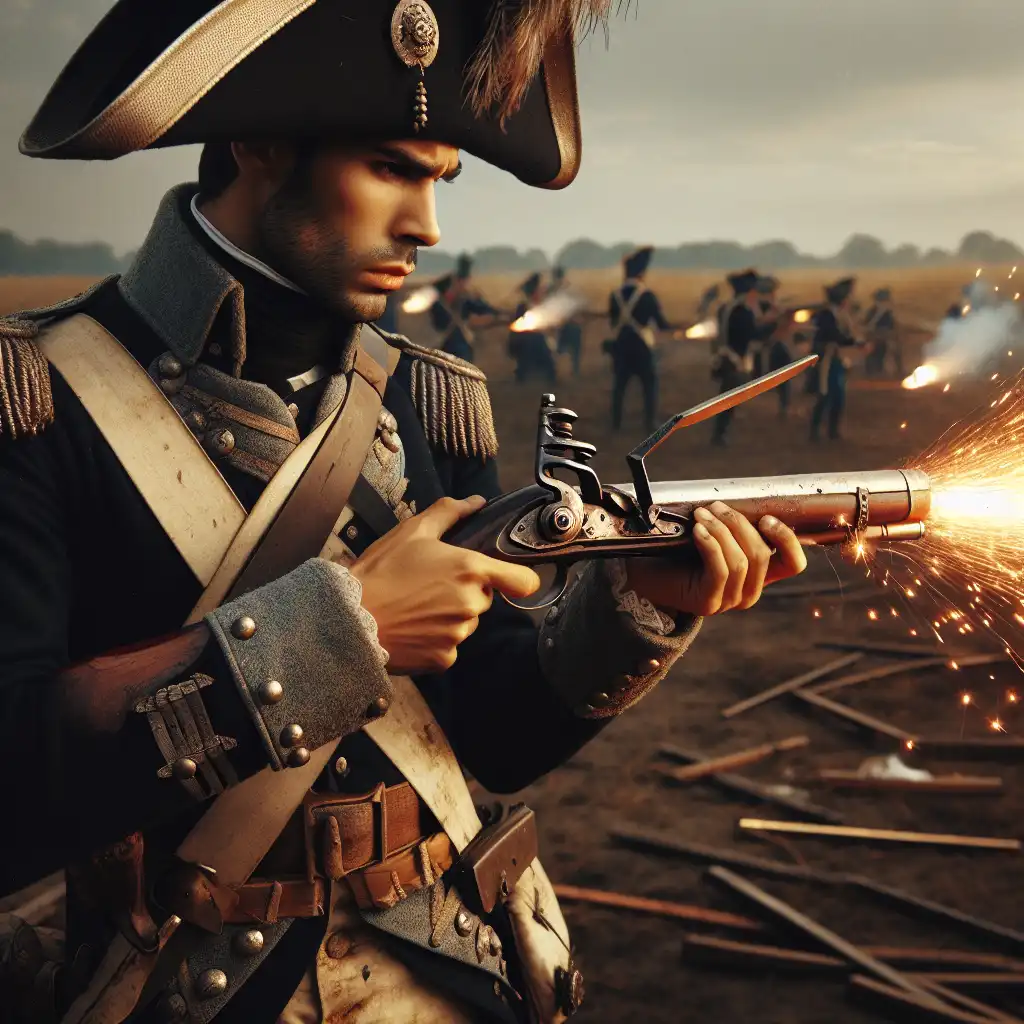
An old type of gun that used a piece of flint to create a spark and fire the gun.
The soldiers in the 18th century often used flintlock rifles in battles.
flintlock
ˈflɪntlɑːk
लोड हो रहा है…
ˈflɪntlɑːk
An old type of gun that used a piece of flint to create a spark and fire the gun.
The soldiers in the 18th century often used flintlock rifles in battles.
ˈflɪntlɑːk
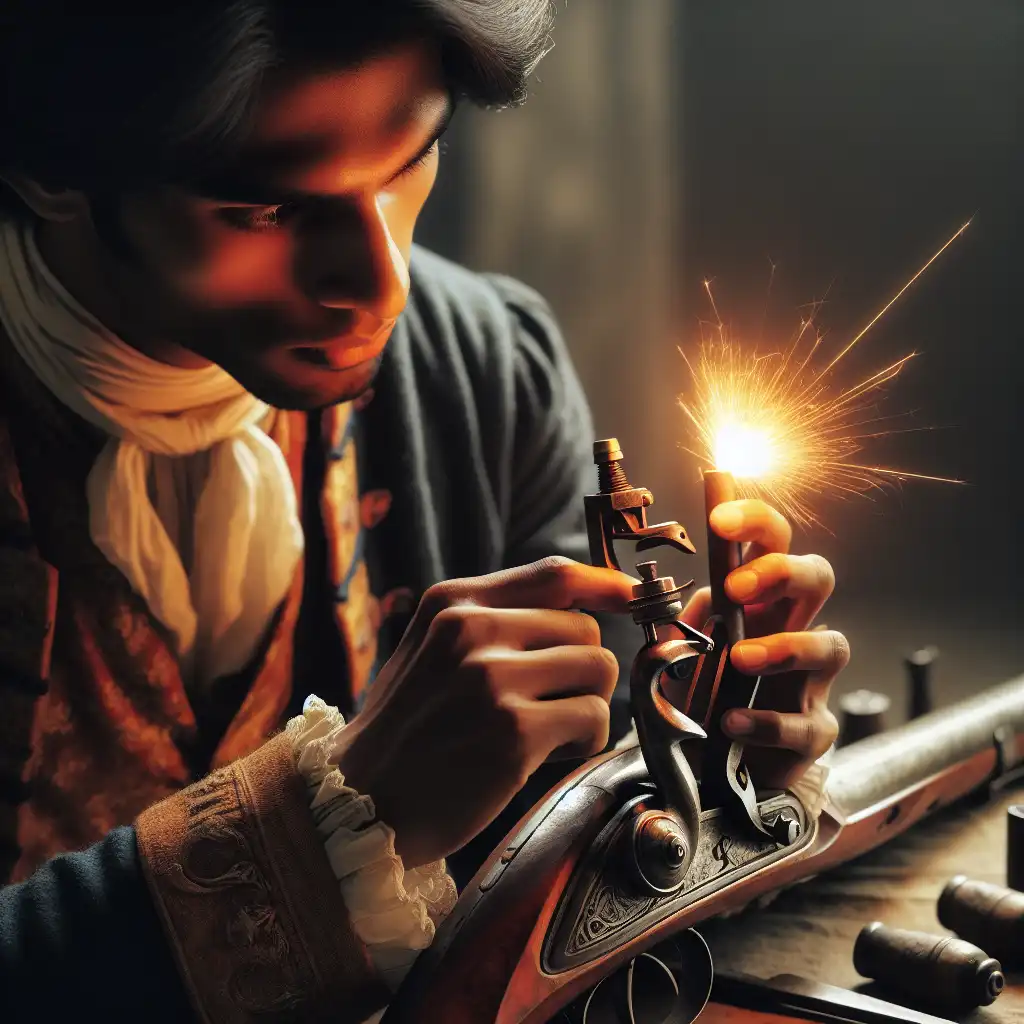
A mechanism in such guns that creates a spark from a flintstone to fire the gun.
He is studying how the flintlock mechanism in these old guns worked.
ऑडियो लोड नहीं हो सका। कृपया बाद में फिर कोशिश करें।
A flintlock is an old type of gun that was used in the past, before more modern types of guns were invented. It works by using a piece of flint to strike a spark and ignite gunpowder in order to shoot a bullet. You might hear the word 'flintlock' when reading about history or watching a movie or TV show that takes place in the past, such as a western or a movie about pirates.
A firearm is a general term used to refer to any weapon that uses gunpowder to propel a bullet, such as pistols, rifles, or shotguns.
A flintlock is a specific type of firearm that was commonly used during the 17th and 18th centuries. It's called a flintlock because it uses a piece of flint to create a spark that ignites the gunpowder and propels the bullet forward.
So basically, firearm is a general term that can refer to a wide variety of guns, while flintlock is a specific type of firearm that was used in the past.
शब्द खोलें: Firearm →A flintlock is a type of gun that was used before modern firearms were invented. It works by using a piece of flint to create a spark that ignites gunpowder and fires a bullet.
The term gun is a more general term that refers to any handheld weapon that fires projectiles.
Guns can be powered by various mechanisms, such as compressed gas or electronic ignition.
Flintlock is a type of gun that uses a piece of flint to create a spark and ignite gunpowder, while gun is a general term for any handheld weapon that fires projectiles, regardless of its specific mechanisms.
शब्द खोलें: Gun →A musket is a type of long gun with a smooth bore barrel that was commonly used in warfare in the 18th and 19th centuries.
In other words, a musket is a type of gun, while a flintlock is a specific mechanism used to fire that gun.
Musket can refer to any firearm with a long barrel and smooth bore, while flintlock specifically refers to guns that use a piece of flint to make a spark that ignites the gunpowder.
Both of these terms are applicable in the context of historical weaponry. Muskets were commonly used in warfare during the Revolutionary War, while flintlocks were a popular firing mechanism for guns during the colonial era.
शब्द खोलें: Musket →A pistol is a type of handgun that can use different technologies to fire bullets, such as a hammer or firing pin.
Both flintlocks and pistols can be used in various situations, such as hunting, self-defense, or military combat.
However, flintlocks are typically older and less commonly used today, while pistols are more modern and widely used.
A flintlock is an older type of gun that relies on a spark from a piece of flint to ignite the gunpowder, while a pistol is a more modern type of handgun that uses different firing mechanisms.
शब्द खोलें: Pistol →A rifle is a type of firearm that is designed with grooves in the barrel to spin the bullet as it is fired, improving accuracy and distance.
Unlike a flintlock, which uses gunpowder and a spark to ignite it, a rifle uses a primer to ignite the gunpowder. Rifles are used for a wide range of purposes, including hunting, recreational shooting, and military and law enforcement operations.
A flintlock is an older type of firearm that uses a spark from flint to ignite gunpowder, while a rifle is a more modern firearm that uses a primer and grooves in the barrel to improve accuracy.
Flintlocks are historically significant and have a certain charm, but rifles are generally more practical for modern purposes.
शब्द खोलें: Rifle →Brass Trunk Corner %\PIPE%...
YouTube पर देखें ↗