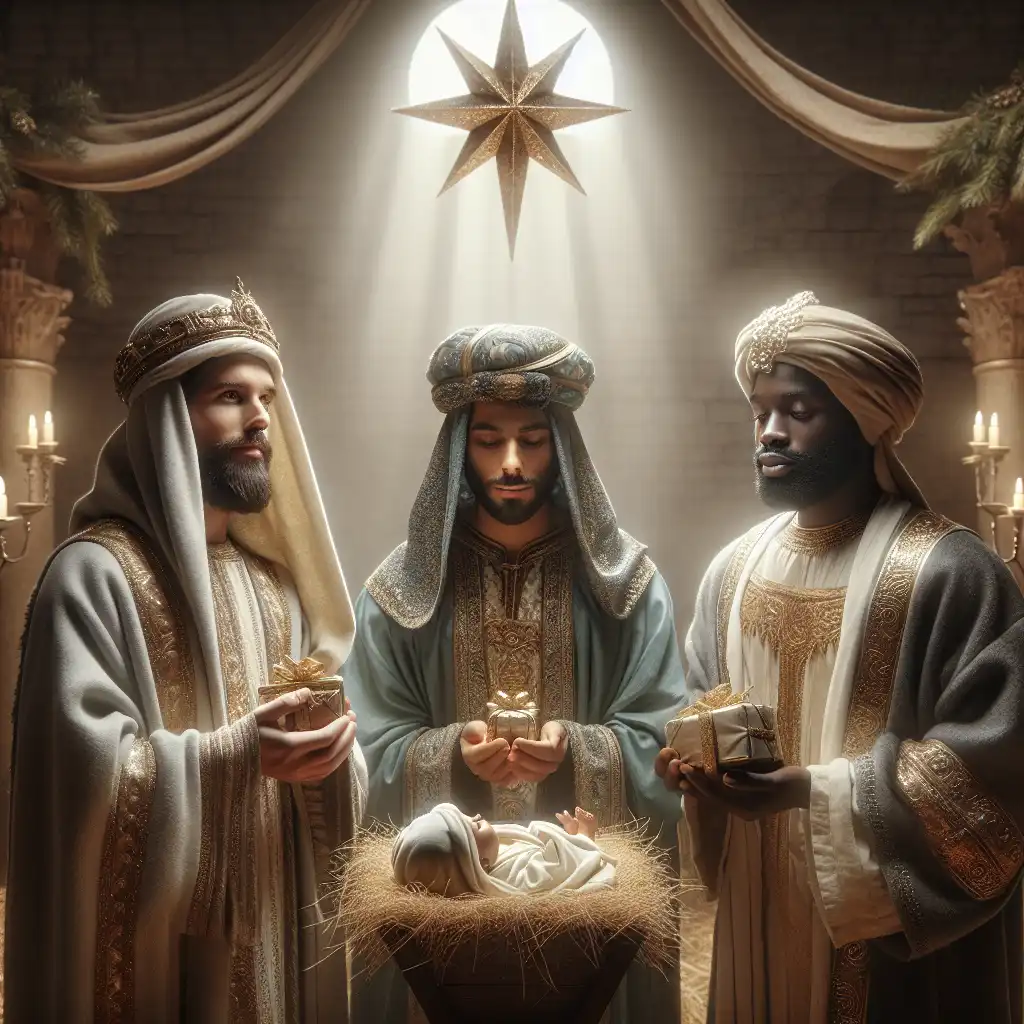
The word 'magi' typically refers to wise men or kings who visited baby Jesus in the Christian religious story. It can also refer to people who are seen as wise or knowledgeable in general. However, the word is not commonly used in everyday conversation and is found mostly in historical, literary, or religious contexts.
An astrologer is a person who studies the positions and movements of the planets and other celestial objects to make predictions or understand personalities.
They typically use astrology charts to provide insight into one's life path, strengths, and weaknesses. Astrologers are often consulted for horoscopes and compatibility readings.
In summary, astrologers focus on the study of the planets and how they affect human personality and fate, while magi are wise and knowledgeable individuals who have supernatural abilities.
Astrologers are applicable in areas such as horoscopes and compatibility readings, while magi can be found in ancient stories and religions.
Magi refers to wise men or astrologers who are skilled in predicting the future based on the movement of celestial bodies, while the word prophet refers to someone who can predict or foretell the future by receiving direct messages from a divine source, such as God.
Magi are typically associated with the Christian story of the Three Wise Men who bring gifts to the baby Jesus, while prophets can be found in various religions, such as Judaism, Christianity, and Islam.
In terms of applicability, magi are often consulted for advice on matters relating to astrology or astronomy, while prophets are seen as spiritual guides and messengers who can help people understand and follow the will of God.
Sage refers to a person who has great wisdom or knowledge in a particular field or subject. This can refer to someone who is an expert in their profession, such as a sage lawyer or a sage scientist.
It can also refer to someone who is respected for their wise advice, such as a sage mentor or a sage friend.
Magi refers to a specific type of wise men with supernatural powers, while sage refers to a wise and knowledgeable person in general.
A seer is a person who is believed to have the power of clairvoyance or prophecy. In ancient times, seers were respected figures who provided guidance to rulers and important figures.
Seers are often associated with divination and the ability to see into the future.
Magi refers to people skilled in magic or astrology, while seer refers to a person who has the power of prophecy or clairvoyance.
Magi are more commonly associated with fantasy and mythology, while seers are more rooted in ancient or mystical beliefs.
Wizard usually refers to somebody who has magical powers or abilities, often in a fictional or fantasy context.
It suggests someone who can cast spells, control elements, or perform other fantastical feats of magic. Wizard is mostly used in literature, movies, and TV shows that have magical/fantasy themes.
Magi has a historical and sometimes religious connotation, while wizard is more commonly used in fantasy/fictional contexts.
The deep learning techniques, while relatively easy to learn, are quite foreign to traditional engineering modalities. It takes a different mindset and a relaxation of the presumption of control. The practitioners are like magi, sequestered from the rest of a typical engineering process.