
imitation
noun imitation
ˌɪmɪˈteɪʃn
The act of copying someone or something.
His imitation of the teacher was so funny that the whole class laughed.
imitation
ˌɪmɪˈteɪʃn
불러오는 중…
ˌɪmɪˈteɪʃn
The act of copying someone or something.
His imitation of the teacher was so funny that the whole class laughed.

ˌɪmɪˈteɪʃn
Something that is made to look like something else, typically as a cheaper version of it.
She bought an imitation leather bag because it was less expensive.

ˌɪmɪˈteɪʃn
Process in learning, where one models their behavior after someone else's.
Children often learn through imitation, copying their parents' behavior.
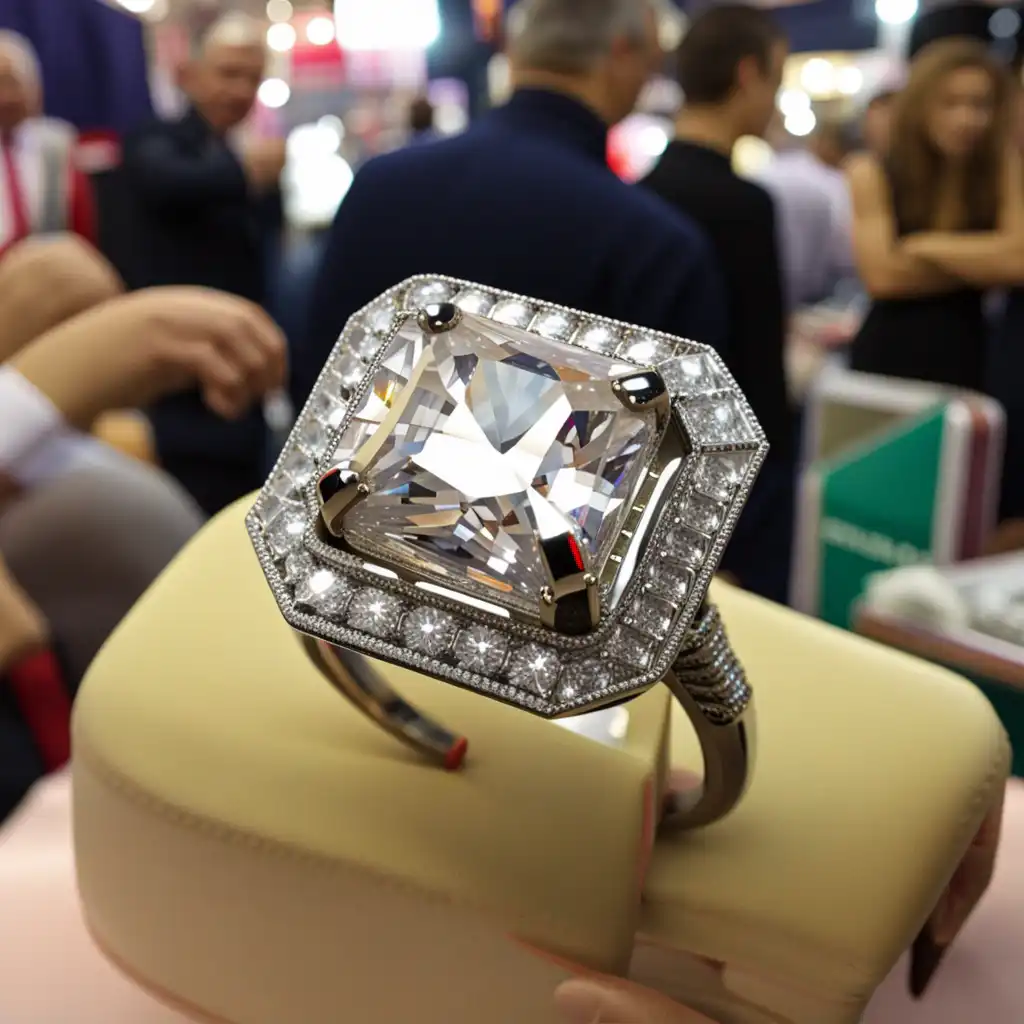
ˌɪmɪˈteɪʃn
Made to look like something else, not the real thing.
They sold imitation diamond rings at the fair.
오디오를 불러오지 못했어요. 잠시 후 다시 시도해 주세요.
The word 'imitation' means to copy or mimic someone or something. It is usually used when someone is trying to replicate the behavior or actions of another person or trying to recreate the appearance or properties of an object. For example, if you are trying to learn how to play the guitar, you might imitate the chords and strumming patterns of your favorite song. Similarly, if you are trying to create a painting, you might imitate the colors and brush strokes of a famous artist. 'Imitation' can be used in various contexts, but it always means copying or replicating something.
Artificial refers to something that is made or produced by human intervention, often with the use of technology or chemicals.
For example, artificial sweeteners are compounds that are created in a lab to mimic the taste of sugar, while artificial intelligence (AI) is a type of computer program that can simulate human thought processes.
Artificial describes something that is created by humans, while imitation describes something that is copied from something else.
단어 열기: Artificial →Copy refers to making an exact replica of something. For example, copying a painting means making an identical one with the same colors, shapes, and details.
단어 열기: Copy →Counterfeit refers to something that is fake or a copy of the original intended to deceive people. For example, counterfeit money is fake money that is made to look like real money.
Counterfeit is used when something is intentionally fraudulent or deceptive, whereas imitation is used when something is similar but not necessarily intended to deceive.
단어 열기: Counterfeit →Duplicate means to make an exact copy of something. It's used when we want to create an identical twin of something.
For example, if you make a photocopy of a document, you're creating a duplicate.
The main difference is that duplicate has the intention of being exactly the same as the original, while imitation seeks to mimic some qualities of the original but not be a replica.
단어 열기: Duplicate →Fake refers to something that is not authentic or real, often made to look like the real thing but is not. It's used to describe something that is intended to deceive people into thinking it's something it's not.
For example, a fake designer handbag or a fake diamond.
The difference between the words fake and imitation is that fake describes something that is intended to deceive people while imitation describes something that is not intended to deceive anyone.
단어 열기: Fake →Mimicry means copying something very closely and trying to make it seem like the original. For example, a parrot that can perfectly imitate a human's speech is exhibiting mimicry.
Imitation is applicable when someone wants to create something similar to another thing but with some variations, while mimicry is useful when someone wants to closely reproduce another thing to make it seem like the original.
단어 열기: Mimicry →Replica refers to an exact copy of something, made to look and function exactly like the original. For example, a replica of a famous sculpture would be an identical copy, down to the smallest detail.
Imitation is a copy that has some differences from the original, while a replica is a copy that is exact in every way. Depending on the situation, either word could be used more appropriately.
단어 열기: Replica →Imitation refers to copying or replicating something, while simulation refers to creating a model or virtual representation of something.
Simulation is often used in fields such as engineering or aviation to create virtual models or scenarios to test equipment or procedures.
Imitation is about copying something that already exists, while simulation is about creating something new that mimics or represents something else.
단어 열기: Simulation →For one thing they must be involved in things like imitation and emulation. Because to imitate a complex act requires my brain to adopt the other person's point of view. So this is important for imitation and emulation. Well why is that important? Well let's take a look at the next slide.
YouTube에서 보기 ↗The bad gains respect through imitation, the good loses it especially in art.
practicing until it can match the song it memorized. As the bird learns hearing the tutor’s song over and over again is helpful— up to a point. If he hears it too many times the imitation degrades— and the source matters.
YouTube에서 보기 ↗In everything truth surpasses the imitation and copy.
live the active outdoor life participating in the same activities as the men in greece and that stark difference made a deep impression on the greeks this difference did inspire admiration not imitation i found out about this when we were searching for images for
YouTube에서 보기 ↗I wouldn't disrespect myself or my art with any imitations.
Here the insect imitations have been replaced with fluffy imitation mice.
YouTube에서 보기 ↗Of course as children, we all, in all cultures and societies, learn behavior from observation, imitation, and encouragement of various kinds. So by the suggestion made, we all 'pretend' most of the time.
and the jobs we hope to create aren't going to stick unless they're jobs that people want. And I know the point of this conference is to celebrate things that are near and dear to us, but I also know that clean and dirty aren't opposites. They're two sides of the same coin just like innovation and imitation,
YouTube에서 보기 ↗Narrative cinema is just an imitation of life. Why would you prevent yourself and the audience of the same images, of the same that happened in real life?
for eight hours a day. There are none of the nuanced cues that help you read a room. Staring at disembodied heads on a screen offers only a pale imitation of real human connection. Social anxiety only makes this worse. When you have a camera in your face,
YouTube에서 보기 ↗I don't know if there is any one secret to successful writing, but one important step is to move beyond imitation and discover what you can write that no one else can - that is, find out who you are and write that in an appropriate narrative and style.
simulation of the other person's action now what is the significance of these mirror neurons for one thing there must be involved in things like imitation and emulation because to imitate a complex act it requires my brain to adopt the other person's point of view so this is important for imitation and emulation
YouTube에서 보기 ↗Art should be life. It's an imitation of life. It should have some humanity in it.
I do like sympathy. I do like magic. So when I click on "sympathetic magic," I get sympathetic magic and voodoo dolls. This is the boy in me getting lucky again. Sympathetic magic is imitation. If you imitate something maybe you can have an effect on it.
YouTube에서 보기 ↗I propose not our enemies as an example for our general imitation, yet, as their navy is the best regulated of any in the world, we must, in some degree, imitate them and aim at such farther improvement as may one day make ours vie with - and exceed - theirs.
making an imitation of that trainer's whistle. If you hummed this tune to your dog or cat and it hummed it back to you, you ought to be pretty surprised. Very few nonhuman mammals can imitate sounds. It's really important for our music and our language.
YouTube에서 보기 ↗Cartoons ran into trouble when they became too much like real life images. Cartoons had become poor imitations of the real thing.
it can't be helped. But where does this sound, commonly described as a click come from? Is it simply the byproduct of a crude mechanical action? Or is it an imitation
YouTube에서 보기 ↗The best imitation in the world is not half as good as a poor original.