pare
verb pare
per
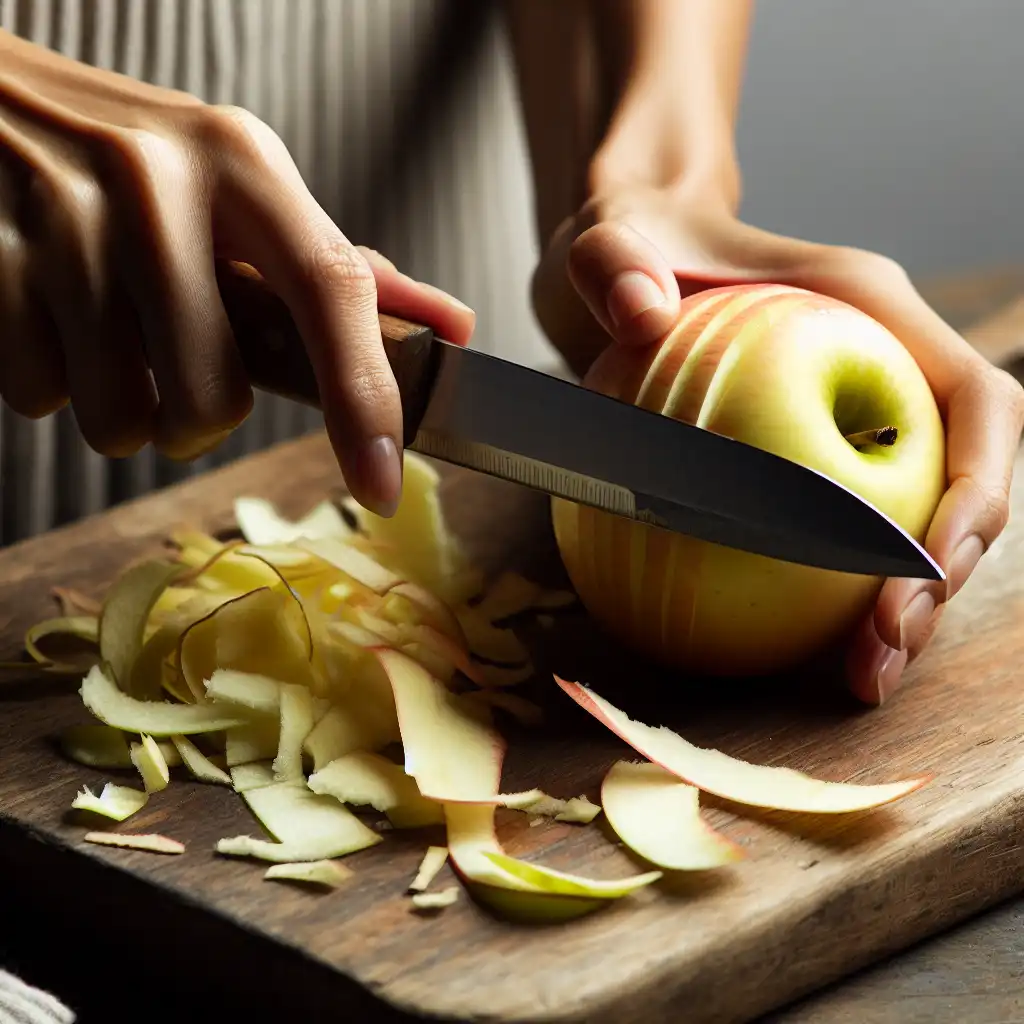
To cut away the outer layer or to remove extra parts from something, often with a knife.
He carefully pared the apple peel with a sharp knife.
pare
per
Cargando…
per
To cut away the outer layer or to remove extra parts from something, often with a knife.
He carefully pared the apple peel with a sharp knife.

per
To reduce or lessen something, particularly expenses or amounts.
The company needed to pare down its expenses to survive the economic downturn.
No se pudo cargar el audio. Inténtalo de nuevo más tarde.
The word 'pare' means to remove the outer layer or skin of something, usually with a sharp tool. For example, you can pare an apple by removing its skin with a knife. It can also mean to reduce something, such as paring down a list of options or expenses. It is a useful word to use in cooking, gardening, or any activity that involves removing the outer layer of something.
Cut back means to reduce the amount of something, often in order to save money or resources. For example, if you usually spend $100 a week on groceries but want to save money, you might cut back and only spend $75 a week instead.
Cut back is more often used in reference to reducing quantity or cost, while pare is more often used in reference to refining or improving quality.
Abrir palabra: Cut back →Decrease means to make something less or lower in quantity, size or intensity.
It can be used in a variety of contexts such as decreasing the volume of music, decreasing the amount of sugar in a recipe, or decreasing the number of employees in a company.
Decrease is used when referring to reducing the quantity or intensity of something, while pare is used when referring to trimming or cutting away excess material to make something smoother or more refined.
Abrir palabra: Decrease →Pare means to remove the outer layer or thin layer of something using a sharp knife or peeler. This is often used when preparing fruits and vegetables, where the outer layer is not edible or may be tough.
Peel means to remove the outer layer of something by pulling or tearing it off. This is often used for items like oranges, bananas, and apples, where the outer layer is edible but may be tough or have a bitter taste.
Pare is used to remove a thin outer layer of something while peel is used to remove the thicker outer layer of something by tearing it off.
Abrir palabra: Peel →Reduce means to make something smaller or lessen its quantity, size, or intensity. It is applicable when you want to decrease the amount or size of something.
For example, when you reduce the heat on a stove, you decrease the intensity of the flame, making the temperature lower.
Pare is about removing unnecessary parts, while reduce is about making something smaller or less intense.
Abrir palabra: Reduce →Pare refers to cutting or trimming off the outer layer of something with a knife or a similar tool. This usually implies that you're removing something in thin slices, like when you pare a potato.
The phrase shave off is used when you're removing something with a razor or a sharp blade. This is often used to refer to facial hair or other types of hair removal.
Pare is more commonly used for food preparation or small-scale trimming projects, while shave off refers to larger-scale cutting or hair removal.
Abrir palabra: Shave off →Strip means to remove multiple layers or to make something bare. It is applicable in situations where you need to take off all the layers or coverings of something, such as removing the wallpaper from a wall, or stripping the bark from a tree.
Abrir palabra: Strip →Trim means to make something neat or even by cutting away the excess or uneven parts. For example, you might trim the edges of a piece of paper to make it fit better in a frame.
So, in short, pare is used when you want to remove the outer layer of something, while trim is used when you want to make something neat or even by cutting away excess parts.
Abrir palabra: Trim →Both pare and whittle refer to the act of cutting away small pieces of something using a tool like a knife or a blade.
Whittle usually refers to the act of shaping or carving something into a particular shape, like carving a stick into a spear or carving a piece of wood into a figurine.
Pare is used when you want to remove something from the surface of an object, while whittle is used when you want to create a new shape or design from an object by cutting it away.
Abrir palabra: Whittle →The First Militaristic...
Ver en YouTube ↗You will find the poet who wrings the heart of the world, or the foremost captain of his time, driving a bargain or paring a potato, just as you would do.
Craig Venter: On the...
Ver en YouTube ↗I try to keep my sentences quite pared back. What I really want to do is observe people's relationships and interactions. I don't want language to get in the way of that. It's quite a difficult process to achieve that, for the language to feel clear.
Composing gives me a chance to work in multiple dimensions and helps me pare down my melodies into what is essential. Learning new skills has always energized me and scoring has opened up a world of sonic possibilities.
It was nice, though, to have the long term benefit to be able to pare away those things and eventually make the character my own and put my own unique stamp.
The artist, like the God of the creation, remains within or behind or beyond or above his handiwork, invisible, refined out of existence, indifferent, paring his fingernails.
Books provide context and allow you to think about things over time. Film is like writing haiku; there is an immense amount of pleasure in paring down and paring down. But it isn't the same.
So-called designer bags are useless, and most are also ugly, faddish and overpriced. Pared down and sleek is always best.
I'm really proud of myself because I've pared my beauty regimen down to a cream blush and berry-tinted lip balm, which has saved me so much time.
Rewriting is a large part of the whole job. And get rid of stuff that's not working. Just pare it down until it's a beautiful thing you can hand in, probably late, to your editor.
I'm interested in fashion; I buy fairly good pieces, and I think as I've gotten older, I've pared down a lot.