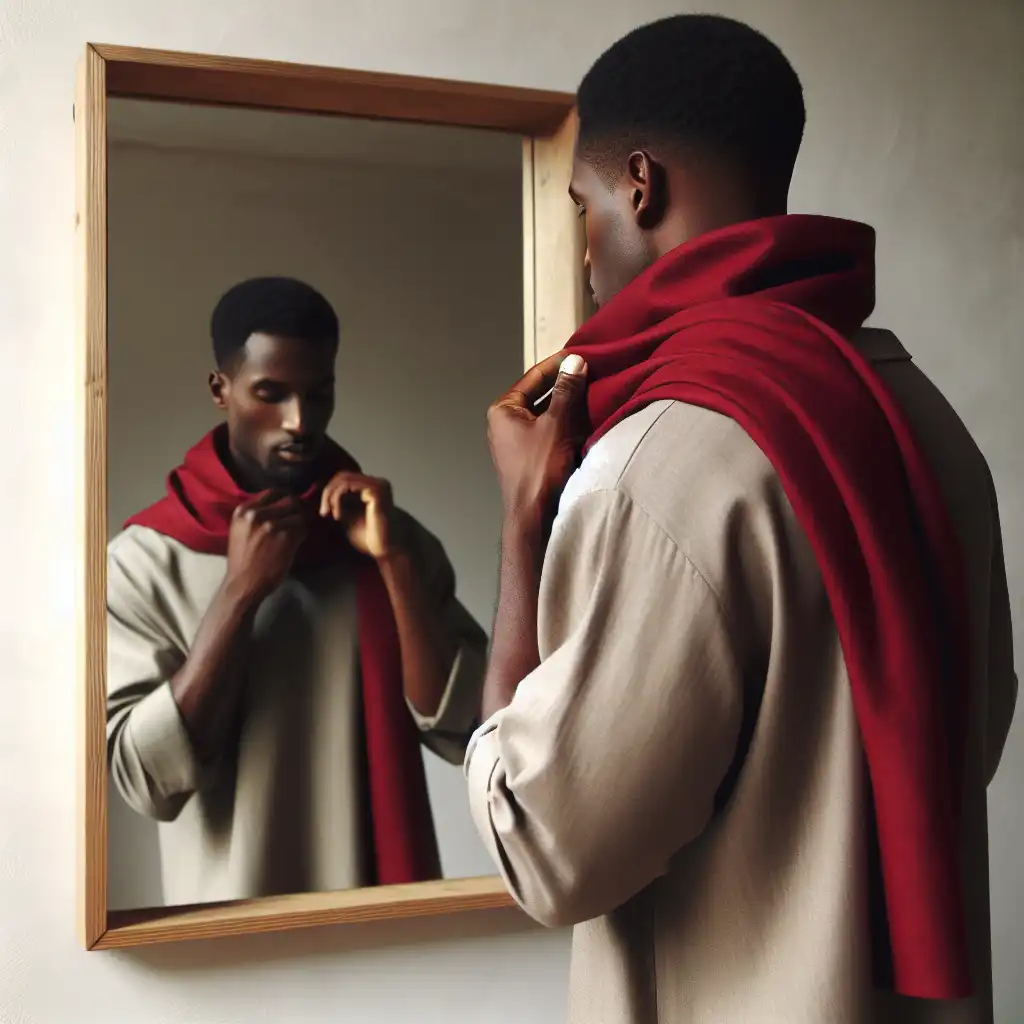
oneself
pronoun oneself
wʌnˈself
Used to refer to the person who is the subject of the verb, used after the verb or preposition.
One should take care of oneself.
oneself
wʌnˈself
불러오는 중…
wʌnˈself
Used to refer to the person who is the subject of the verb, used after the verb or preposition.
One should take care of oneself.

wʌnˈself
Used to emphasize the person who is the subject of the verb, to show they are doing something on their own or without help.
She baked the cake herself.

wʌnˈself
Used to reflect back to the subject, it shows that the action affects the person who performs it.
He hurt himself while playing football.
오디오를 불러오지 못했어요. 잠시 후 다시 시도해 주세요.
'Oneself' is a word that means 'me' or 'myself'. It is used to talk about the person who is speaking or writing, and it is often used when the writer or speaker wants to avoid using words like 'I' or 'me' too much. For example, instead of saying "I like to read books", you could say "One likes to read books". This might be used in more formal writing, such as academic essays or business reports.'Oneself' can also be used in sentences like "One should take care of oneself" which means 'You should take care of yourself'. This is used to talk about a general rule or advice that applies to everyone. Overall, 'oneself' is a formal and polite way to talk about oneself, and it is often used in academic or professional writing. For everyday conversation, it is more common to use 'I' or 'me'.
Ego refers to a person's sense of self-importance or self-esteem.
Essentially, ego is about how a person views themselves in relation to others, whereas oneself is about understanding oneself as a unique individual.
단어 열기: Ego →Identity is the qualities, characteristics, and beliefs that make a person unique and different from others. It is the way a person perceives and defines themselves in relation to the world around them.
Identity is applicable when talking about a person's personality traits, cultural background, and personal beliefs. Oneself is applicable when referring to an individual's physical and emotional state, and their inherent nature as a person.
Identity is a broader term that encompasses various elements that make a person who they are, while oneself refers more specifically to the individual themselves.
단어 열기: Identity →Individual refers to a single person or being, while the word oneself refers to the person speaking or writing.
For example, if someone is talking about a group of people and wants to single out one person, they might say "that individual over there." If they are talking about their own thoughts or actions, they might use the word oneself to refer to themselves, as in "one must always be honest with oneself."
Individual is used to refer to a specific person or thing, while oneself is used to refer to the person speaking or writing.
단어 열기: Individual →Me is a pronoun that refers to oneself in the first-person singular form. It is commonly used in everyday conversations and is applicable when talking about oneself.
For example, "I am feeling happy" uses the pronoun me in a casual conversation. On the other hand, "One must take care of oneself" uses the pronoun oneself in a more formal and impersonal manner.
단어 열기: Me →It is used when talking about personal feelings, actions or experiences. For example, "I need to take care of myself."
Person refers to any individual, and it means "someone" or "somebody."
It is used when speaking generally about people. For example, "The person next to me is reading a book."
It can also be used to refer to a specific individual, but without referencing the speaker, as in "That person over there is my friend."
Oneself is used when talking specifically about the speaker, while person is used when talking generally about people or a specific individual.
단어 열기: Person →Oneself and self both refer to a person, but oneself is used when referring to the reflexive or reflective pronoun, while self describes a person's identity or character.
For example, "I can take care of myself" uses 'myself' as a reflexive pronoun, while "I need to work on improving myself" uses 'myself' to describe a person's identity.
In other words, oneself is used when talking about the person doing the action, while self is used to talk about a person's identity or character traits.
단어 열기: Self →Oneself and yourself are both pronouns that refer to a person.
However, oneself is used in a more formal or general context, while yourself is used in a more personal or direct context.
If you were speaking directly to someone or writing informally, yourself could be used as it indicates that you are speaking to that person directly.
단어 열기: Yourself →describes several traits associated with narcissistic personality disorder. They include a grandiose view of oneself, problems with empathy, a sense of entitlement, and a need for admiration or attention.
YouTube에서 보기 ↗To love oneself is the beginning of a lifelong romance.
it is essential to do things that bring back a sense of self-worth, to surround oneself with love and with friends and activities that give back joy and meaning and identity. But even more important,
YouTube에서 보기 ↗The questions which one asks oneself begin, at least, to illuminate the world, and become one's key to the experience of others.
and we were on the beach so it was a very easy to keep cool you just said maybe a minute or two of being hot and then you were cool again and then it was just a constant process of bathing oneself is one of the things we need to come up with a solution for keeping ourselves cool I have forgotten my spray
YouTube에서 보기 ↗Politeness is a desire to be treated politely, and to be esteemed polite oneself.
that one sets for oneself in creating a language one such goal in the modern era of language creation or con langing remember that term is naturalism a naturalistic language is one that attempts as nearly as possible to
YouTube에서 보기 ↗In oneself lies the whole world and if you know how to look and learn, the door is there and the key is in your hand. Nobody on earth can give you either the key or the door to open, except yourself.
that true listening requires a setting aside of oneself. And sometimes that means setting aside your personal opinion. He said that sensing this acceptance, the speaker will become less and less vulnerable and more and more likely to open up the inner recesses
YouTube에서 보기 ↗A hero is someone who has given his or her life to something bigger than oneself.
it lasted for six months. It's a sensation of being afraid all the time but not even knowing what it is that you're afraid of. And it was at that point that I began to think that it was just too painful to be alive, and that the only reason not to kill oneself
YouTube에서 보기 ↗The object of life is not to be on the side of the majority, but to escape finding oneself in the ranks of the insane.
or that's how people think about it. There is also a rare thing called temporal lobe epilepsy, and sometimes if one has this, one may feel oneself transported back to a time and place in the past.
YouTube에서 보기 ↗The consciousness of knowing how to make oneself useful, how to help mankind in many ways, fills the soul with noble confidence, almost religious dignity.
It's highly desirable. However this is not enough. Those are just auxiliary help conditions. The experience that translates everything is within the mind. So then when we ask oneself how to nurture the condition for happiness,
YouTube에서 보기 ↗Artists should be free to create what we want. I believe there's a special value in work that is a reflection of oneself as opposed to interpretation. When I see a film or a TV show about black people not written by someone who's black, it's an interpretation of that life.
is often vitally important to determining the ethical way to act. Another argument is that there’s something unethical about being dishonest, and refusing to follow the evidence is a way of being dishonest with oneself. However perhaps there are other ethical factors in play.
YouTube에서 보기 ↗One must know oneself. If this does not serve to discover truth, it at least serves as a rule of life and there is nothing better.
that at the heart of being anti-racist is love, is loving one's country, loving one's humanity, loving one's relatives and family and friends, and certainly loving oneself.
YouTube에서 보기 ↗Every writer uses his own way to motivate oneself.