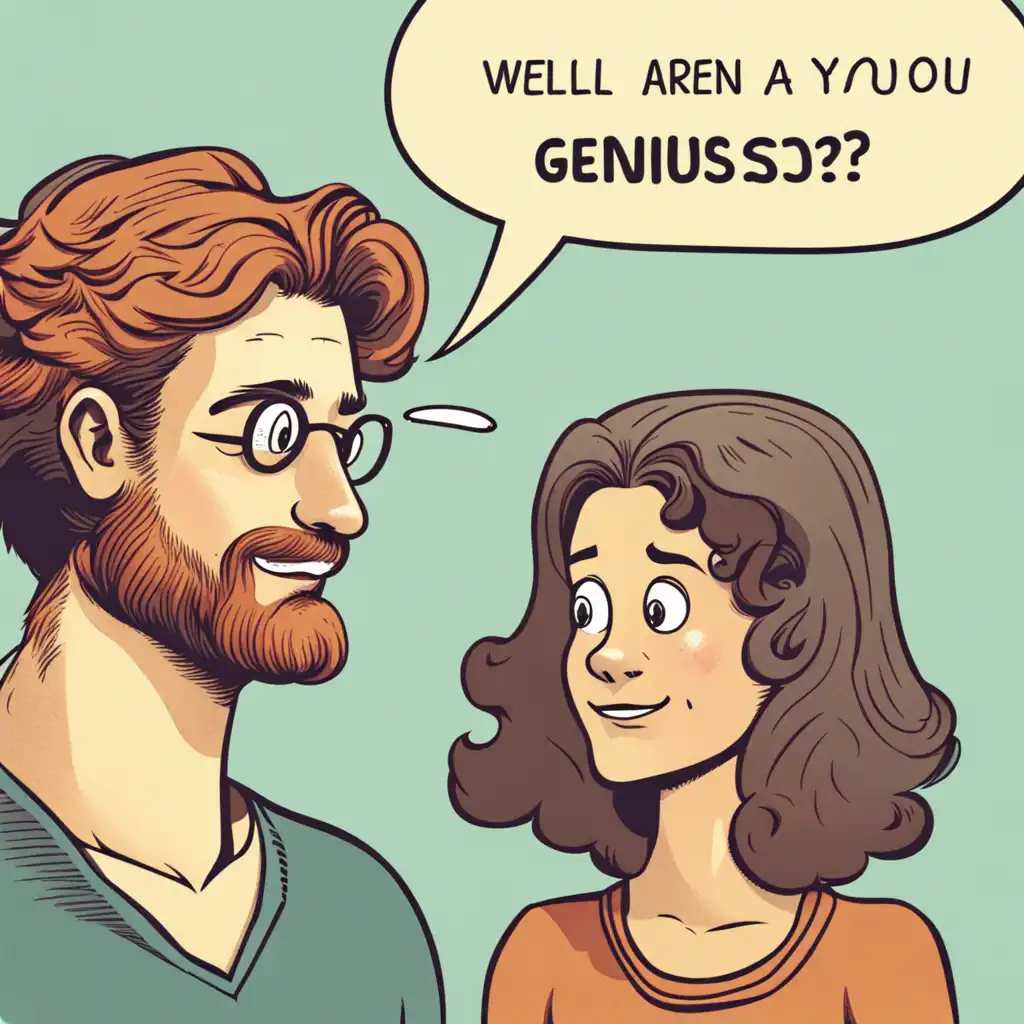
In a way that uses words that mean the opposite of what you really want to say, especially in order to insult someone, to show irritation, or to be funny.
He asked sarcastically, 'Well, aren't you a genius?'
Audio could not be loaded. Please try again later.
How to use
The word 'sarcastically' is used when you want to say something that means the opposite of what you actually mean. For example, if someone says something foolish, you can say "great idea" in a sarcastic tone to show that you actually think it's a bad idea. Sarcastic comments are often used to make a point or to express dissatisfaction with something. It's important to use sarcasm carefully because it can sometimes be hurtful or confusing if the listener doesn't understand that you are being sarcastic.
Ironically means something unexpected or the opposite of what was intended happened. For example, if someone who always preaches about healthy living dies young from heart disease, that would be an ironic situation.
The main difference is that ironically refers to a situation where something unexpected happens, while sarcastically refers to a way of speaking that is meant to be mocking or teasing.
Both mockingly and sarcastically are used to describe a way of speaking that expresses contempt, ridicule, or irony.
Mockingly describes a tone that is meant to make fun of or ridicule someone or something in a playful or teasing way.
For example, if you imitate someone's mannerisms in a way that makes fun of them, you can be said to be speaking mockingly.
It is often used in a more negative or critical way than mockingly.
If you want to tease someone or make fun of them in a playful way, you can use mockingly. If you want to express criticism or contempt in an ironic way, you can use sarcastically.
Speech is the twin of my vision, it is unequal to measure itself, it provokes me forever, it says sarcastically, Walt you contain enough, why don't you let it out then?
We all know how funny Morrissey is. Actually, you know what? I say that sarcastically. His songs are some of the funniest songs I've ever heard in my life. I mean, really. I mean, not that the 'Girlfriend in a Coma' is, like, really funny.