asunder
adverb asunder
əˈsʌndər
Into separate parts or pieces
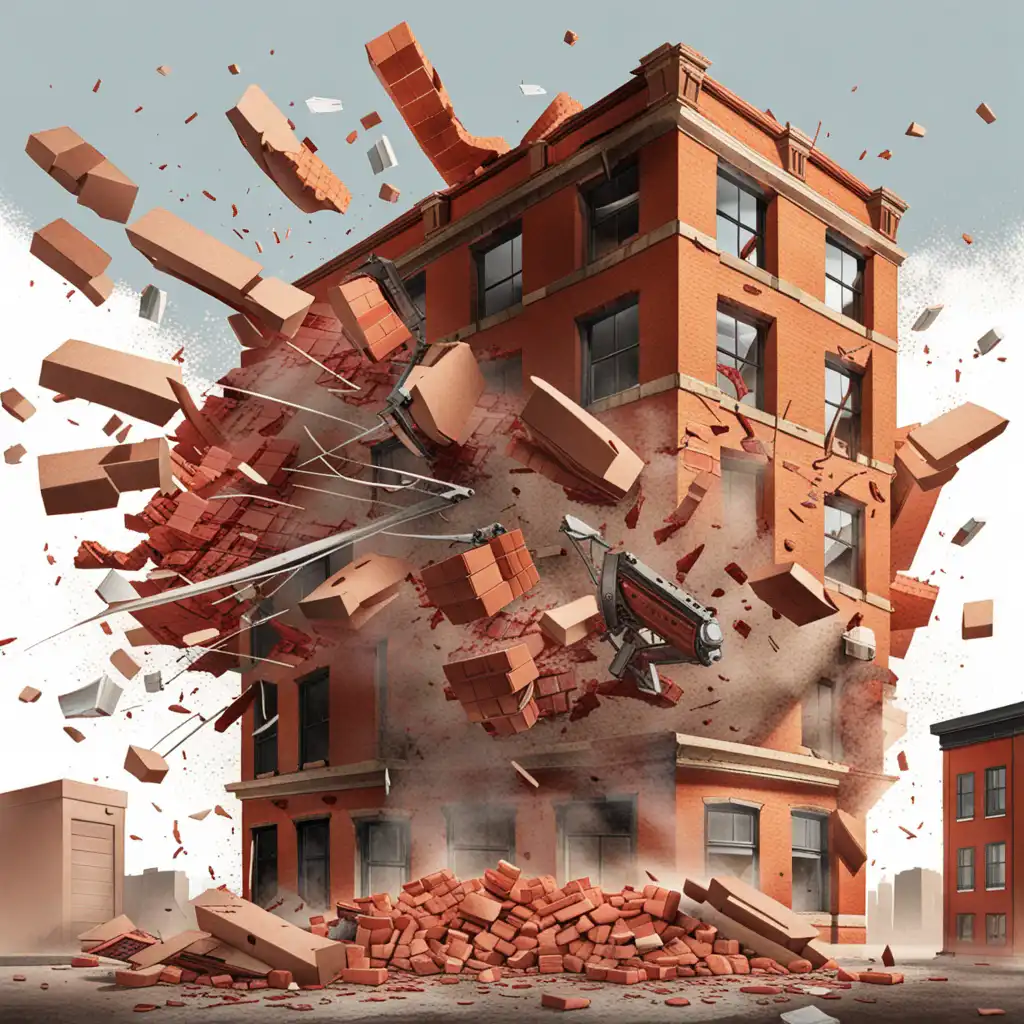
The explosion tore the building asunder
asunder
əˈsʌndər
Đang tải…
əˈsʌndər
Into separate parts or pieces
The explosion tore the building asunder

əˈsʌndər
In separate directions
The crowd scattered asunder at the sound of gunshots
əˈsʌndər
Destroyed or ruined
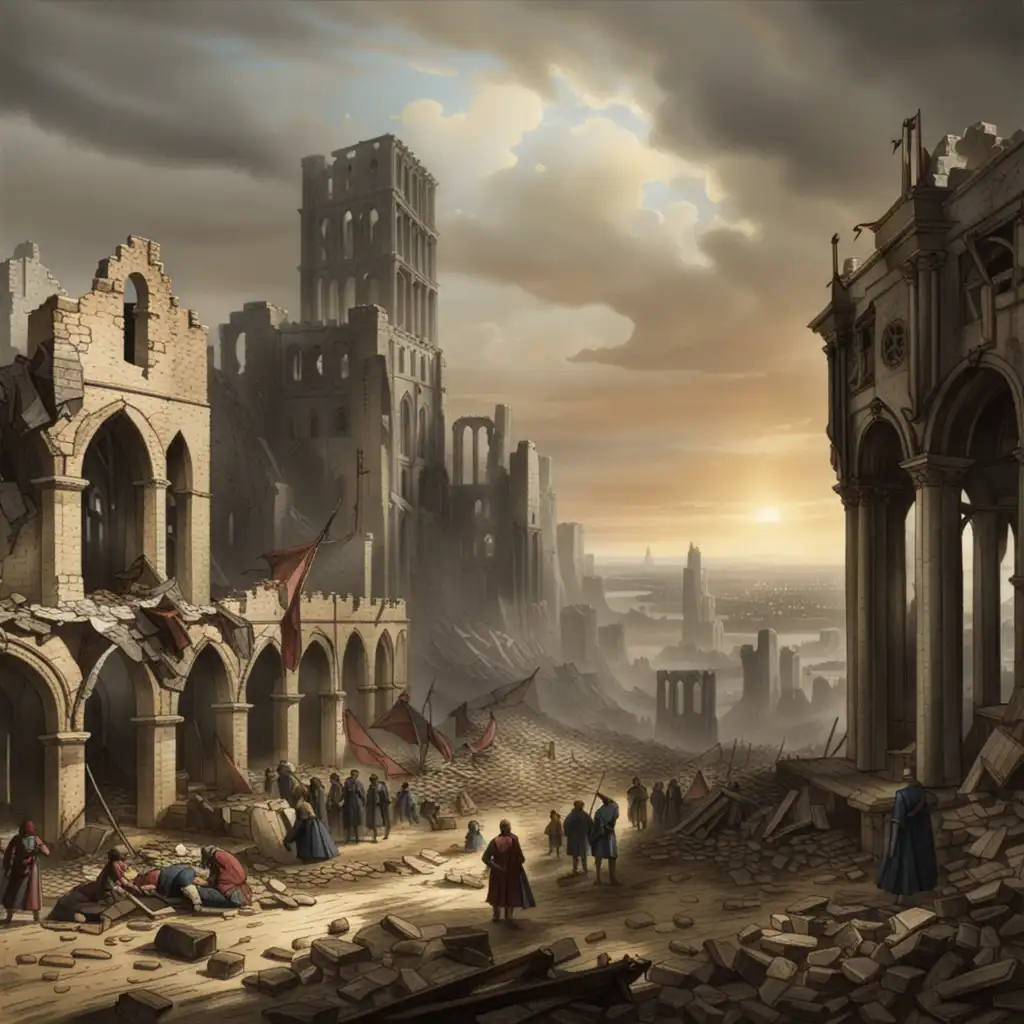
The kingdom was torn asunder by civil war
Không tải được âm thanh. Vui lòng thử lại sau.
The word 'asunder' means to be torn or separated apart. It is often used when something is split into two or more parts in a forceful or violent way. For example, a rock could be split asunder by a hammer, or a family could be torn asunder by a disagreement. It is a dramatic and emotive word, used to convey a sense of destruction or division.
Both apart and asunder mean separated or in pieces, but apart is more commonly used in everyday language while asunder is used in more formal or poetic contexts.
For example, if you say "I pulled the two pieces of paper apart," that would be a normal, everyday use of 'apart.' If you wrote "The storm tore the ship asunder," that would be a more formal or poetic use of 'asunder.'
Apart is more versatile and can be used in almost any context where something is separated or divided, while asunder is more specific and is typically used with more dramatic or impactful words or ideas.
Mở từ: Apart →Asunder refers to something being torn or separated into pieces, while break refers to something being physically or suddenly broken apart.
For example, you could say "the vase fell and broke into pieces" or "the relationship was torn asunder by a disagreement".
Break is often used for physical things like objects, bones, or machinery. Asunder is usually used for more abstract things like relationships or emotions.
Mở từ: Break →Disconnect means to break a connection or communication between two things.
Asunder describes physical separation while disconnect describes a breaking of connection or communication.
Mở từ: Disconnect →Divide means to separate something into two or more parts or sections.
It can be used in both physical and abstract senses. For example, "The cake was divided into equal slices for all the guests" or "The political opinions of the country were deeply divided.".
Asunder is used when something has been physically torn apart, while divide is used when something is being purposely separated into two or more parts, either physically or abstractly.
Mở từ: Divide →Asunder means apart or into pieces, whereas fragment means a small part broken off from a larger whole.
Asunder is applicable when something is separated or torn apart completely, while fragment is applicable when something is broken into small pieces but still retains its original form, albeit in smaller parts.
For example, if you tear a piece of paper in half, it is now "asunder." If you drop a glass and it shatters into many pieces, those pieces are fragments of the original glass.
Mở từ: Fragment →Asunder means to break or tear something apart, while the word separate means to divide things that were once together.
If you use the word separate, you might be talking about dividing a group of people into two smaller groups, or separating different types of food on a plate.
Asunder is used when something has been forcefully torn apart, while separate is used when something is intentionally divided or split up.
Mở từ: Separate →Shatter means to break or smash something into small pieces.
It describes something that has been completely destroyed or shattered into many pieces. For example, "The vase fell off the table and shattered into a million pieces on the floor.".
Asunder means to be separated into pieces, while shatter means to break something into small pieces. The difference is that asunder implies separation, while shatter implies destruction.
Mở từ: Shatter →Both asunder and split mean to divide or separate.
Split can also mean to separate but tends to be used in a more casual way.
For example: "She split the cake into equal portions" or "The group split up and went their separate ways."
Mở từ: Split →The idea that though we are different we must choose to be united, but now it's our turn. Our challenge is to come together to preserve our collective self-interest and humanity rather than tearing ourselves asunder.
Xem trên YouTube ↗The beauty of the world, which is so soon to perish, has two edges, one of laughter, one of anguish, cutting the heart asunder.
Geography has made us neighbors. History has made us friends. Economics has made us partners, and necessity has made us allies. Those whom God has so joined together, let no man put asunder.
The way of fortune is like the milkyway in the sky; which is a number of small stars, not seen asunder, but giving light together: so it is a number of little and scarce discerned virtues, or rather faculties and customs, that make men fortunate.
Under this window in stormy weather I marry this man and woman together; Let none but Him who rules the thunder Put this man and woman asunder.
Everyone sees they cannot well live asunder, nor many together, without some rule to which all must submit.
Law and equity are two things which God has joined, but which man has put asunder.
In the seventeenth century, the science of medicine had not wholly cut asunder from astrology and necromancy; and the trusting Christian still believed in some occult influences, chiefly planetary, which governed not only his crops but his health and life.
We trace out all the veins of the earth, and yet, living upon it, undermined as it is beneath our feet, are astonished that it should occasionally cleave asunder or tremble: as though, forsooth, these signs could be any other than expressions of the indignation felt by our sacred parent!
Our forefathers regarded as a prodigy the passage of the Alps: first by Hannibal and, more recently, by the Cimbri; but at the present day, these very mountains are cut asunder to yield us a thousand different marbles; promontories are thrown open to the sea; and the face of Nature is being everywhere reduced to a level.