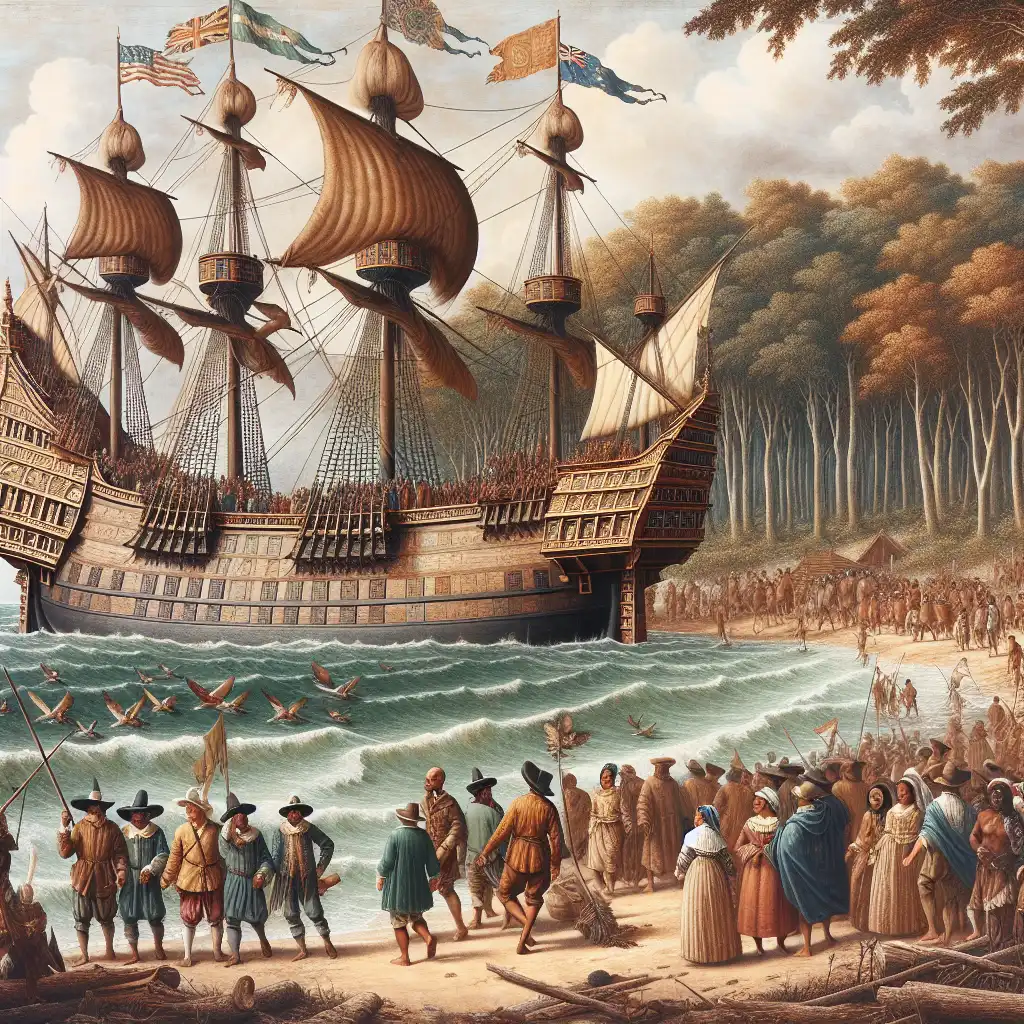
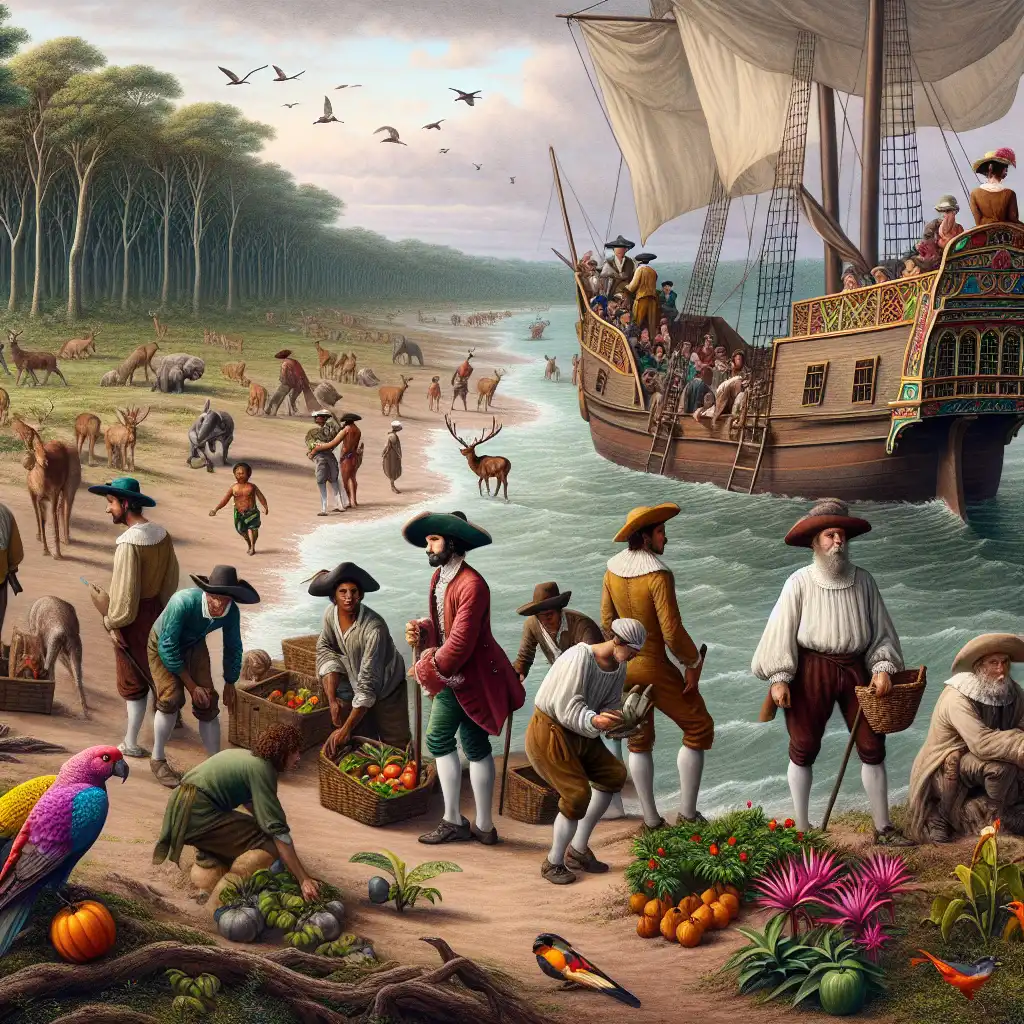
Colonization refers to the process of taking control of an area or region by a group of people or a country. This can happen when people move into a new area and establish homes and businesses, or when an established country sends people to take over a new land. It often involves the exploitation of resources and can have significant social, environmental and economic impacts on the area being colonized. Examples of colonization in history include the European colonization of the Americas, Africa and Asia.
Annexation refers to the process in which an existing territory or piece of land is incorporated into another territory or country, typically through legal or political means.
In simpler terms, annexation is like taking over your next-door neighbor's shed and using it as your own, while colonization is like moving into your neighbor's house and claiming it as your own.
Annexation is typically applicable in cases where two neighboring territories or countries have a mutually agreed upon resolution to combine their political boundaries, or where one country peacefully takes over another's territory.
Overall, both annexation and colonization involve one territory or country exerting control over another, but the key difference is in the manner in which this control is established and the intended purpose of that control.
Conquest refers to the acquisition of territory through the use of military force. Conquest is usually characterized by a use of force by one party, leading to the defeat and subjugation of the other.
Its ultimate goal is to exert dominance over the conquered people or territory. An example of conquest is the military campaigns of Genghis Khan, which were marked by conquest and subjugation of conquered peoples.
Both colonization and conquest involve control of foreign lands, but their intentions and methods are different. Colonization is a more peaceful and deliberate process that involves the establishment of settlements and the introduction of new cultures.
Conquest is more violent and aims to impose the will of the conquerors on the conquered people.
Dominate refers to the act of having control or power over something or someone.
It can be applied to a wide range of situations, such as in sports or business, where one team or company may dominate over others.
Colonization describes the act of taking over a whole country or territory, while dominating can refer to exerting control over particular areas or groups within a country or organization.
Imperialism is the practice of extending a country's power and influence over other territories, often through military force or economic dominance.
Imperialism can involve colonization, but it can also involve other forms of control, such as indirect rule or economic dominance.
Imperialism is applicable when a country seeks to extend its influence over other countries or territories, often for economic or strategic reasons, such as when European powers partitioned Africa in the late 19th century or when the United States exercised economic imperialism in Latin America in the early 20th century.
Settlement refers to the act of people establishing a new community or society in a previously uninhabited area. This can be done for various reasons, such as seeking new opportunities, finding a better quality of life, or escaping persecution.
Colonization involves taking control of a foreign land with the goal of benefiting the colonizing nation, while settlement involves establishing a new community for various reasons.
Subjugate refers to the act of bringing someone or something under control or domination, often through force or coercion.
This can refer to the subjugation of a group of people or the domination of a region or country.
Both words refer to forms of power and control, but colonization is more specific to the establishment and exploitation of new territories, while subjugation can refer to any kind of power dynamic.
Colonization has historically been used as an excuse for exploitation and dispossession of native populations, while subjugation is often associated with oppression and tyrannical rule.
Supremacy refers to the belief that one group is superior to others and has the power and authority to control them. This can manifest in various forms, such as racial supremacy, religious supremacy, or cultural supremacy.
Supremacy is applicable in contexts where one group seeks domination and control over others based on their perceived superiority, such as in the case of white supremacy in the United States.
continent and its people its rivers its lands its wildlife the powers that were there the colonization the great scramble of carving up the land and he wrote about it and he talked about it
we are called childish. Which really bothers me. After all take a look at these Imperialism and colonization, world wars George W. Bush. Ask yourself who's responsible? Adults. Now what have kids done?
With my government, we engaged in bringing our help to fights for national freedom. At that precise moment, several countries were still colonised or had barely overcome colonisation. This was the case in practically all of Africa. We supported them.
today but in the modern times the other world find itself on the margins of history not much contribution to the world as the spread of the Western colonization around the world most of
from colonization. And later that century it seems that Maroons— or people escaping from slavery— began entering the area. In fact the team’s findings support the theory
its fins have long fleshy lobes at their base which make them quite unlike the fins of any other living fish and there seems little doubt that these represent the first rudimentary legs which enabled the ancestral amphibians to drag themselves from the water and begin the colonization of the dry
Filipinos are not worse than any other colonized people except that our colonization was a little longer, and the independence movement was always dictated in political terms, never in social ones. We borrowed terms, but we didn't understand them.
much better than an erupting volcano on Vanuatu we were there to investigate how quickly microbial colonization happens on rocks we certainly wouldn't imagine that there is life in the lava lake itself just way too hot for anything to
is that as civilizations become technologically advanced enough to consider living amongst the stars, they lose sight of how important it is to safeguard the home worlds that fostered that advancement to begin with. It is hubris to believe that interplanetary colonization alone will save us from ourselves,
If interstellar travel is as time- or energy- demanding as the above figures indicate, it is far from obvious what the motive for colonization might be.
it was the colonization of the land by plants that helped create the benign climate we currently enjoy. The converse is also true. The more vegetation we lose, the more that's likely to exacerbate climate change and lead to further desertification.
To begin remember how I said that we need the right combination of microbes? Well to get that combination right, we need to receive those microbes that inhabit our bodies in a certain order. You can think of it like a colonization march.
Historians still often see the end of the war as meaning nothing more for Germany than lost territories, lost participation in colonization, and lost assets for the state and individuals. They frequently overlook the most serious loss that Germany suffered.
This ongoing colonization process has shaped the unfair world we live in today. So how can we make sure we stop perpetuating the same old colonial patterns?
What are the 10 major legacies that European colonization have left behind? Issues of illiteracy. Issues of ill health. Issues of poor infrastructure. Issues of backward agricultural economies. And it goes on.