
chattel
noun chattel
ˈtʃætl
Something that a person owns other than land or buildings.
Furniture, cars, stocks, and bonds are considered chattels.
chattel
ˈtʃætl
加载中…
ˈtʃætl
Something that a person owns other than land or buildings.
Furniture, cars, stocks, and bonds are considered chattels.
ˈtʃætl
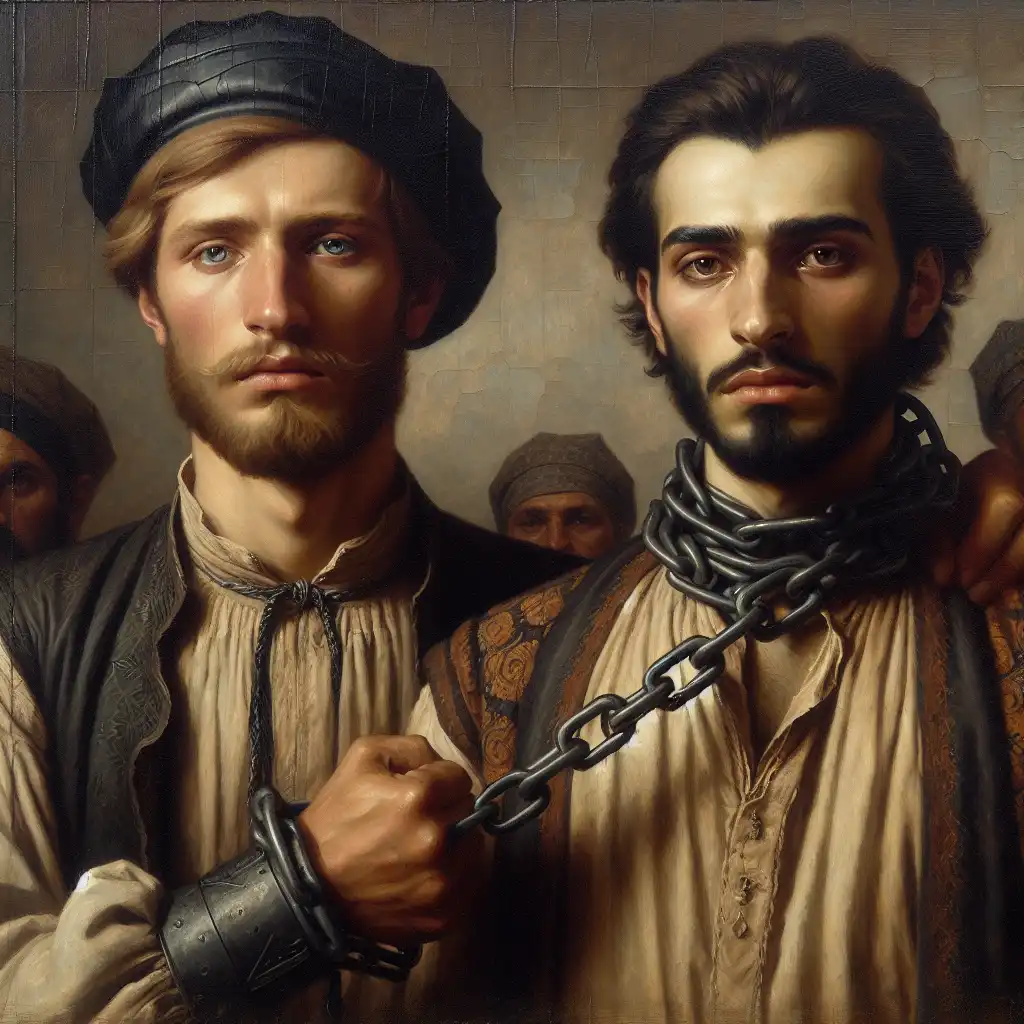
A human who is owned as property by another human.
In the past, slaves were considered chattel by their owners.
音频无法加载,请稍后再试。
The word 'chattel' refers to personal property such as furniture, livestock, or cars. It is used in the context of law or business when discussing the ownership or transfer of such property. For example, a farmer might sell their chattel (livestock) to a buyer, or someone might include their chattel (furniture) in their will.
An asset is anything valuable that a person or a company owns, such as property, investments, or equipment.
It is typically used in business or financial contexts. For example, a company's assets could include their office building, computers, and inventory.
Overall, assets are more general and applicable to a wider variety of items, while chattel specifically refers to movable personal property.
打开单词: Asset →Belongings refer to the personal possessions of a person. Chattel refers to any movable property or assets that are not attached to land or buildings.
Belongings can be tangible or intangible and are usually personal in nature, such as clothing, gadgets, money, and jewelry.
打开单词: Belongings →Chattel refers to personal property that can be moved, such as furniture or livestock. Effect refers to the result or consequence of something happening.
Effect is applicable in a wide range of contexts when discussing the outcome of an action or event, such as in a scientific experiment or a political decision.
打开单词: Effect →Estate refers to all a person's assets, which can include both real property (homes or land) and personal property (such as chattel).
It is the total sum of a person's belongings, including all debts and liabilities. An estate is typically inherited by heirs after a person dies.
Chattel refers to individual items of personal property, while estate refers to the total sum of a person's belongings.
打开单词: Estate →Good refers to any physical item that a person owns or possesses, such as a book, car, or phone. Chattel is a legal term that refers specifically to personal property that is movable, such as furniture or livestock.
In simple terms, everything that you own is a good, but not all goods are chattel. For example, if you own a piece of land or a house, those assets are not considered chattel because they are not movable.
Good is a more general term that can be used in everyday language to refer to any tangible item.
打开单词: Good →Possession refers to having control or ownership of something or someone.
Chattel refers to things you can touch and possess, while possession refers to having control over anything, tangible or intangible.
Chattel is generally used in legal contexts, while possession is a more general term that can be applied to everyday situations.
打开单词: Possession →Chattel and property are similar terms, but they have slightly different meanings.
Chattel refers to movable personal property, such as a car or a piece of furniture, while property is a more general term that can refer to both real property (like land or a building) as well as personal property (like a chattel).
Chattel is something that can be moved around, while property can refer to anything that someone owns. Both terms are applicable in legal contexts, such as property law.
打开单词: Property →The lie that invented...
在 YouTube 上观看 ↗Humans have a fraught relationship with beasts. They are our companions and our chattel, our family members and our laborers, our household pets and our household pests. We love them and cage them, admire them and abuse them. And, of course, we cook and eat them.
Shadow-Chasing Dogs %\PIPE%...
在 YouTube 上观看 ↗Experience demonstrates that there may be a wages of slavery only a little less galling and crushing in its effects than chattel slavery, and that this slavery of wages must go down with the other.
The breathtaking courage...
在 YouTube 上观看 ↗Sally is my wife, but not my chattel or my property.
Leopard Kill Captured...
在 YouTube 上观看 ↗There is - and always will be - the legacy of chattel slavery in this nation, an obsession with racial and gender differences, but I think that, at its best, this nation is capable of creating standards for itself and reaching towards those standards.
America's gravest moral evil, chattel slavery, was defeated by an authoritarian president in a religious civil war, not by proceduralism or constitutional debate.
I am accused of using hard language. I admit the charge. I have not been able to find a soft word to describe villainy or to identify the perpetrator of it. The man who makes a chattel of his brother - what is he? The man who keeps back the hire of his laborers by fraud - what is he?
A man who is without capital, and who, by prohibitions upon banking, is practically forbidden to hire any, is in a condition elevated but one degree above that of a chattel slave. He may live; but he can live only as the servant of others; compelled to perform such labor, and to perform it at such prices, as they may see fit to dictate.
Many years ago, when I lived in the mini-Siberia they call East Anglia, I was awakened in the early hours by the sound of a pantechnicon being loaded. Peeping through the curtains, I observed the grocer doing a runner with all his chattels and his family.
Starting in the early 1800s, Southerners in the United States began to defend slavery as their 'peculiar institution,' and northerners didn't mind, since the phrase suggested that chattel bondage was quarantined from the rest of the nation: that it was, or soon would be, a relic of its past and would not define its future.
Women were once considered chattel, and slavery was regarded as sanctioned in the Bible. However, western society grew to recognize that neither was just.