
vocalization
noun vocalization
ˌvəʊkələˈzeɪʃn
The action of uttering sounds or words.
Her vocalization of the song was mesmerizing.
vocalization
ˌvəʊkələˈzeɪʃn
Loading…
ˌvəʊkələˈzeɪʃn
The action of uttering sounds or words.
Her vocalization of the song was mesmerizing.
ˌvəʊkələˈzeɪʃn
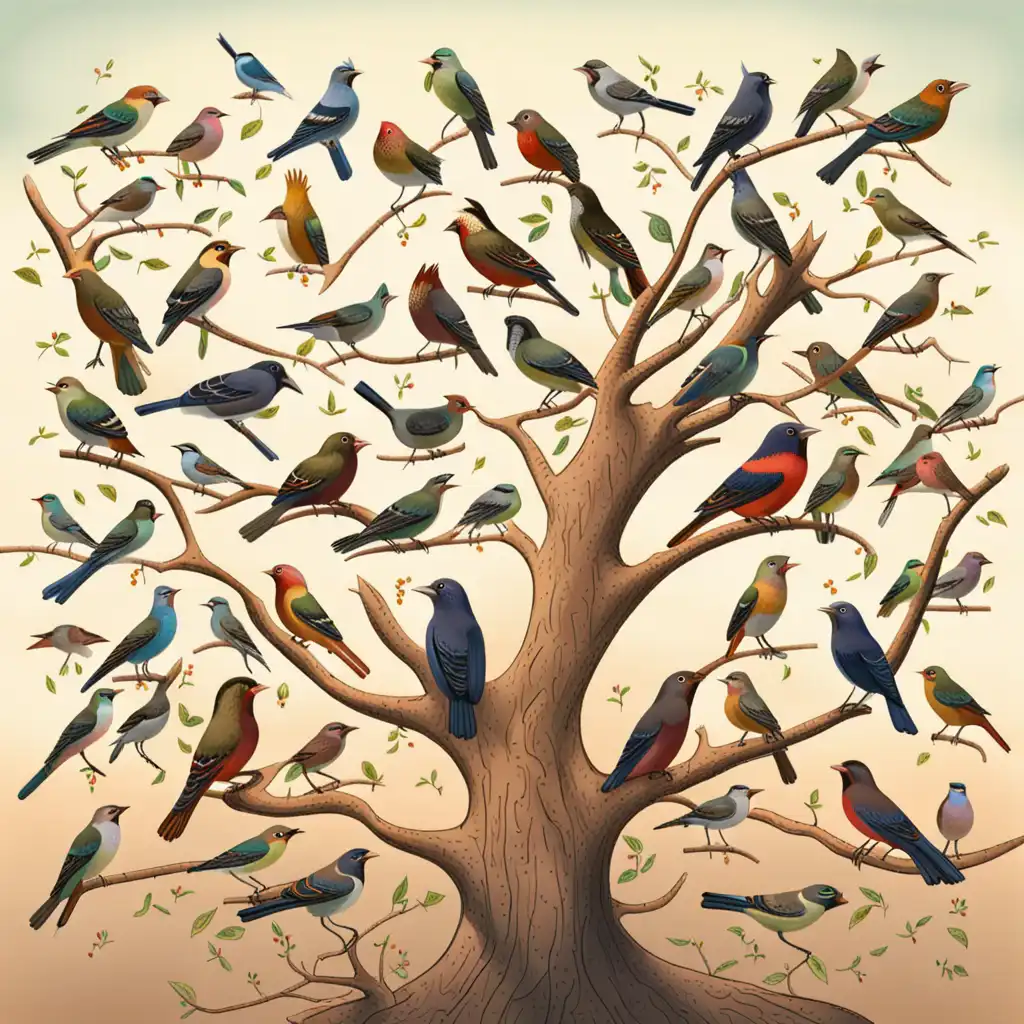
Sound produced by an animal for communication.
Bird vocalization is a primary method of communication among birds.

ˌvəʊkələˈzeɪʃn
The production of musical sounds with the voice.
Her remarkable vocalization left the entire room mesmerized.

ˌvəʊkələˈzeɪʃn
The use of voiced speech sounds in language.
Vocalization plays a crucial role in the articulation of many languages.
Audio could not be loaded. Please try again later.
The word 'vocalization' refers to making sounds with your voice, usually for the purpose of communication. For example, when you talk to someone, you are making vocalizations. You can also make vocalizations when you sing, cry, or shout. The word is often used in scientific or academic contexts, but can also be used in everyday language when describing someone's communication or vocal abilities.
Articulate means to express oneself clearly and effectively in speech or writing. It refers to the ability to communicate effectively and convey one's thoughts and ideas clearly.
Articulate is applicable when discussing effective communication and expressing oneself clearly, while vocalization is applicable when discussing the act of making sounds with one's voice or speech.
Open word: Articulate →Enunciation refers to the act of articulating words or sounds clearly and distinctly, usually when speaking aloud or performing.
Enunciation is most applicable when you want to communicate a message effectively or when performing in a public setting, such as giving a speech or performing in a play.
Open word: Enunciate →Pronunciation refers to how we say words, particularly the correct way to say them. We use pronunciation when we want to communicate clearly and effectively with other people.
For example, when we learn how to say 'hello' in another language, we learn the proper pronunciation so that we can be understood by someone who speaks that language.
Pronunciation focuses on the correct way to say words, while vocalization focuses on the sounds we make with our voice, whether they are words or not.
Open word: Pronunciation →Speech refers to the act of conveying meaningful sounds and words to express thoughts, feelings, or ideas. It involves complex brain processes of language understanding, grammar, and syntax.
Speech is used by humans for communication and is essential for social interactions.
Speech is a specific type of vocalization that involves expressing meaningful ideas, while vocalization refers to any sound made with the voice.
Open word: Speech →An utterance is any spoken or written expression of language, such as a sentence, phrase, or word. It is a way of communicating ideas, thoughts, or feelings using language.
In other words, utterance refers specifically to language, while vocalization can include any sound made with the voice.
Utterance would be applicable when discussing language or speaking, while vocalization would be more general and broader in scope.
Open word: Utterance →Grief and love in the...
Watch on YouTube ↗Gorillas have a belch vocalization, which is sort of like, 'I'm OK, you're OK.' They do a pig grunt, which is reprimanding. They sing, they laugh, and they hoot, which grows into a chest-beating display.
Safari Live - Day 154 %\PIPE%...
Watch on YouTube ↗BBC Earth 50 Top Natural...
Watch on YouTube ↗Why do whales sing? -...
Watch on YouTube ↗Amazing: Watch an...
Watch on YouTube ↗How to speak monkey: The...
Watch on YouTube ↗A Rare Look at the...
Watch on YouTube ↗Why can parrots talk? -...
Watch on YouTube ↗Tim Laman & Ed Scholes:...
Watch on YouTube ↗Are we sexual omnivores?...
Watch on YouTube ↗