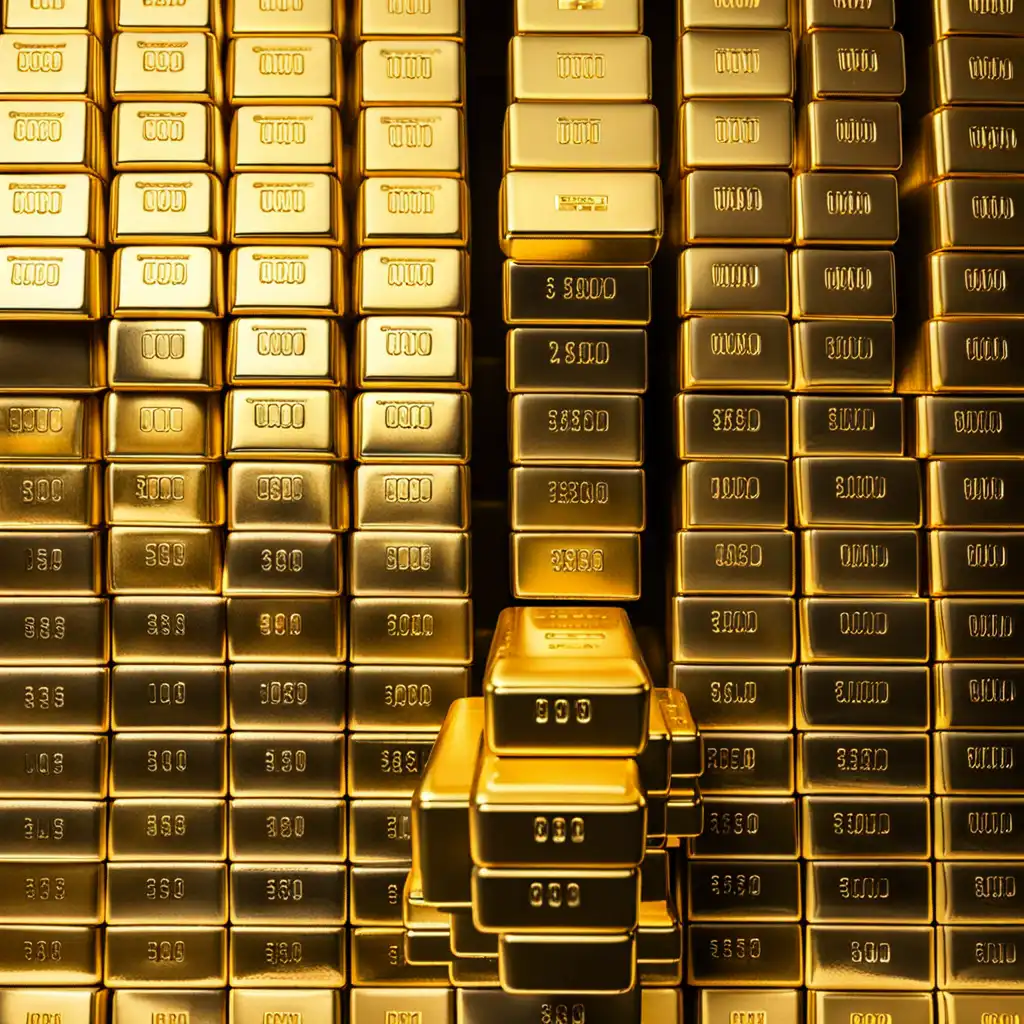
bullion
noun bullion
ˈbʊliən
Gold or silver in its raw form before it's made into coins or other items.
The bank stored a large amount of gold bullion in its vaults.
bullion
ˈbʊliən
Đang tải…
ˈbʊliən
Gold or silver in its raw form before it's made into coins or other items.
The bank stored a large amount of gold bullion in its vaults.

ˈbʊliən
A thick soup made from meat or vegetables.
She sauteed the vegetables before adding them to the beef bullion.

ˈbʊliən
A decorative craft method using gold or silver threads.
The dress she wore to the banquet had beautiful bullion embroidery.
Không tải được âm thanh. Vui lòng thử lại sau.
Bullion refers to precious metals, especially gold or silver, that have been shaped into bars or ingots. It's commonly used to refer to a collection of these bars or ingots, which can be bought and sold for investment purposes or used in the creation of jewelry and other valuables. Bullion can be held as a physical asset, stored in secure vaults, or traded electronically. If you want to buy or sell bullion, you'll likely need to work with a trusted dealer or broker.
Bar refers to a rectangular or square-shaped piece of metal that is shaped for storage and handling.
It can be made of gold, silver, platinum, or other metals. Bars are generally larger than coins and are used for investment or industrial purposes.
It can be in the form of bars or coins and is used for investment purposes.
Bullion can be bought or sold on exchanges, while bars are available through dealers or banks.
Overall, both are used for investment purposes but bars are physical metal pieces while bullion refers to the bulk quantity of precious metal in a specific form.
Mở từ: Bar →Brick usually refers to a rectangular block of clay that is used in building houses and walls. Bullion refers to a precious metal such as gold or silver that is in the form of bars, ingots, or coins.
Brick is applicable in the context of construction and building whereas bullion is applicable in the context of finance and investment.
For example, a construction worker would use bricks to build a wall, while an investor might buy bullion as a way of investing in precious metals.
Mở từ: Brick →Coins are pieces of metal, usually made of gold or silver, that are stamped with a design and used as money. They can have a fixed value or be worth whatever someone is willing to pay for them.
Bullion is a form of precious metal in the shape of bars or ingots, while coins are stamped pieces of metal used as money.
Bullion is better for investing or making jewelry, while coins are better for buying and selling goods and services.
Mở từ: Coin →An ingot is a cast or molded metal, also typically made of gold or silver, that has a specific shape and weight. Ingots are often used in the manufacturing industry as raw material for producing various products, such as jewelry or electronics.
Bullion represents an investment in precious metals, while ingots are used as raw material in manufacturing processes.
Mở từ: Ingot →It usually describes gold or silver that is used for investment purposes. Nugget usually refers to a small piece of precious metal that is found in its natural state.
It is usually used to refer to gold or other precious metals that are found in rivers or streams. Nugget is mostly used in the context of natural resources, while bullion is used in the context of investment or currency.
Mở từ: Nugget →Stash is a more general term that can refer to any hidden or stored collection of items, but is commonly used to refer to a secret or hidden supply of valuables or money.
Bullion specifically refers to bars or ingots of precious metals used as a form of investment or wealth storage, while stash is a more general term that refers to hidden or stored items, often including valuables and money.
Mở từ: Stash →Set the Net %\PIPE% Life Below...
Xem trên YouTube ↗The world's central banks and the International Monetary Fund still have vaults full of bullion, even though currencies are no longer backed by gold. Governments hold on to it as a kind of magic symbol, a way of reassuring people that their money is real.