spore
noun spore
spɔːr
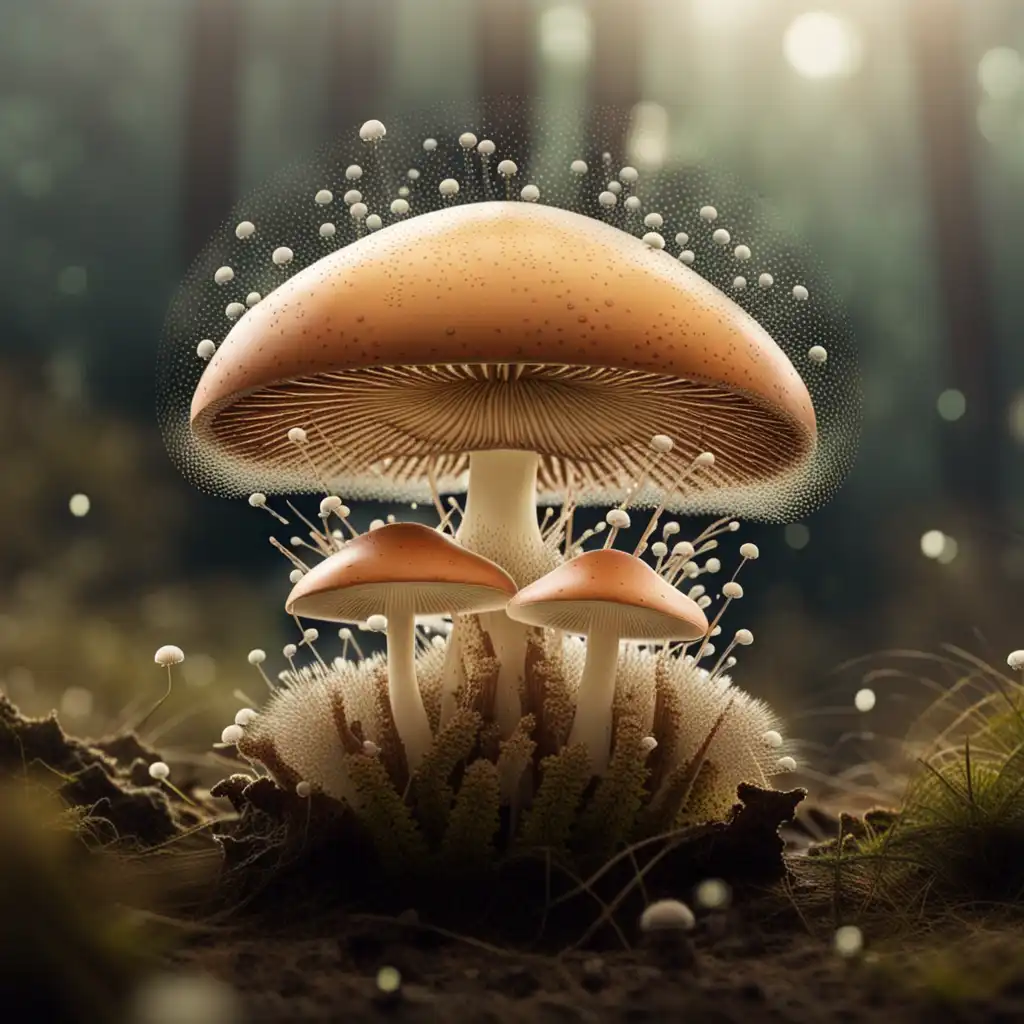
A tiny cell that can grow into a new plant or fungi
Mushrooms produce spores that are spread by the wind.
spore
spɔːr
読み込み中…
spɔːr
A tiny cell that can grow into a new plant or fungi
Mushrooms produce spores that are spread by the wind.
spɔːr
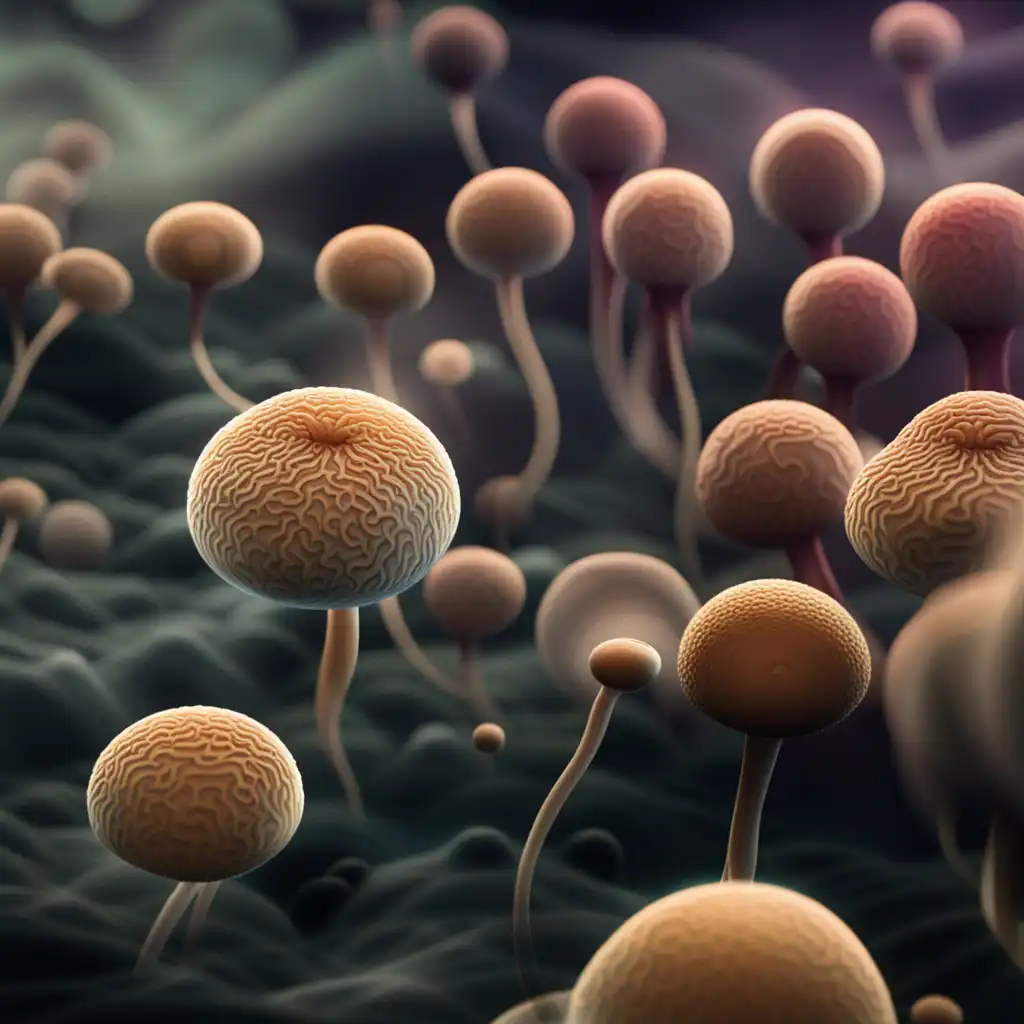
A small organism that can survive in harsh conditions until it finds a host
Some bacteria can form spores to survive without nutrients.
音声を読み込めませんでした。しばらくしてからもう一度お試しください。
A spore is a tiny cell that plants and some other organisms, like fungi, make to help them reproduce. Spores can be spread by wind or water and grow into new plants or organisms. They are often used for spreading and creating new colonies or populations. So, the word 'spore' is particularly used in the context of biology and nature.
Bacteria are living organisms that can reproduce and spread on their own. They are found in many different environments such as soil, water, and inside living organisms.
Bacteria can cause diseases if they enter a living organism and multiply rapidly, making it sick. In agriculture, bacteria are used to produce fertilizers and they help decompose dead plants and animals.
On the other hand, spores are essentially like seeds for certain types of organisms, including some bacteria but also fungi, plants, and even some animals.
So to sum up, bacteria are living organisms that can cause disease or be beneficial, while spores are like dormant seeds that can grow into new organisms under the right conditions.
単語を開く: Bacteria →Bud is a small, undeveloped growth on a plant that eventually grows into a flower or a leaf.
Buds can be found on the stems or branches of a plant, and they contain all the necessary structures for growth and development.
In summary, buds are small growths on plants that develop into flowers or leaves, while spores are cells used for reproduction by some plants and fungi.
単語を開く: Bud →Embryos and spores are both terms used to describe different developmental stages of organisms.
An embryo is an early stage of development for many animals and plants. It is the name given to the fertilized egg before it has developed into a fully formed organism.
Embryos are typically found in animals, such as mammals, birds, and reptiles, as well as in some plants. The embryo is the beginning of the development process, and it goes on to grow and develop into a juvenile organism.
An embryo is an early stage of development for many animals and some plants, while a spore is a reproductive cell used by plants, bacteria, and fungi to reproduce and spread.
単語を開く: Embryo →Fungus is a type of organism that is composed of one or many cells and reproduces through spores. They are typically found in damp environments such as soil, decaying matter, or on the skin of plants and animals.
Fungi take in nutrients from organic material such as dead plants, animals and waste.
Spores are tiny structures that are produced by some organisms, including fungi, plants, and bacteria. Spores are usually reproductive structures that are dispersed by wind or water to germinate and grow into new organisms.
Fungi release spores, allowing them to reproduce and grow in new locations.
So, essentially, fungus is a type of organism, while spore is a structure produced by certain organisms for reproduction.
Fungus is applicable in contexts such as identifying diseases and infections, and is also utilized for food & medicine.
単語を開く: Fungus →A germ is a small organism that can make you sick or cause infection. It often refers to bacteria or viruses that can spread from person to person through contact or the air.
In short, germs are typically associated with illness and infection, while spores are associated with the reproduction and growth of certain types of fungi and plants.
単語を開く: Germ →A microbe is a living organism that is too small to be seen by the naked eye, such as bacteria or viruses. They can be found everywhere, in soil, water, air, and inside living creatures.
Microbes and spores are both very small and can cause infections or diseases.
However, while microbes are living organisms, spores are not considered as living organisms because they are in a dormant state until they find a suitable environment to grow.
Microbes are applicable in many areas such as medicine, biotechnology, food processing, and industrial microbiology, while spores are applicable in agriculture, microbiology, and biotechnology.
単語を開く: Microbe →Pollen and spore are both reproductive structures produced by plants.
Pollen is a fine powder that is produced by the male part of a flower. Its main function is to fertilize the female part of the same or another flower, leading to the production of seeds.
Pollen is mostly applicable to flowering plants.
They are a means of reproductive and genetic dissemination. Unlike pollen, spores do not require fertilization to develop into new individuals.
The main difference between pollen and spore is that pollen is specific to flowering plants and is related to sexual reproduction, while spores are produced by non-flowering plants and are used for asexual reproduction.
単語を開く: Pollen →Protozoan refers to a single-celled organism with a nucleus, which can move around and feed on other smaller organisms.
Protozoans can be found in water or soil and are important in nutrient recycling.
To summarize, protozoan refers to a type of organism, whereas spore is a reproductive structure that various organisms use to reproduce and survive unfavorable conditions.
単語を開く: Protozoan →A seedling is a young plant that has developed from a seed that has been planted in soil. It has roots, stem, and leaves and eventually grows into a mature plant.
Seedlings are applicable to plants while spores are applicable to fungi, bacteria, and some plants. Seedling is a stage in the life cycle of a plant while spores are a means of reproduction for fungi and bacteria.
単語を開く: Seedling →How parasites change...
YouTube で見る ↗Whether Earth was deliberately terraformed, in other words, or whether it was seeded with the spores of life from crashed comets or whether, indeed, life arose here spontaneously and accidentally, it is reasonable to hope that we might find traces of the same kind of process on Mars.
This Fungus Turns...
YouTube で見る ↗If Iraq had succeeded in spray-drying anthrax spores to extend their life and lethality, that would have been among the most important secrets of its wide-ranging weapons program.
6 ways mushrooms can...
YouTube で見る ↗While reishi mushrooms have historically been prepared as teas or infusions, other modern preparations include capsules, tinctures, and fractionated extracts of mushrooms, mycelium, and spores.
How Cicadas Become...
YouTube で見る ↗Will Wright: Spore,...
YouTube で見る ↗The story of life in...
YouTube で見る ↗What is dust made of? -...
YouTube で見る ↗What if cracks in...
YouTube で見る ↗What’s in the air you...
YouTube で見る ↗Mark Roth: Suspended...
YouTube で見る ↗