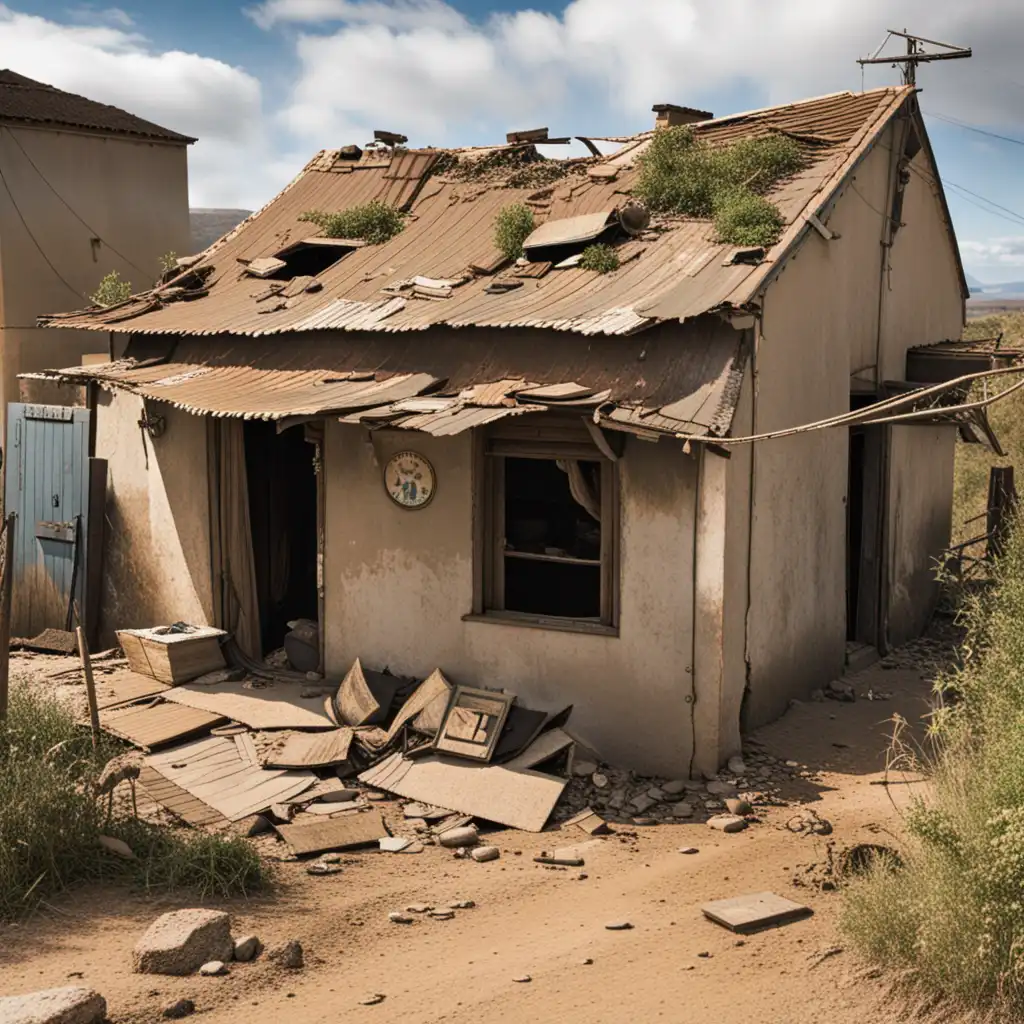
hovel
noun hovel
ˈhʌvl
A small, poorly built and often dirty house
He lived in a tiny hovel at the edge of the town.
hovel
ˈhʌvl
Loading…
ˈhʌvl
A small, poorly built and often dirty house
He lived in a tiny hovel at the edge of the town.
Audio could not be loaded. Please try again later.
"Hovel" is a word that describes a small, cramped, and often dirty living space. It is usually used when talking about a place where people live that is not very comfortable or well-maintained. For example, you might use the word "hovel" to describe a run-down cabin in the woods or a tiny apartment that is filled with clutter. It is not a positive word and is usually used to describe a place that is not very nice to live in.
A cabin is a small, simple house usually made of wood or logs.
It is typically used to describe a place where poor people live in extreme poverty without proper sanitary conditions. Therefore, cabins are associated with leisure and relaxation, while hovels are indicative of poverty and destitution.
Open word: Cabin →Cottage and hovel are both words that describe small houses or living spaces, but they have different connotations.
A cottage is generally a quaint and cozy small house, often found in rural areas or as a vacation home.
A cottage is a lovely little house, while a hovel is a shabby and often unlivable dwelling.
Open word: Cottage →Dump refers to a dirty and unpleasant place that is usually unorganized and full of trash or waste.
Dump refers to a place that is untidy and unpleasant, while hovel refers to a small, shabby dwelling.
Open word: Dump →A hut is a simple and often rustic dwelling place usually made of wood or other natural materials. While huts can be small and basic, they are typically more comfortable and well-maintained than hovels.
Huts can be found in many different contexts, from vacation cabins to remote mountain shelters.
The main difference between the two is that a hovel is a shabby, uncomfortable place to live while a hut can be a more comfortable and rustic dwelling place.
Open word: Hut →Both hovel and shack are used to describe small and poorly built houses.
A shack is also a small and poorly built dwelling, but it may not necessarily be dirty or run-down. Shacks are often associated with temporary or makeshift housing, especially in rural areas.
A hovel is a dirty, rundown dwelling associated with poverty, while a shack is a simple, improvised dwelling.
Open word: Shack →A shanty is a similar type of dwelling but is usually made of more modern materials such as metal, plastic, or corrugated iron.
Shanties are often associated with temporary housing for workers or refugees who have been displaced from their homes due to war or natural disasters.
In summary, while both hovels and shanties are basic, low-quality dwellings, hovels are typically associated with more primitive homes made of natural materials, while shanties are a more modern version of this type of housing made with man-made materials.
Open word: Shanty →A slum is a densely populated area within a city or urban area where the housing and living conditions are overcrowded, unsanitary, and often unsafe.
A hovel refers to a small, dirty and poorly constructed rural dwelling, while a slum is a densely populated urban area with poor living conditions.
Open word: Slum →Squalor refers to a state of being extremely dirty and unpleasant due to neglect or poverty. It is applicable in describing a dirty, unkempt, and slummy environment, such as a neglected alley or a rundown neighborhood.
Hovel describes a specific type of dwelling, whereas squalor describes a general state of uncleanliness and unpleasantness.
Open word: Squalor →Whoever cultivates the golden mean avoids both the poverty of a hovel and the envy of a palace.
Having leveled my palace, don't erect a hovel and complacently admire your own charity in giving me that for a home.
I might have been born in a hovel but I am determined to travel with the wind and the stars.
You think you're in another civilization, another time, and then you see antennas coming out of these hovels, and your mouth falls open when you see the descendants of the Incas shouting 'Columbo! Columbo!