ratify
verb ratify
ˈrætɪfaɪ
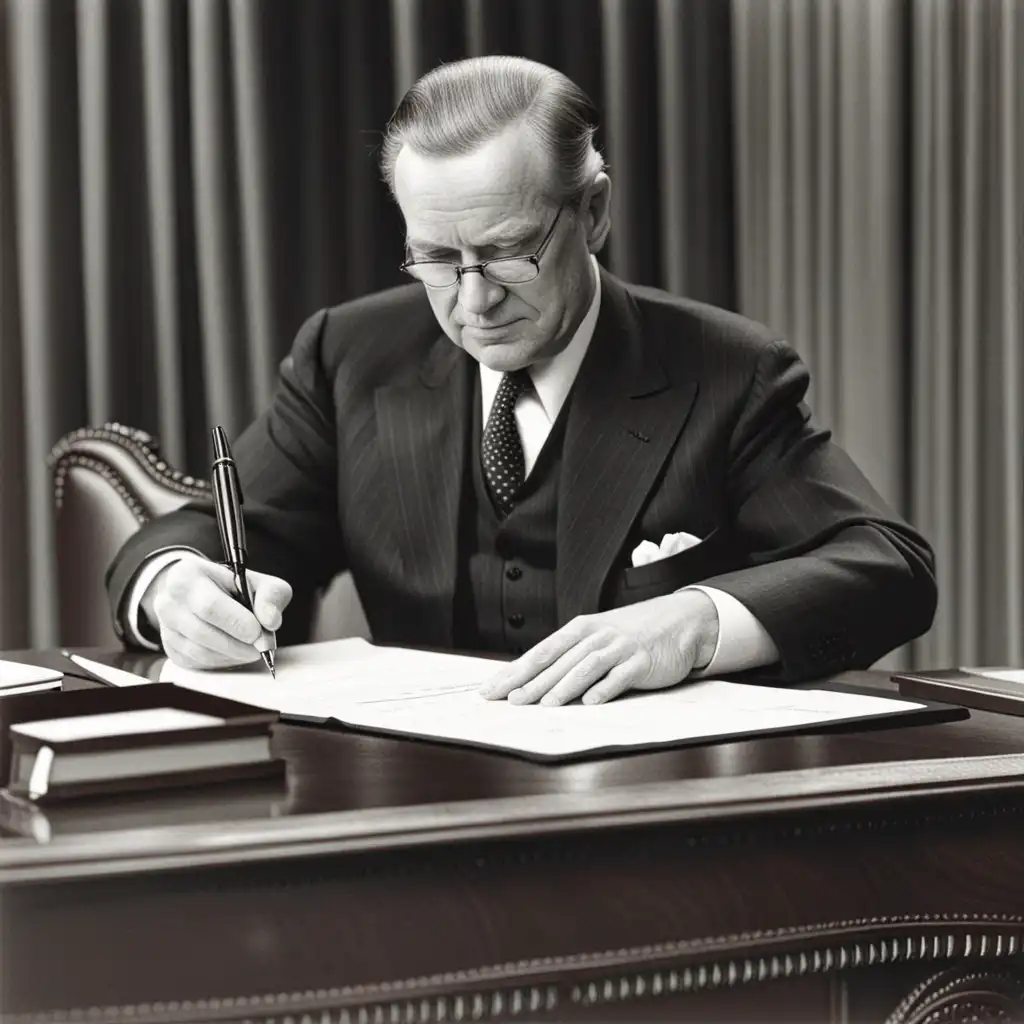
To officially agree to a law, contract, decision, etc.
The president is expected to ratify the bill into law.
ratify
ˈrætɪfaɪ
불러오는 중…
ˈrætɪfaɪ
To officially agree to a law, contract, decision, etc.
The president is expected to ratify the bill into law.

ˈrætɪfaɪ
To confirm or validate something by expressing consent, approval, or formal sanction.
The contract was ratified by the board of directors.

ˈrætɪfaɪ
In trade union terminology, to accept or approve an agreement by vote.
The workers ratified the new pay agreement.
오디오를 불러오지 못했어요. 잠시 후 다시 시도해 주세요.
'Ratify' means to officially approve or confirm a decision, agreement, or treaty. For example, if a group of people make an agreement, they might need to ratify it by voting to make it official. The word is often used in legal or political contexts where important decisions are made.
Approve means giving permission or agreeing to something, whereas ratify means giving formal approval or endorsement, usually in writing or through a legal process.
For example, a teacher might approve a student's request to use the bathroom during class. A country's government might ratify a treaty or agreement with another country, meaning they officially approve it and agree to abide by it.
Approve is more commonly used in everyday situations, while ratify tends to be used in formal, legal or political contexts where a particular agreement or decision must be officially approved or endorsed.
단어 열기: Approve →Authorize means giving permission or approval to someone to do something. For example, a parent might authorize their child to use their credit card for a specific purchase.
The main difference between these words is that authorize is more about giving permission or authority for someone to take an action, while ratify is more about confirming or approving a decision that has already been made.
단어 열기: Authorize →Confirm means to approve or verify something that has already been agreed upon or established. This often involves checking that the details of the agreement or decision are correct.
To put it simply, confirming is like double-checking something that's already been decided, while ratifying is like officially approving something that's still being negotiated.
단어 열기: Confirm →Endorse means to publicly support or recommend a product, person or idea. For example, a famous athlete endorsing a sports drink.
Endorse is used more broadly to indicate approval or support, while ratify is used in a more specific context of formal approval or validation of a legal document or agreement.
단어 열기: Endorse →The words legitimize and ratify both mean giving official approval to something, but they are used in different contexts.
Legitimize means making something legal or acceptable, even if it was previously seen as illegal or unacceptable. For example, if a new law is passed to allow same-sex marriage, it is legitimizing these marriages and making them legal and socially acceptable.
Legitimize is used to give something or someone legitimacy or acceptance, while ratify is used to give official approval to an already existing agreement or treaty, thereby making it legally binding.
단어 열기: Legitimize →Sanction, on the other hand, can have a few different meanings.
Ratify is more directly related to formal approval or consent, while sanction can refer to both punishment and permission.
Ratify is often used in a legal or government context, while sanction can be used in a variety of settings, such as sports or international politics.
단어 열기: Sanction →Support means to help someone or something by providing assistance or encouragement.
It can be used in a variety of contexts, from supporting a friend who is going through a tough time to supporting a political candidate by donating money or campaigning for them.
Ratify is a more formal term that refers to official approval, while support is a broader term that can refer to a range of actions taken to help someone or something.
단어 열기: Support →Uphold means to support or maintain something, especially a principle or law.
Ratify is used for giving formal approval, while uphold is used for supporting or maintaining something that has already been approved or established.
단어 열기: Uphold →Validate means to confirm or make something legally binding, usually a process or document. This can be done by an individual or organization.
Ratify is about approving something already agreed on, while validate is about making sure something is legally sound or binding.
Ratify is typically used in the context of international agreements, while validate can be used in a broader range of contexts, such as validating a parking ticket or validating a software license.
단어 열기: Validate →Why wasn’t the Bill of...
YouTube에서 보기 ↗All over the place, from the popular culture to the propaganda system, there is constant pressure to make people feel that they are helpless, that the only role they can have is to ratify decisions and to consume.
What if a US presidential...
YouTube에서 보기 ↗In a world we find terrifying, we ratify that which doesn't threaten us.
Portraits of Afghanistan...
YouTube에서 보기 ↗In so many ways, a lot of the drive I've had to do certain things has been because of this sense that I have both the opportunity and in some sense the obligation to ratify that my parents' life had purpose.
We need nuclear power to...
YouTube에서 보기 ↗Kyoto was a flawed process. There isn't one industrialized country around the world that has ratified that treaty, and so that is a non-starter.
New thinking on the...
YouTube에서 보기 ↗I entirely concur in the propriety of resorting to the sense in which the Constitution was accepted and ratified by the nation. In that sense alone it is the legitimate Constitution.
Peter Eigen: How to...
YouTube에서 보기 ↗Home is one's birthplace, ratified by memory.
How to expose the...
YouTube에서 보기 ↗I could become very rich in Guatemala but by the low method of ratifying my title, opening a clinic, and specialising in allergies. To do that would be the most horrible betrayal of the two 'I's' struggling inside me: the socialist and the traveller.
Why is the US...
YouTube에서 보기 ↗The E.U. is founded on the Treaties which apply only to the Member States who have agreed and ratified them.
The oddities of the...
YouTube에서 보기 ↗For black people, everything we do has to be ratified and endorsed by a power structure that is white. And that reinforces a kind of racial hierarchy where whiteness is the privileged position to be in, and ethnicity is problematic.
A 3-minute guide to the...
YouTube에서 보기 ↗Once the USMCA is sent to Congress, the House has a responsibility to step up and swiftly ratify the agreement.