
jabber
verb jabber
ˈdʒæbər
To talk quickly and without making much sense
She started to jabber away about her trip to New York
jabber
ˈdʒæbər
読み込み中…
ˈdʒæbər
To talk quickly and without making much sense
She started to jabber away about her trip to New York
ˈdʒæbər
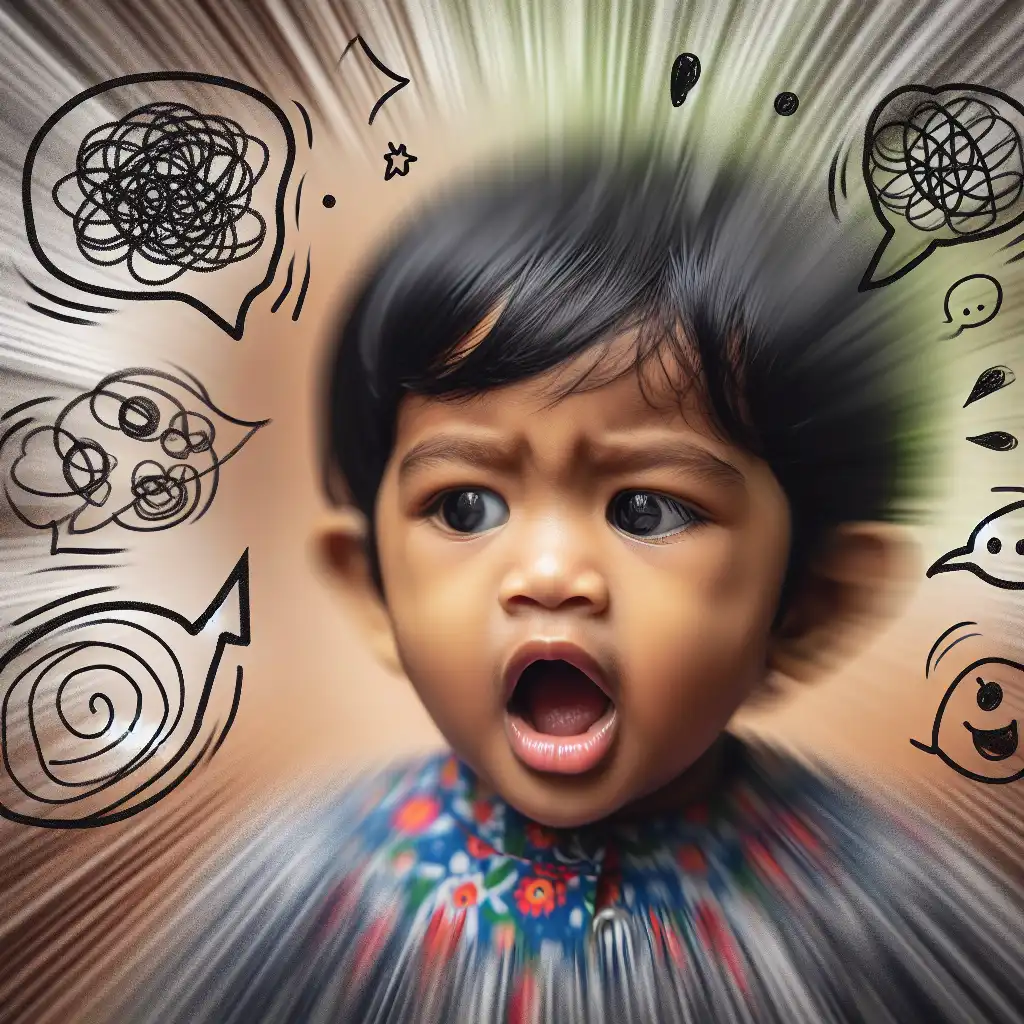
Talk that is quick and hard to understand
The toddler was babbling an incomprehensible jabber.
音声を読み込めませんでした。しばらくしてからもう一度お試しください。
Jabber is a word that means to talk quickly and in a way that is hard to understand. It is often used to describe someone who talks a lot and very fast, but you can't really understand what they're saying. You might hear this word used in a situation like a group conversation where one person keeps talking and not giving others a chance to speak or share their ideas. It can also be used to describe a language that is unfamiliar or confusing to the speaker.
Both babble and jabber refer to speaking unintelligibly or incoherently.
However, babble usually connotes speaking with excitement or enthusiasm, while jabber often carries a negative connotation of speaking excessively or annoyingly.
For example, a child might babble excitedly about their favorite toy or game, but someone may jabber on and on about something that is not interesting or important to others.
Babble is more neutral and can be used in positive or negative contexts, while jabber is more negative and is often used to criticize repetitive or annoying speech.
単語を開く: Babble →Both blabber and jabber refer to speaking excessively without making sense.
However, blabber usually describes someone who speaks too much, often revealing secrets or sensitive information that should not be shared.
Blabber is used when someone talks too much, and jabber is used when someone speaks incoherently.
単語を開く: Blabber →Both blather and jabber refer to talking in a way that is fast, unintelligible, and possibly annoying.
However, blather usually refers to talking excessively or pointlessly, often about unimportant topics. Jabber usually refers to talking in a way that is unclear and makes it difficult to understand what the person is trying to say.
Blather is more about excessive talking and jabber is more about unclear talking.
単語を開く: Blather →Chatter and jabber are both words that describe the act of talking, but they have slightly different meanings. Chatter usually refers to friendly, casual conversation between friends or family members.
For example, a group of friends might chatter away while they hang out together.
Chatter is a more positive and friendly word, while jabber is a more negative and potentially annoying word.
単語を開く: Chatter →Both gabble and jabber mean to speak quickly and incoherently, but there are subtle differences in their usage.
Gabble is usually meant to describe someone who is speaking too quickly and unclearly, as if they are not articulating their words properly.
It can also imply that the person is talking nonsense or foolishness. For example, "He was gabbling on about his conspiracy theories.".
Gabble connotes a negative connotation, while jabber can be either negative or neutral.
単語を開く: Gabble →Both gibberish and jabber refer to words or speech that are unclear, meaningless or difficult to understand.
However, gibberish usually describes random or nonsensical speech that is difficult to comprehend, like someone speaking incoherently or unintelligibly.
Both words are applicable to situations where someone is speaking unclearly, but gibberish emphasizes the lack of meaning while jabber emphasizes the rapidity or chaos of the speech.
単語を開く: Gibberish →The words jabber and natter both refer to speaking, but there is a slight difference between them.
Natter means to chat in a friendly and informal way. It usually involves light conversation that isn't too serious or important. It might also include some gossip or small talk.
If someone is talking really fast or not making a lot of sense, you could say they're jabbering. If you're having a casual and light-hearted conversation with someone, you could say you're nattering.
単語を開く: Natter →Both jabber and prattle refer to talking in a way that is annoying or meaningless.
However, jabber implies speaking rapidly and unintelligibly, whereas prattle implies speaking in a childish or nonsensical way.
For example, someone who jabbers might be speaking so fast that it's impossible to understand what they're saying, while someone who prattles might be talking about something unimportant or irrelevant to the conversation.
単語を開く: Prattle →They've made me a proud "I-don't-know-it-all." Now when the mystic part of me jabbers on and on like this, the warrior rolls her eyes. She's concerned about what's happening in this world right now.
YouTube で見る ↗I definitely I prefer to sing in the car. I don't sing in the shower, maybe its because that's the one time I don't need to talk to anyone so I should just shut up, otherwise I'm just, you know, jibber jabber.
see my kids again the first start was I like music drama calm is a beautiful thing and you just get this feeling like oh yeah I got to get a picture of this I know in here that and of course everybody's excited jabbering it doesn't
YouTube で見る ↗We Latins are known for jabbering on.
I sent out a tweet, 'Dancing with the Stars' should stop the jibber jabber. They shouldn't make the departure of a dancer so tear jerky because nobody's going to war.
Utah may well be the most cosmopolitan state in America. Vast numbers of young Mormons - increasingly women as well as men - spend a couple of years abroad as missionaries and return jabbering in Thai or Portuguese and bearing a wealth of international experience.
As a young girl, I was too intent on getting to London and drama school and out of east Yorkshire to think about winning Oscars. I did win a Bafta once, and was so unprepared for it I jabbered on for a minute - a minute too long.
I jabbered too much in class about all the Russian writers whom I admired for being, among other things, uncouth and somewhat humorously melodramatic, such as Gogol and Dostoyevsky, just as it was in my own household when I was growing up.
One of my earliest memories was of seeing horse-drawn buggies with little Amish children peering out at me from the back, their legs dangling as they jabbered in Pennsylvania Dutch, sometimes pointing and giggling at my family following slowly behind them in our car.