taxation
noun taxation
tækˈseɪʃn
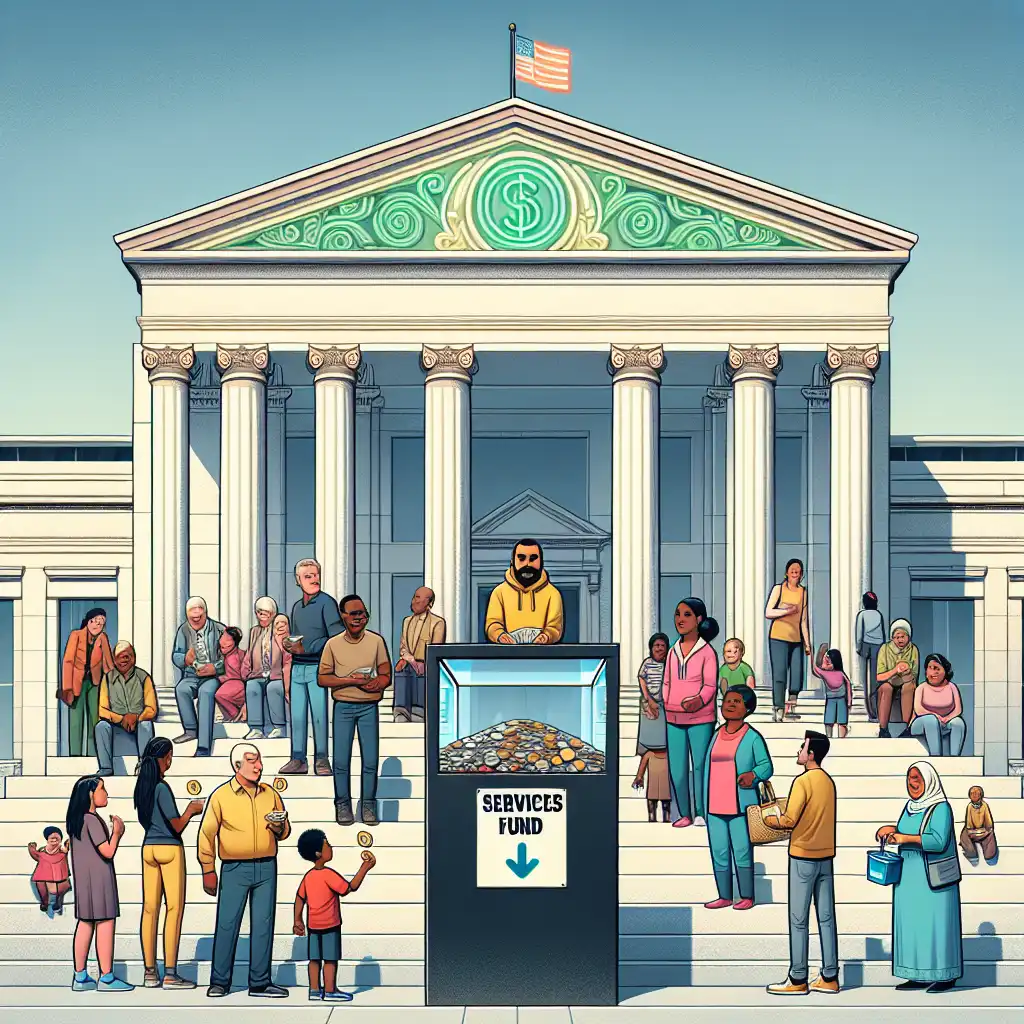
The act of charging people money, called taxes, in order to fund government services.
Taxation laws in the US are determined by both state and federal governments.
taxation
tækˈseɪʃn
Đang tải…
tækˈseɪʃn
The act of charging people money, called taxes, in order to fund government services.
Taxation laws in the US are determined by both state and federal governments.
tækˈseɪʃn
A particular system or way of taxing people.
The company is looking into the taxation policies of other countries for their new business expansion.

tækˈseɪʃn
The amount of tax that a person or company has to pay.
Homeowners in this area are protesting the high taxation on their properties.
Không tải được âm thanh. Vui lòng thử lại sau.
Taxation refers to the process of the government collecting money from citizens and businesses to provide public services, such as roads, hospitals, and schools. Taxes are collected through various means, such as income tax, sales tax, property tax, and corporate tax. Understanding taxation is important because it is a major source of revenue for governments worldwide, and it helps ensure that public services are adequately funded. As an English learner, it is helpful to review common tax terms and their meanings, so you can better understand how taxation impacts your daily life.
Assess means to evaluate or calculate the value or worth of something.
Assess is about determining value while taxation is about collecting money from individuals or businesses to fund public services.
Mở từ: Assess →A contribution is a voluntary payment that someone makes to support a cause or organization, usually in order to help others or to make a positive change.
Contributions are usually made out of a desire to help others or to support a cause, while taxation is mandatory and enforced by law.
Contributions can be made to a variety of different organizations and causes, while taxation is solely collected by the government.
Mở từ: Contribution →Duty and taxation are both terms related to financial obligations, but they are not interchangeable.
A duty is a fee that is charged on goods that are imported or exported. It is a type of tax specifically applied to products that cross international borders.
The purpose of imposing a duty is to protect local industries from competition from foreign producers. For example, if a company in the United States sells shoes, they may have to pay a duty on shoes imported from abroad, which makes them more expensive to purchase than shoes made locally.
A duty is a type of tax specifically applied to goods crossing international borders, while taxation is a broader term that refers to the process of collecting taxes for general revenue purposes.
Mở từ: Duty →Impostor refers to someone who is pretending to be someone else or is pretending to have skills or knowledge that they do not actually possess.
Impostor describes a person who is deceiving others while taxation is the process of collecting mandatory payments from citizens to fund government services.
Mở từ: Impostor →Levy refers to the act of collecting money or imposing a fee or charge for a specific purpose. For example, a government may levy a fee on plastic bags to discourage their use.
Taxation is a broader term that includes different types of taxes such as income tax, sales tax, property tax, etc. Taxation is applicable in all areas where the government provides public services, while a levy is generally implemented for a specific purpose or sector.
Mở từ: Levy →Tariff and taxation are both ways for governments to collect money from individuals or organizations.
A tariff is a tax on imports or exports.
It is usually used to protect domestic industries from foreign competition. For example, if a country produces a lot of cars, they might impose a tariff on imported cars to make them more expensive and encourage people to buy domestic cars instead.
Both tariffs and taxation are used by governments to raise revenue, but they are applied differently. Tariffs are primarily used to regulate trade, while taxation is used to fund government programs and services.
Mở từ: Tariff →Toll refers to a fee or charge that individuals pay to use certain infrastructure or services, such as a toll road or bridge.
The money collected from tolls often goes towards maintenance of the infrastructure or service. Tolls are applicable in areas where there are specific routes or services that require maintenance and upkeep, and are often used as a means of financing such infrastructure.
Mở từ: Toll →Tribute refers to a payment made by a lesser power to a more powerful central authority as a sign of allegiance or submission.
Tribute is often paid in ancient societies, such as in the form of natural resources or precious gifts, to appease or honor a higher power.
Tribute is applicable in feudal or authoritarian systems of governance, where smaller states or territories pay tribute to larger empires or kingdoms.
Mở từ: Tribute →and they were the only ones who paid taxes, not just to the king but to the other Estates as well. In bad harvest years, taxation could leave peasants with almost nothing
Xem trên YouTube ↗The wisdom of man never yet contrived a system of taxation that would operate with perfect equality.
Balancing the power of capitalists like me and workers isn't bad for capitalism. It's essential to it. Programs like a reasonable minimum wage, affordable healthcare, paid sick leave, and the progressive taxation necessary
Xem trên YouTube ↗Declare Church and State forever separate and distinct, but each free within their proper spheres, and that all church property shall bear its own proportion of taxation.
people to high taxation and showed little tolerance for dissent chin outlived numerous assassination attempts and was quite paranoid about revolution he may have thought these threats would follow him into the afterlife the army
Xem trên YouTube ↗I lay this down as a fundamental proposition, which I do not think will be denied, that whoever controls the taxation and trade policy of a country controls its destiny and the entire character of its civilization.
people agreed to pay these voluntary tax if I ever drive again through South America I would love to go through the papers that were financed through the sides of voluntary taxation Latin
Xem trên YouTube ↗As a general rule, governments are wise to avoid taxation that is voluntary, as they need a steady stream of income.
to create a stronger federal government. Thanks to compromises on issues like state representation, taxation power, and how to elect the president, their proposal gradually gained support.
Xem trên YouTube ↗I guess it feels to me that the political argument that has been lost in my lifetime is taxation. How do you engage in that debate when people don't trust politicians at all? It is almost impossible to start a conversation about taxation.
life liberty the pursuit of happiness. If people took seriously that finding, I mean it seems to turn upside down everything we believe about like for example, taxation policy and so forth.
Xem trên YouTube ↗Some doomsayers think the collapse will be triggered by runaway government spending, excessive taxation, oppressive regulation, food shortages, fuel shortages or natural disasters such as deadly pandemics or lethal changes in the world's climate.
But another really important difference is how they get their greater equality. Sweden has huge differences in earnings, and it narrows the gap through taxation, general welfare state, generous benefits and so on.
Xem trên YouTube ↗I think if you look back through time, the history of income, wealth and taxation is full of surprise. So I am not terribly impressed by those who know in advance what will or will not happen.
The circumstances of our lives may actually matter less to our happiness than the sense of control we feel over our lives. It's an interesting question. We ask the question -- the whole debate in the Western world is about the level of taxation.
Xem trên YouTube ↗Broadly shared progress can be achieved with policies that are designed specifically to benefit consumers and workers. And such policies need not even include redistributive taxation, which many workers oppose. Rather, they can focus on ways to encourage competition and discourage rent-seeking.
was as I said, destruction taxation of capital, so this is the pre-tax rate of return. This is the after-tax rate of return, and after destruction, and this is what brought the average rate of return after tax after destruction,
Xem trên YouTube ↗The hollowing out of the middle class. That's not just about capitalism or the structure of taxation. That is also about the fundamental truth that machines can do a lot of things better than humans used to do. A lot of those people are being pushed down to do less value-adding jobs, so they get paid less money.
Every province had its own market for agriculture. Increasingly now the policies of taxation and infrastructure and all that, are moving towards creating India as a single market. So there is a form of internal globalization which is happening, which is as important as external globalization.
Xem trên YouTube ↗By common consent, most European countries support the maintenance of robust welfare states and are comfortable with taxation systems that support them.