simulate
verb simulate
ˈsɪmjuleɪt
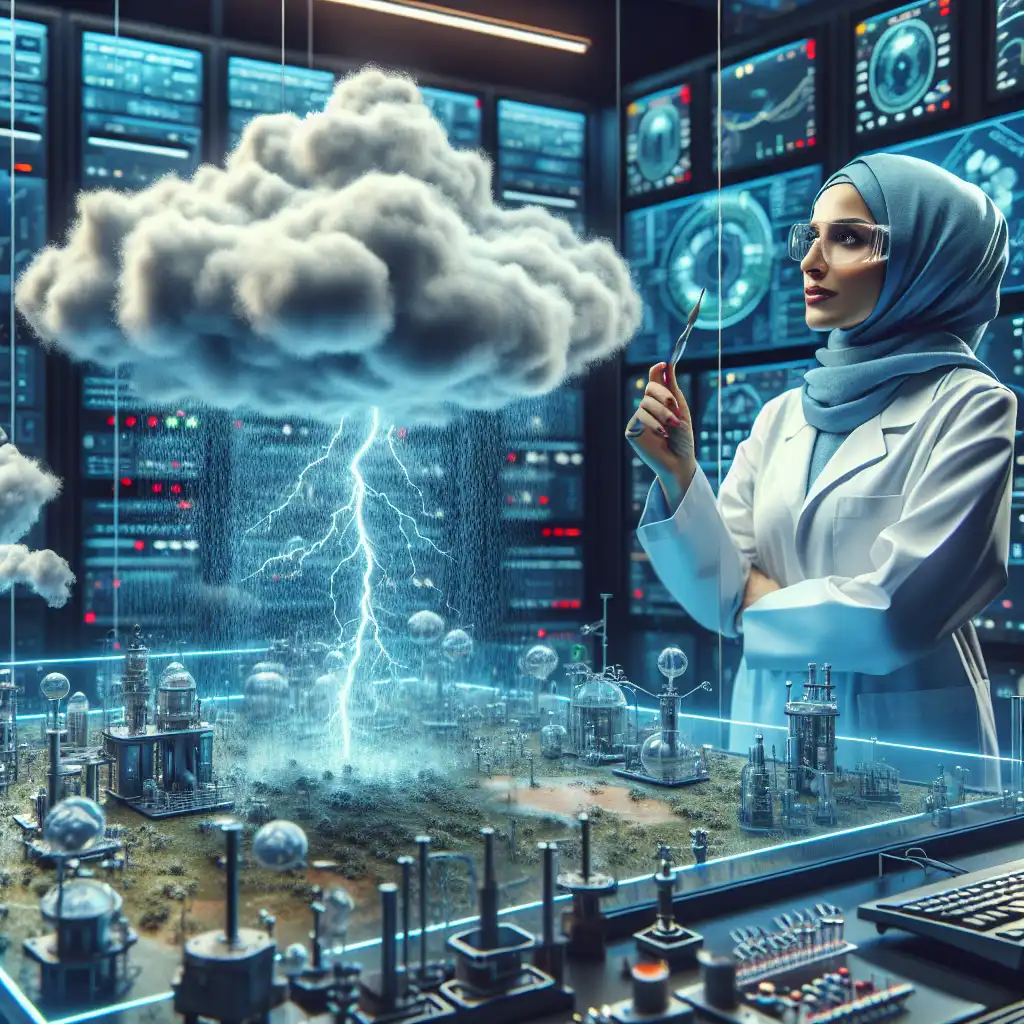
To create a model or representation of something for the purpose of study or testing
Scientists simulate weather conditions in the lab to better understand how storms form.
simulate
ˈsɪmjuleɪt
Loading…
ˈsɪmjuleɪt
To create a model or representation of something for the purpose of study or testing
Scientists simulate weather conditions in the lab to better understand how storms form.
ˈsɪmjuleɪt
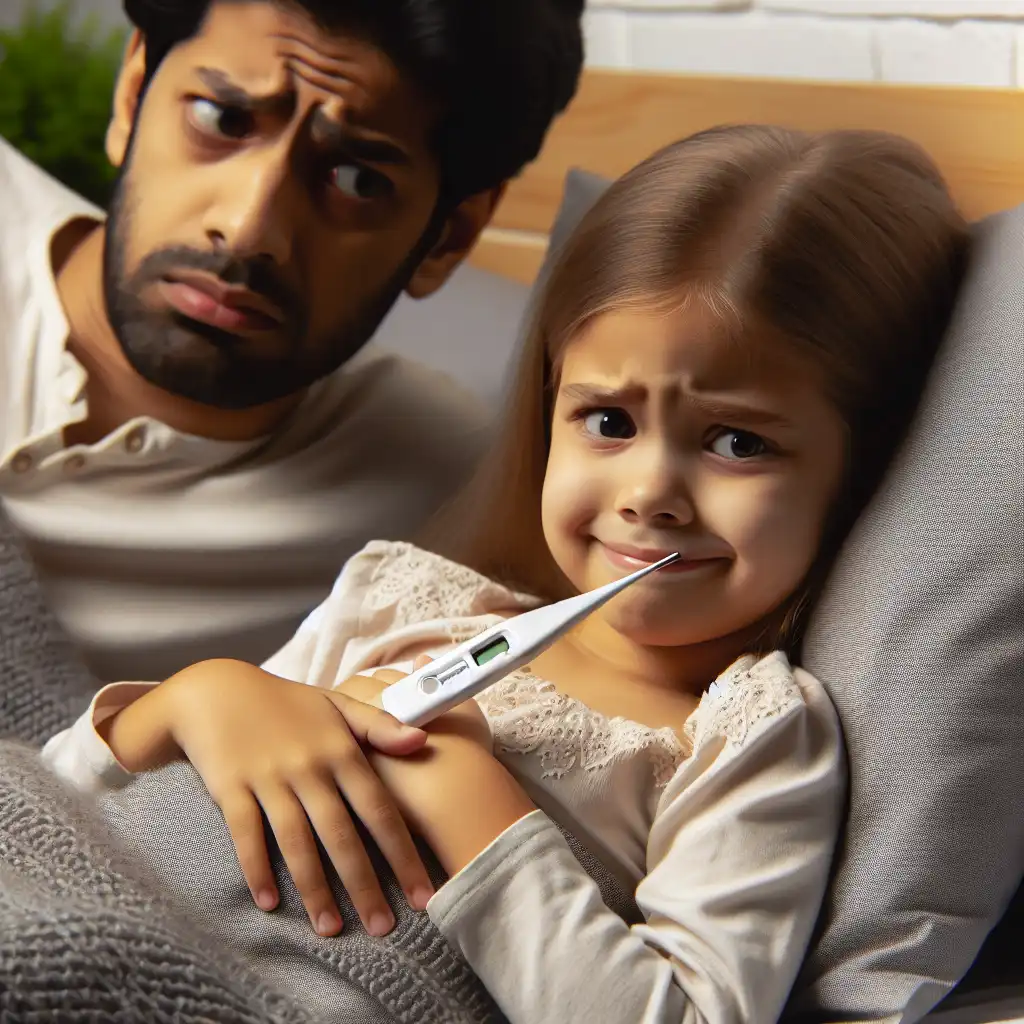
To pretend to have, feel, or do something
She simulated illness to avoid going to school.
ˈsɪmjuleɪt
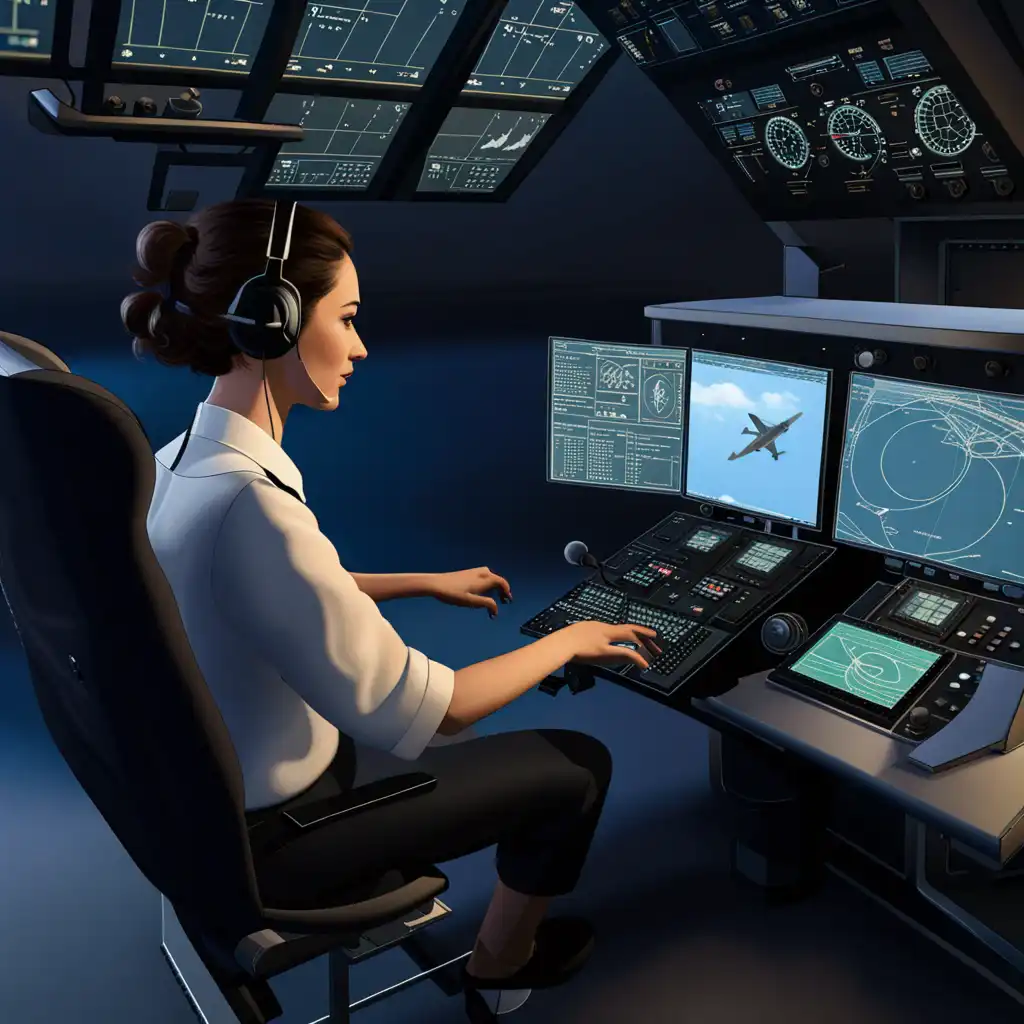
In computing, to act as if you are (something or someone)
The software simulates the experience of flying a plane.
ˈsɪmjuleɪt
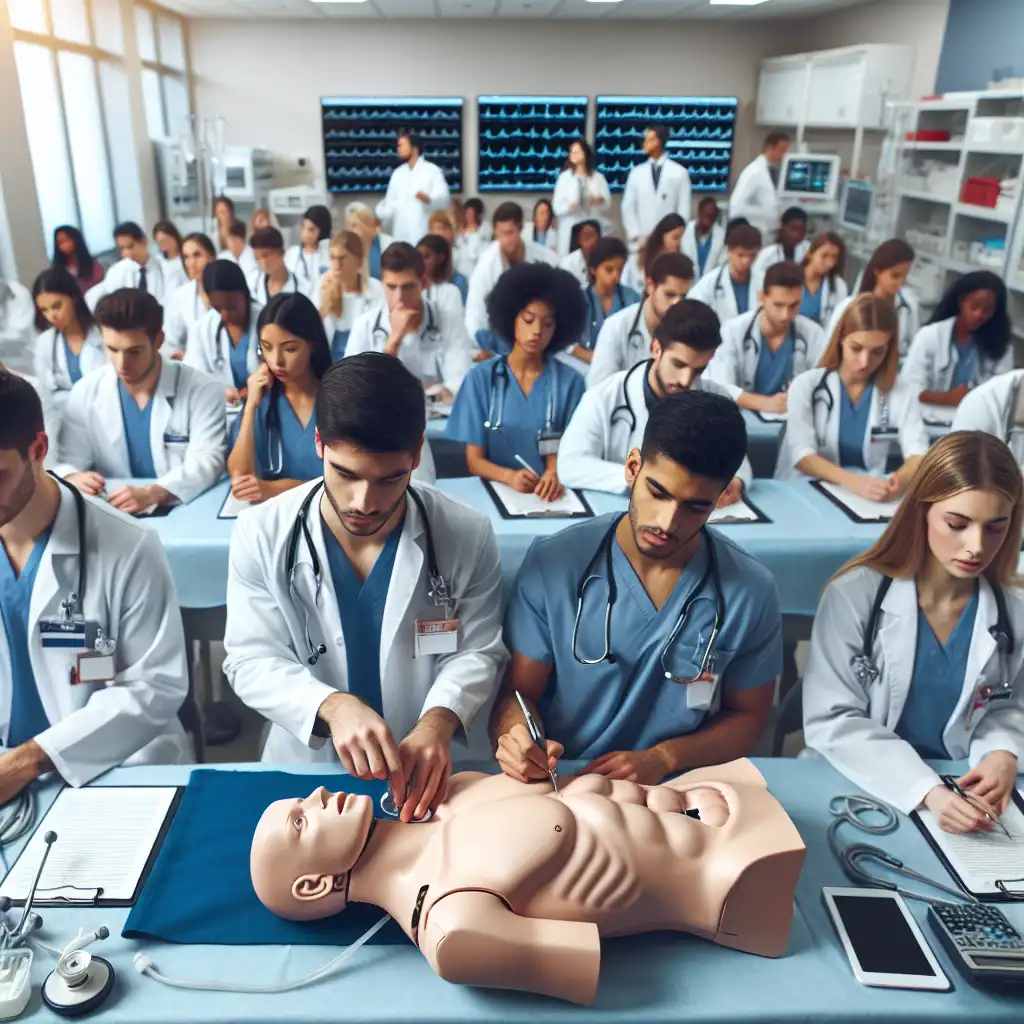
In medical study, to run a scenario with a mock setting for training
We use mannequins to simulate patient scenarios in medical training.
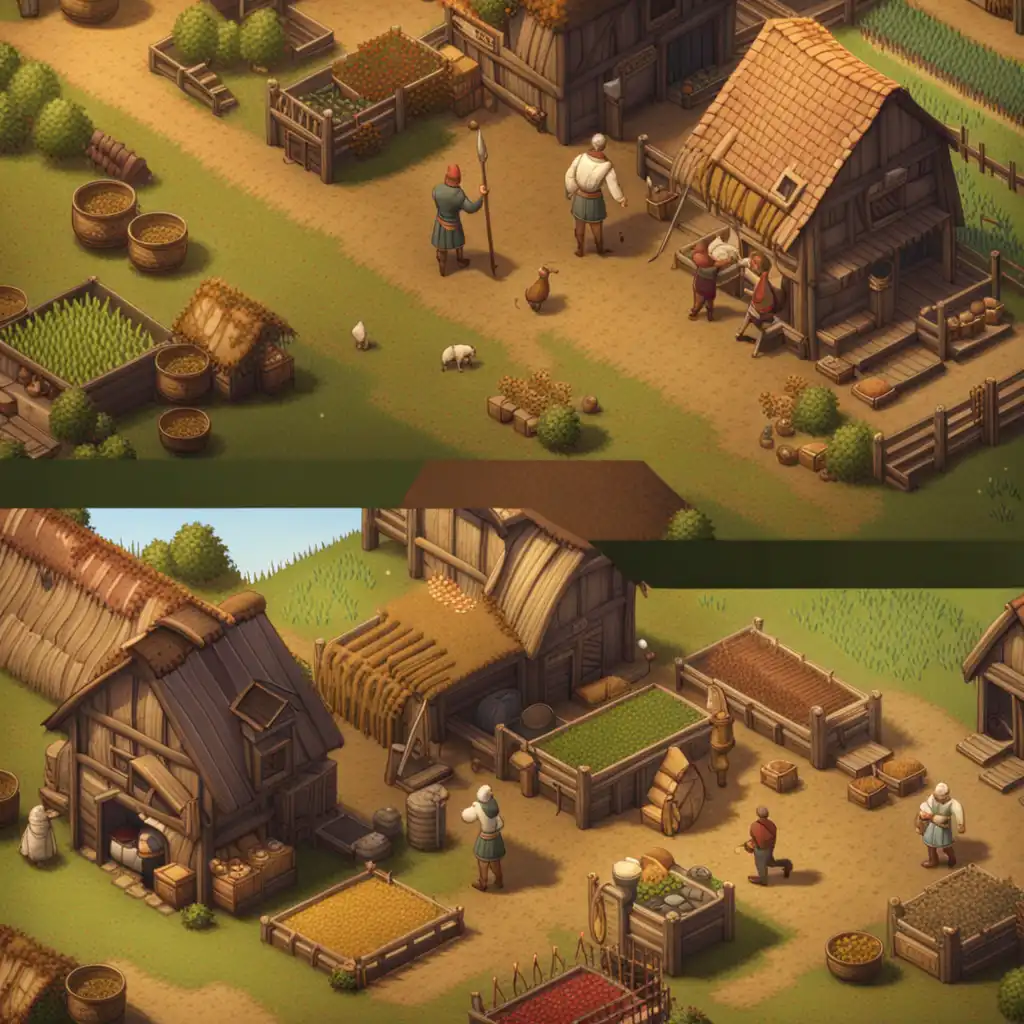
ˈsɪmjuleɪt
In video games, to create a reality that imitates life
The game simulates the day-to-day life of a medieval farmer.
Audio could not be loaded. Please try again later.
The word "simulate" means to imitate or recreate an event or situation that may not be possible or practical in reality. It is often used in computer games or simulations where a particular scenario is replicated for training purposes. For example, a pilot may use a flight simulator to practice flying a plane in different weather conditions or emergency situations. Similarly, a surgeon may use a medical simulator to refine their surgical skills without actually performing surgery on a patient. In everyday language, "simulate" can also refer to pretending or faking something. For instance, a student may simulate interest in a boring lecture to appear engaged. Overall, the word "simulate" is used to describe the act of recreating an experience, whether for training or entertainment purposes.
Duplicate means to create an exact copy of something.
It is used when you want to create a copy of something that already exists. For example, you can duplicate a document, a video, or a photograph.
In other words, duplicate means creating an identical copy of an original, while simulate means imitating or replicating something.
Open word: Duplicate →The difference between emulate and simulate is that emulate means to imitate or copy someone or something in order to achieve the same results, while simulate means to create a similar situation or environment to test or demonstrate something.
For example, if a young athlete wants to emulate their favorite sports star, they would study and practice the same techniques and habits as the star in order to improve their own performance.
Open word: Emulate →Feign and simulate are both words used to describe pretending or imitating something, but they are used in slightly different contexts.
Feign is often used when someone is pretending to have a certain feeling or emotion. For example, if someone is feigning happiness to make others think they are doing okay when they are actually sad.
Feign is often used to describe the act of pretending to have a feeling, such as feigning interest or feigning surprise.
Feign is often used to describe pretending to have a certain feeling, while simulate is more often used to describe imitating something physical or technical.
Open word: Feign →Imitate means copying or doing something similar to someone or something. It involves copying behaviour, actions or habits of someone else.
For example, if you try to speak like your favourite celebrity, you are imitating them.
Simulate means imitating or creating an artificial environment or situation that mimics something. It involves creating a situation that feels like the real thing but is not necessarily the same.
Imitate is about copying someone or something, while simulate is about creating an artificial environment that mimics something.
Imitate is applicable when you want to copy someone's behaviour or actions, while simulate is applicable when you want to create a training or testing environment.
Open word: Imitate →Mimic means to copy the actions or speech of an entity in a way that is meant to be playful, mocking, or humorous. For example, a person mimicking their teacher's mannerisms or a comedian mimicking a celebrity's voice.
Mimic is used when imitating actions or speech in a playful or humorous way, while simulate is used when creating models to replicate the behavior of a system or entity.
Open word: Mimic →Model refers to creating a representation of something, such as a physical object, a situation, or a process.
Models are often used to study and analyze the behavior of things in a simplified way, making it easier to understand how they work.
In summary, models are used to understand things in a simplified way, while simulations are used to predict outcomes in complex systems.
Open word: Model →Pretend means to act out something that is not real, typically for fun or to imagine a situation. For example, kids play pretend games in which they imagine they are astronauts or pirates.
Pretend is used for imagination play, while simulate is used for scientific purposes.
Open word: Pretend →Replicate means to duplicate or copy something exactly as it is. For example, if you were to replicate a cake recipe, you would make the exact same cake as the original recipe.
Replicate is applicable when you want an exact copy of something, while simulate is applicable when you want to model or imitate something without necessarily creating an exact copy.
Open word: Replicate →in which scientists have developed a machine that would simulate real life while guaranteeing experiences of only pleasure and never pain. The catch? You have to permanently leave reality behind, but you'll hardly know the difference.
Watch on YouTube ↗If people want to simulate a godly lifestyle - great. If they don't - good luck with that.
and that includes encouraging them to wee and poop. In the wild they can't do this on their own, so mum helps by licking their behind. Tapping Ling Hwa's back end is the next best option and simulates what panda mums do with their tongue to encourage going to the toilet.
Watch on YouTube ↗I'd say that we dream primarily the same way that we have consciousness of the world for the same reason. Basically, that our brains evolve to simulate reality and to control what's happening around us.
the imaging algorithms I develop use our limited telescope data to guide us to a picture that also looks like stuff in our universe. Using these algorithms we're able to piece together pictures from this sparse noisy data. So here I show a sample reconstruction done using simulated data,
Watch on YouTube ↗I can be fascinated with very little things. The clouds stimulate my imagination, and sometimes I just sit somewhere and go on dreaming for a long time. Your head is also a computer. When you're dreaming, you are simulating a world in which you are living.
resulting from a concrete bomb now the way we've decided to do that is to line up three cars using the center vehicle as the target for our bombs the center car will be rigged with explosives to simulate the sort of damage that a real-life explosive bomb causes when it hits its target
Watch on YouTube ↗Computers are very powerful tools, but in the simulated world of the computer, everything has to be calculated.
reef it has a normal ocean chemistry you can see the white coral there you can see the red coral there you can see lots of life diversity on the right is an area of the reef that's closer to these volcanic vents this area simulates how all of our
Watch on YouTube ↗Post-human intelligence will develop hypercomputers with the processing power to simulate living things - even entire worlds. Perhaps advanced beings could use hypercomputers to surpass the best 'special effects' in movies or computer games so vastly that they could simulate a world, fully, as complex as the one we perceive ourselves to be in.
as this active constructive process. Here we've combined immersive virtual reality with image processing to simulate the effects of overly strong perceptual predictions on experience. In this panoramic video we've transformed the world -- which is in this case Sussex campus --
Watch on YouTube ↗Shorter daylight hours can affect sleep, productivity and state of mind. Light therapy, also known as phototherapy, may help. It uses light boxes emitting full-spectrum light to simulate sunlight.
where we'd simulate what needed to be done. We hardly did anything, and so now here we have a respiratory virus that is sadly fulfilling some of the more negative predictions I made. Last month you said that this might be the big one.
Watch on YouTube ↗The most important application of quantum computing in the future is likely to be a computer simulation of quantum systems, because that's an application where we know for sure that quantum systems in general cannot be efficiently simulated on a classical computer.
from a walking climbing or swimming animal. A monkey's brain must have software capable of simulating a three-dimensional world of branches and trunks. A mole's software for constructing models of its world will be customized for underground use.
Watch on YouTube ↗If we're going to achieve compassion in the machines and also feel safe with the machines, to raise machines with human-like values, we need to make them human-like by simulating, or perhaps eventually imitating, human beings in high accuracy from top to bottom.
If space and time are continuous, then even a tiny piece of the universe has infinite points and becomes impossible to simulate with finite computing power. So a simulation would have to represent space and time in very small pieces. These would be almost incomprehensibly tiny. But we might be able to search for them
Watch on YouTube ↗Life in zero gravity is hard to simulate. We practice on the ground what we call 'the day in the life' simulations, but it's just practicing some of the tests. It can't prepare you for the fact that all of your tools float if you don't pay attention to where they are! If you don't Velcro things down, they're gonna float away.
own so mum helps by licking their behind tapping yinghua's back end is the next best option and simulates what panda mums do with their tongue to encourage going to the toilet
Watch on YouTube ↗There is no disguise which can hide love for long where it exists, or simulate it where it does not.