sediment
noun sediment
ˈsedɪmənt
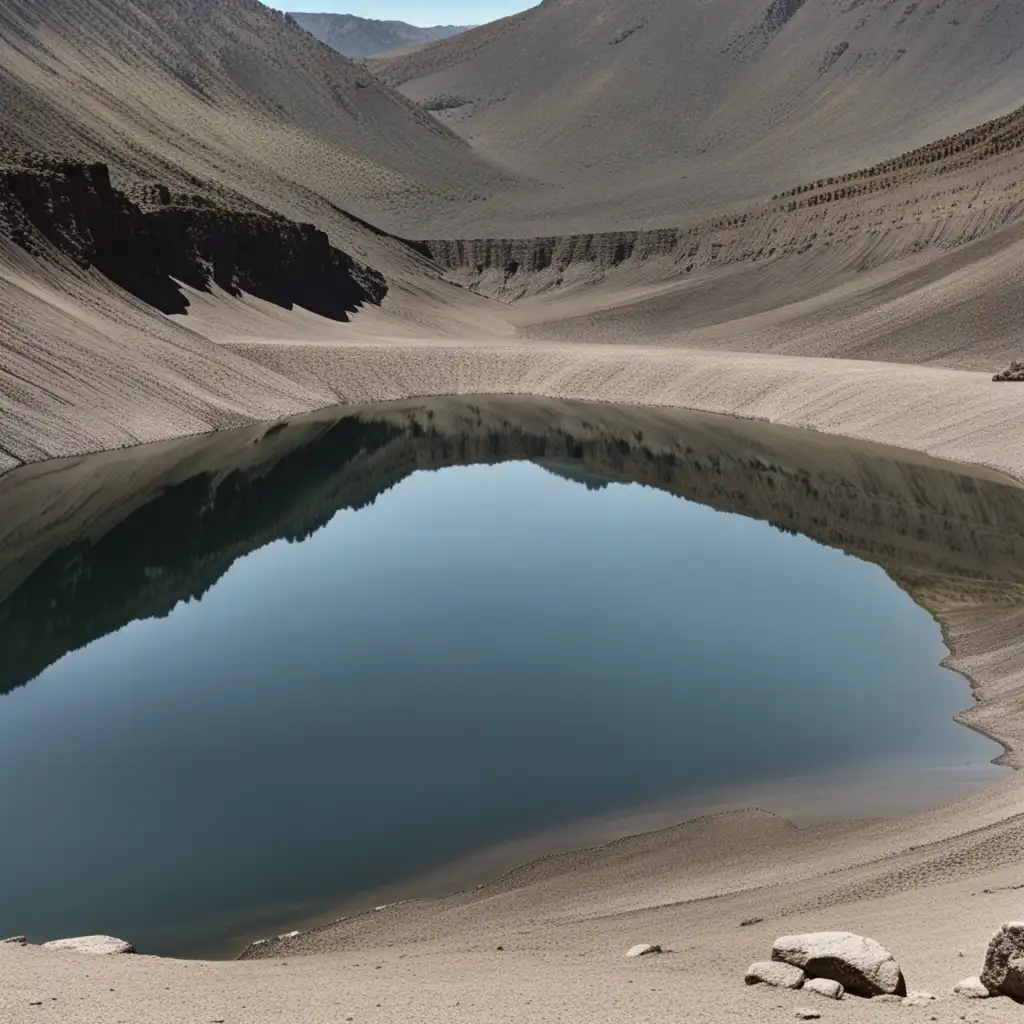
Small pieces of matter that settle at the bottom of a liquid
There was so much sediment at the bottom of the lake that it was nearly impossible to see through the water.
sediment
ˈsedɪmənt
Cargando…
ˈsedɪmənt
Small pieces of matter that settle at the bottom of a liquid
There was so much sediment at the bottom of the lake that it was nearly impossible to see through the water.
ˈsedɪmənt
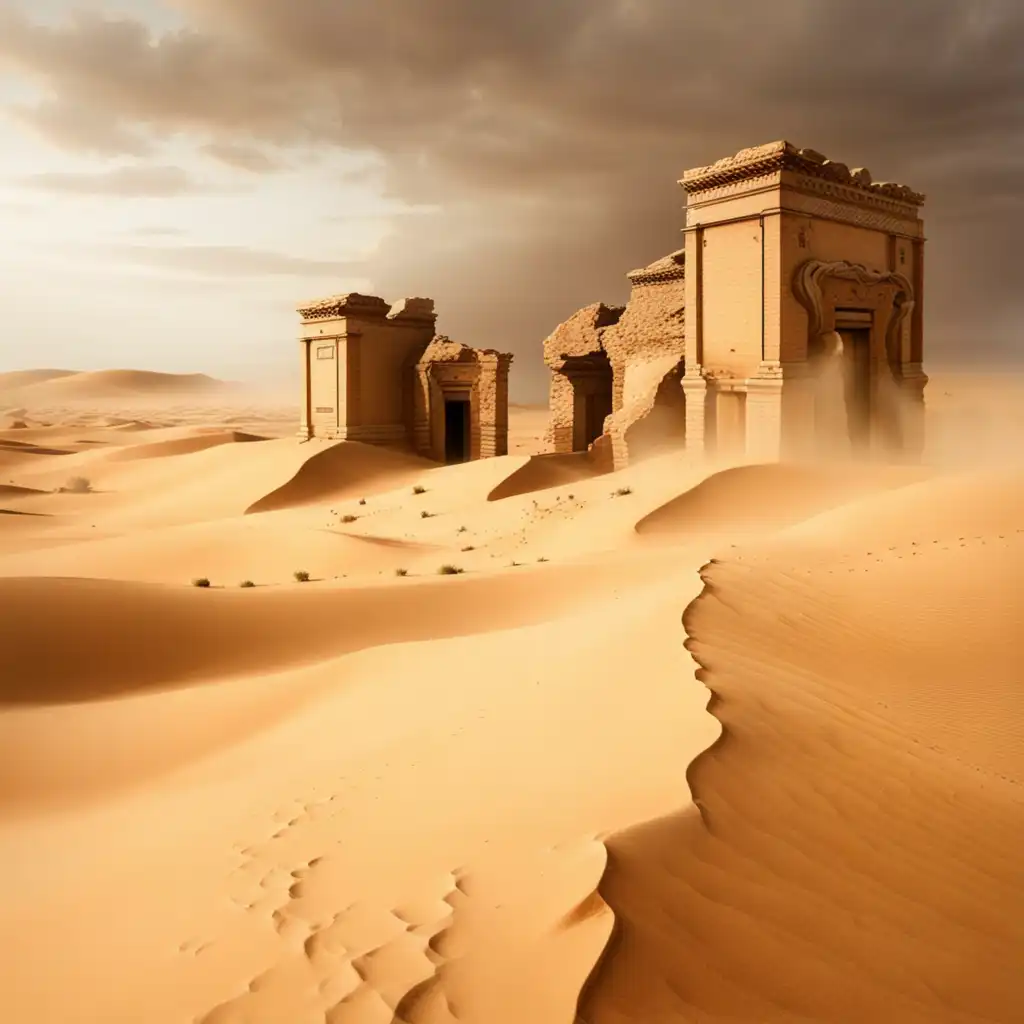
Material deposited by water, wind, or glaciers
The windy desert conditions resulted in a thick layer of sediment covering the ancient ruins.
ˈsedɪmənt
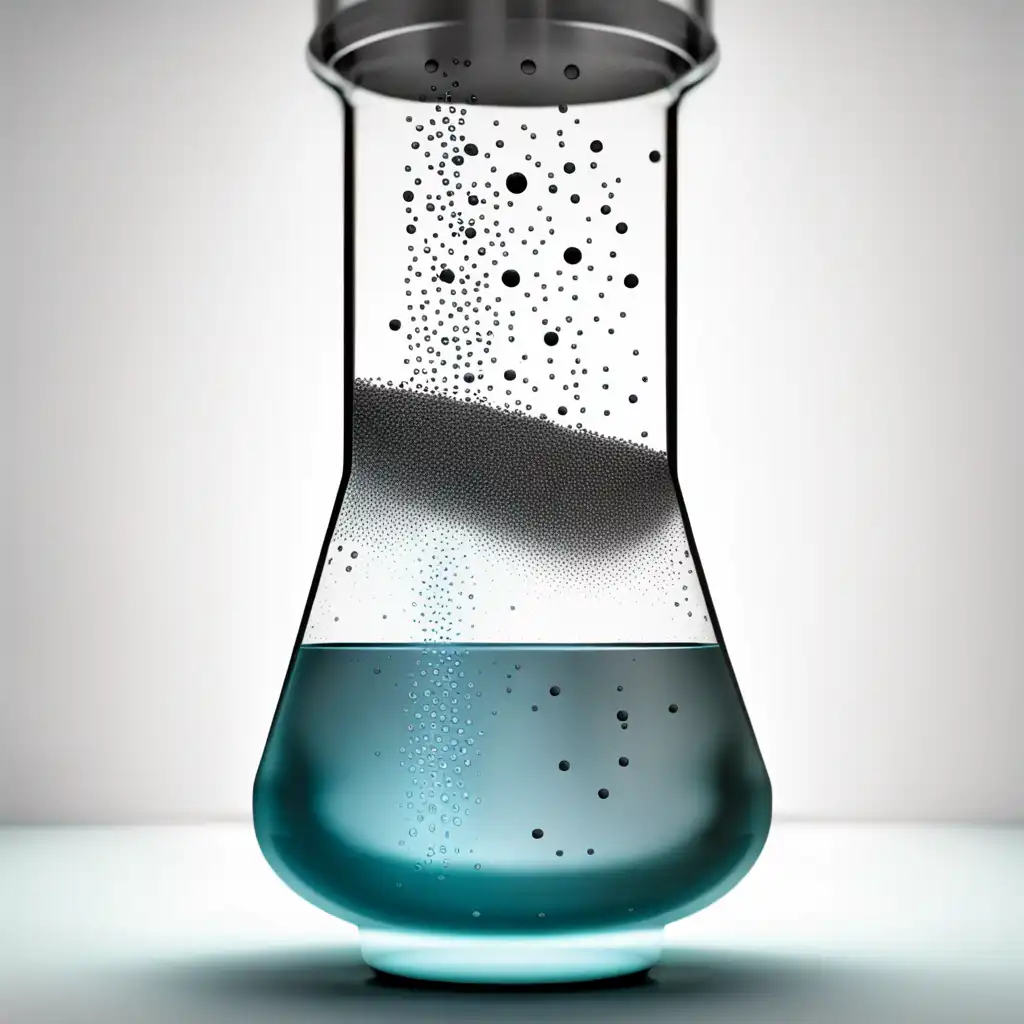
The process of settling or being deposited as a sediment
The experiment involved observing the sedimentation of particles in a solution.
No se pudo cargar el audio. Inténtalo de nuevo más tarde.
Sediment is a word used to describe the tiny bits of dirt, sand, rocks, and other stuff that sinks to the bottom of a body of water, like a lake or river. It can also refer to any material that settles to the bottom of a liquid, like a bottle of juice or a test tube. Basically, sediment is the solid material that collects at the bottom of something.
Deposit refers to the act of placing or putting something somewhere, usually with the intention of it remaining in that specific place for a period of time.
It can also refer to money being placed into a bank account. For example, a person may deposit cash into their savings account.
Deposit can also refer to general items being placed or stored, such as a deposit of books in a library.
Deposit refers to the act of placing something in a specific location with the intention of it remaining there, while sediment refers to matter that has settled at the bottom of a liquid due to gravity.
Deposit is applicable in a wide range of scenarios, including financial transactions and storage of items. Sediment is most commonly associated with geological formations and the study of the Earth's history.
Abrir palabra: Deposit →Dregs are the leftover particles or residue at the bottom of a container, typically after liquid has been poured out. This applies to things like coffee or wine, where the dregs are the last bits of liquid mixed with solid particles like coffee grounds or grape skins.
Dregs are applicable to liquid beverages and the remnants at the bottom of the cup or bottle, while sediment can be found in natural processes such as water erosion or settling.
Abrir palabra: Dregs →Precipitate and sediment are both related to the settling or separation of solid particles from liquids or gases, but there are some key differences.
Precipitate refers to the process of a solid forming within a solution as a result of a chemical reaction. For example, adding bleach to water causes a white precipitate to form.
Precipitate refers to solid particles that form as a result of a chemical reaction, while sediment refers to solid particles that settle out of a liquid or gas over time.
Abrir palabra: Precipitate →Both residue and sediment refer to materials that remain after a process, but there are some differences:
Residue: Refers to the material that remains after a substance has been processed or refined.
It is usually a small, leftover amount of something that cannot be extracted or removed from the original material. For example, the residue left after a perfume is made or after cooking in a pan.
Residue is the material left over after a process, while sediment is the material that settles down naturally.
Abrir palabra: Residue →Sediment refers to small particles of sand, dirt, and other materials that settle at the bottom of a body of water or other liquid over time.
It can also refer to similar particles that settle in the bottom of a container over time. Settle refers to when those particles or other materials come to rest and stop moving.
Sediment refers to the actual particles that settle, while settle refers to the act of those particles coming to rest. Sediment is applicable when discussing the accumulation of small particles in a liquid or container, while settle can be used in a variety of contexts to describe any situation where something comes to rest.
Abrir palabra: Settle →It is a natural occurrence and can sometimes be useful, such as in agriculture. Sludge refers to a thick, muddy substance that is the result of waste and sewage treatment processes.
Sludge is not natural and often contains harmful bacteria and chemicals that can be hazardous to human health and the environment.
Sludge is typically disposed of in a safe and regulated manner.
Abrir palabra: Sludge →as it enters botswana it confronts the dry sounds of the kalahari desert and its main arteries begin to slow its rich sediments settle and form the largest inland delta in the world
Ver en YouTube ↗For fossils to thrive, certain favorable circumstances are required. First of all, of course, remnants of life have to be there. These then need to be washed over with water as soon as possible, so that the bones are covered with a layer of sediment.
lakes contain layers of sediment that have accumulated in the bottom it's a bit like a tape recorder year by year what's gone on in the climate what the temperature was what the life-forms were around so it was proposed that to add to
Ver en YouTube ↗When whales die, their bodies sink to the bottom of the ocean and over time become part of the marine sediment layer, where they can sequester the carbon dioxide they have accumulated during their life span, an average of 33 tons for a great whale species, keeping it out of the atmosphere for hundreds or thousands of years.
underneath all the world's oceans that extends hundreds of meters into the seafloor, which is cool, but the only problem is that nobody believed him, and the reason that nobody believed him is that ocean sediments may be the most boring place on Earth.
Ver en YouTube ↗I've collected John Ward pieces for years. Ward represents ideas of nature and of sediments.
Otherwise you'd better hope the sediments around you harden while your bones decay away and another sediment or mineral fills in the spaces your bones leave behind, creating a perfect cast of your skeleton. Over time the sediments around your fossil
Ver en YouTube ↗The success of the suffrage movement would injure women spiritually and intellectually, for they would be assuming a burden though they knew themselves unable to bear it. It is the sediment, not the wave, of a sex. It is the antithesis of that highest and sweetest mystery - conviction by submission, and conquest by sacrifice.
simply diverting water and very specific ways based on the kind of recorded set of histories we've seen of how this behaves we're able to in a sense guide you know massive amounts of sediment in very specific directions and then I mean I mean it's basically what what it says it is it's printing where we want want
Ver en YouTube ↗We can see cities during the day and at night, and we can watch rivers dump sediment into the ocean, and see hurricanes form.
and the pictures that we can take of the surface, and the things that we can do on the surface to ground truth that data. This data we can resolve things that are about 20 meters across. The camera has a resolution of six meters per pixel. And we can see that channel now coming in from the upper left and draining out into a fan of sediment. We call this an alluvial fan.
Ver en YouTube ↗At the point when continuity was interrupted by the first nuclear explosion, it would have been too easy to recover the formal sediment which linked us with an age of poetic decorum, of a preoccupation with poetic sounds.
the reason that they like the same places that are shrimp do is the shrimp are keeping it clean and they're sweeping off the sediment from the bottom they're turning a lot of that material into their own bodies and that the shrimp are able to use a lot of things that would otherwise
Ver en YouTube ↗I just got hooked on the radio, the voice of it all. It was my connection to metropolitan America, if you will. Sports, in particularly baseball then 'cause of its rich sediment of numbers, was one of the first things a young person could peg up with adults on - that is, you could know as much about Jimmy Fox as your father did.
Deltas are a kind of landmass formed when sediment carried by rivers is deposited where that river meets a larger body of water. River deltas are incredibly fertile ecosystems capable of supporting abundant agriculture and marine life.
Ver en YouTube ↗Furthermore, both Pennsylvania and New Jersey Departments of Environmental Protection have evaluated the sediment to be dredged and also found it to be not toxic.
that mean for the long-term stability of those populations we even had some rare and endangered birds that we're actually nesting out here and today nothing they're all gone there is an effort to restore this island and to bring in sediment back and the mangroves back so
Ver en YouTube ↗The sediments of the past are many miles in collective thickness: yet the feeble silt of the rivers built them all from base to summit.
I hadn't realized it was based on concrete measurements of what the paleoclimates -- the ancient climates -- were, as recorded in the ice sheets as recorded in deep ocean sediments,
Ver en YouTube ↗I have two moods. One is Roy, rollicking Roy, the wild ride of a mood. And Pam, sediment Pam, who stands on the shore and sobs... Sometimes the tide is in, sometimes it's out.