
formalism
noun formalism
ˈfɔːrməlɪzəm
A strong focus on rules, structures, and procedures rather than on the content or context.
His strict formalism in applying the law was frustrating to many.
formalism
ˈfɔːrməlɪzəm
Cargando…
ˈfɔːrməlɪzəm
A strong focus on rules, structures, and procedures rather than on the content or context.
His strict formalism in applying the law was frustrating to many.
ˈfɔːrməlɪzəm
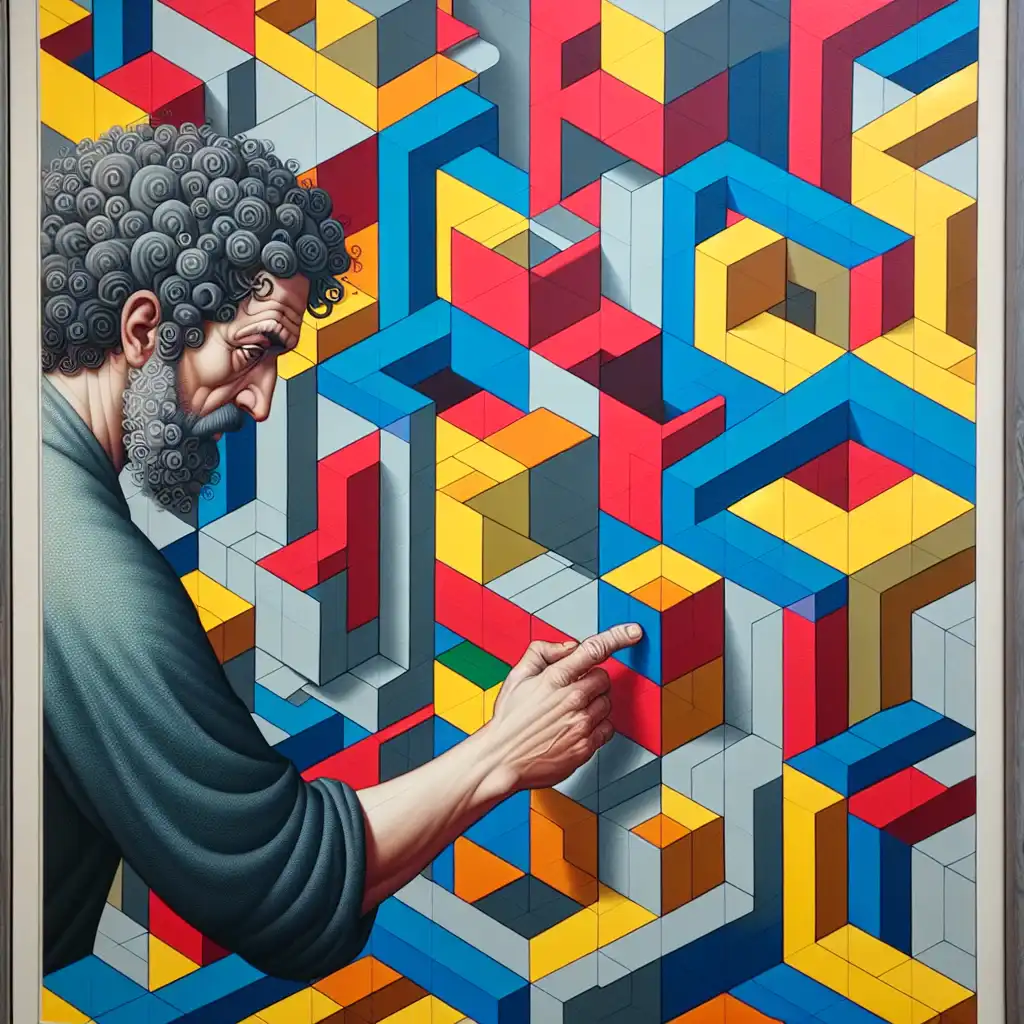
An approach in art, music, or literature that emphasizes form and structured patterns over expression or emotion.
The painter's work is characterized by a bold formalism, with a heavy emphasis on geometric shapes.

ˈfɔːrməlɪzəm
An approach in philosophy emphasizing symbolic logic, mathematical structures, and objective verification.
His philosophical work is largely based on formalism, with a focus on understanding the nature of symbolic representations.
ˈfɔːrməlɪzəm
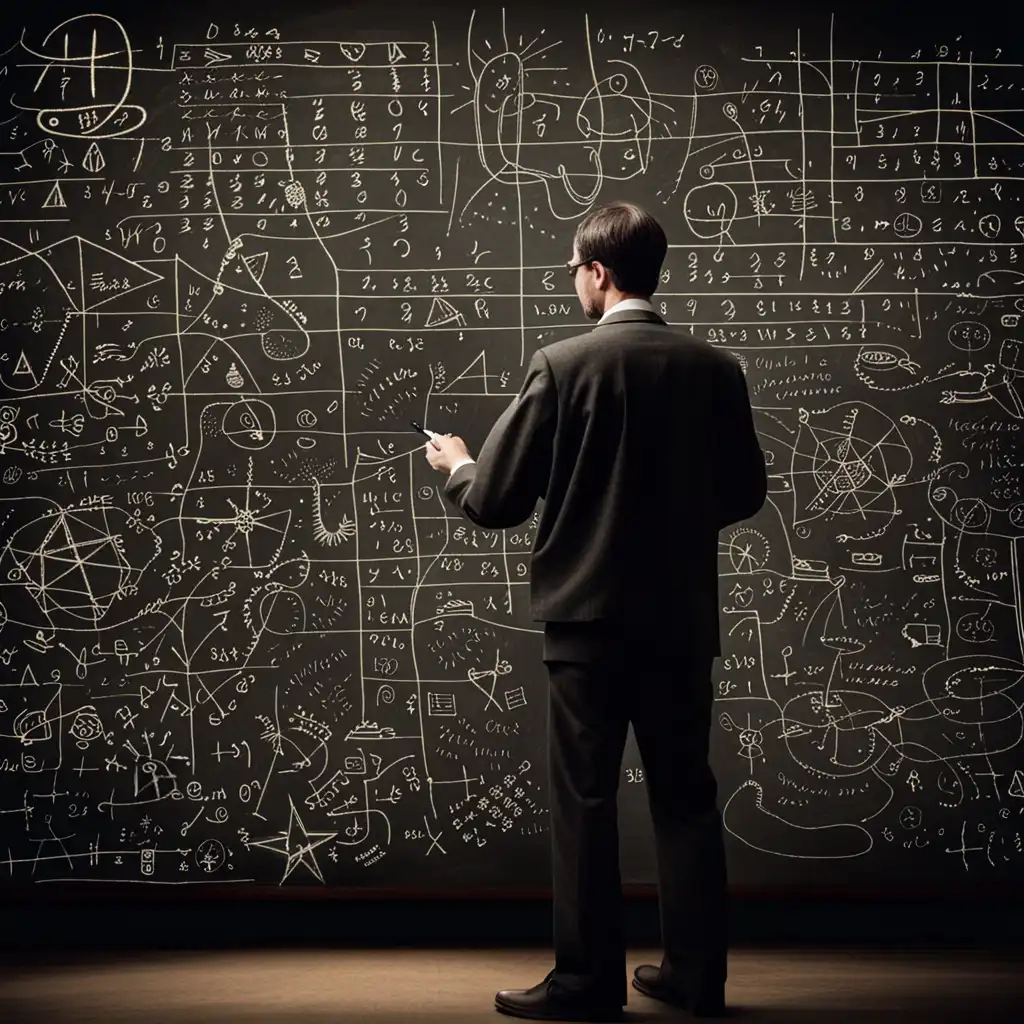
An approach in mathematics which regards mathematical concepts as formal expressions, disconnected from their intuitive meanings.
The formalism of his mathematical proofs ... they are purely symbolic and do not rely on geometric intuition.
No se pudo cargar el audio. Inténtalo de nuevo más tarde.
Formalism can refer to a style, approach, or philosophy that emphasizes following rules and conventions strictly, especially in the arts or academic fields. In simpler words, formalism means giving importance to following certain established norms or procedures while doing something. For example, in literature, formalism means paying more attention to the technical aspects of a text, such as structure and language, rather than its meaning or context. Similarly, in science, formalism is a way of approaching a problem by using a rigorous mathematical framework to derive solutions or predictions. In general, the word formalism is often used to describe a conservative or traditional approach to a particular field.
Aestheticism is the belief that beauty and the experience of beauty should be the primary focus of art. It prioritizes the emotions evoked by a work of art over any underlying meaning or message.
Aestheticism is applicable when someone wants to appreciate art purely for its sensory and emotional impact. It is most commonly associated with the late 19th century movement of art for arts sake.
In simpler terms, aestheticism is about the feeling and experience of art, while formalism is about the technical aspects and structure of art.
Abrir palabra: Aestheticism →Artificiality relates to something that is not genuine, but has been created or designed, often in an attempt to imitate something natural or real.
Both artificiality and formalism can be applied to various areas, such as art, literature, and social behavior. For example, a piece of art that is highly stylized and lacks any naturalistic elements could be described as artificial, while a literary work that follows a strict set of poetic rules could be described as formalist.
Abrir palabra: Artificiality →Conformity refers to the act of following rules, expectations, or norms that are already in place. It often involves fitting in with a larger group in order to be accepted or to avoid negative consequences.
Conformity is about following existing norms and expectations to fit into a larger group, while formalism is about rigidly following rules and procedures without considering individual circumstances.
Abrir palabra: Conformity →Conservatism is a political ideology that emphasizes tradition and stability, preferring to preserve existing social, economic, and political structures.
Conservatism relates to traditional and political beliefs, while formalism relates more to artistic and literary analysis.
Abrir palabra: Conservatism →Formality refers to the observance of traditional or official customs, such as dress codes or etiquette. It involves behaving in a polite and respectful manner according to social expectations.
Formality is applicable in situations where a certain level of decorum is expected, such as business meetings or formal events.
Abrir palabra: Formality →Orthodoxy refers to adherence to traditional beliefs or practices within a particular religion, philosophy or ideology.
Orthodoxy places a greater emphasis on maintaining the status quo and preserving traditional values, often in contrast to more progressive or innovative approaches.
Formalism is about following rules to achieve consistency and accuracy, while orthodoxy is about adhering to traditional beliefs or practices.
Abrir palabra: Orthodoxy →Pedantry refers to an excessive concern with minor details or rules, often at the expense of common sense or practicality.
Formalism is generally considered positive, as it promotes accuracy and consistency in a particular field, while pedantry is often viewed as negative, as it can lead to unnecessary complication and rigidity.
Abrir palabra: Pedantry →Superficiality refers to a lack of depth or substance, where something appears only on the surface or is unimportant. Superficiality is applicable in situations where something is not genuine, authentic, or doesn't have much depth or meaning.
In essence, formalism is about following procedures, while superficiality is about appearances.
Abrir palabra: Superficiality →There's a perspective that I've gained as an astronaut that I didn't get from my science activities. In my science activities, I learned by the seat of my pants. Spending 17 years as an astronaut, I learned the NASA formalism of systems engineering as if my life depended on it. Literally.
The exercises of our meeting are to be simple and devoid of all ceremonial and formalism.
We refuse to recognize problems of form, but only problems of building. Form is not the aim of our work, but only the result. Form, by itself, does not exist. Form as an aim is formalism; and that we reject.
Far from creating a new formalism, what these can yield is something far transcending surface values since they not only embody form as beauty, but also form in which intuitions or ideas or conjectures have taken visible substance.
Bjork has this kind of abstraction and formalism that you associate with art music or avant-garde music.
I kept writing not because I felt I was so good, but because I felt they were so bad, including Shakespeare, all those. The stilted formalism, like chewing cardboard.
It's a big criticism of Greenaway films that they are far too interested in formalism and not enough interested in notions of emotional content. It's a criticism I can fully understand from a public that has been brought up by Hollywood movies that demand intense emotional rapport.
Art has a double visage: it looks before and after. Romance is its forward-looking face. The germ of growth is in romanticism. Formalism, on the other hand, consolidates tradition; gleans what has been gained and makes it facile to the hand or the mind; economizes the energy of genius.
Form as a goal always ends in formalism. For this striving is directed not towards an inside, but towards an outside. But only a living inside has a living outside.