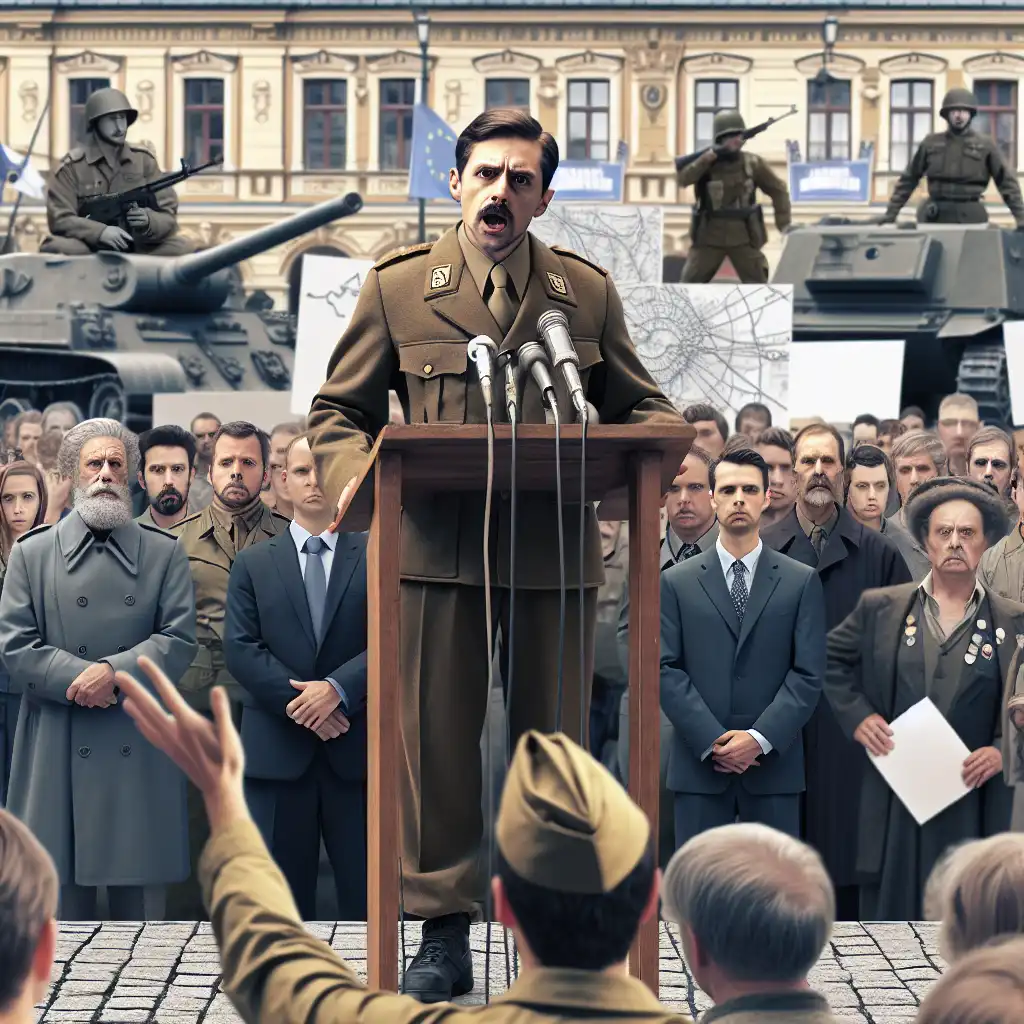
The term 'militarist' refers to someone who supports the use of military force and the promotion of military power in their government and society. The term is often used to describe certain politicians or people in power who prefer armed conflict as a way of resolving problems, rather than diplomacy or peaceful negotiations. It is important to note that the term can have negative connotations, as an excessive focus on military power can sometimes lead to aggression, violence, and conflict.
Aggressive refers to someone or something that is prone to or likely to attack or confront others, while militarist refers to someone who believes in or supports military power and practices.
For example, an aggressive person may be quick to pick fights or argue with others, while a militarist may believe that military force is the best way to solve problems or secure a country's interests.
Aggressive is more applicable to individual behavior or actions, while militarist is more applicable to political ideologies or beliefs.
Bellicose means inclined to fight or be hostile. It describes a person or a group of people who have a certain attitude and demeanor that displays their readiness for conflict or violence.
While both words are related to situations involving war and conflict, bellicose describes someone's behavior or attitude, while militarist refers to someone's beliefs or political views.
In summary, one could say that a person who is bellicose is someone who tends to be aggressive or confrontational, while a militarist is someone who strongly supports the use of military force.
Belligerent refers to a person or nation who is aggressive and eager to fight or engage in conflict. This can be applied to individuals who are quick to start arguments or fights, or nations that are involved in conflicts or wars.
Belligerent describes behavior while militarist describes a belief or ideology. Belligerent individuals or nations behave aggressively and are quick to fight, while militarists prioritize military power as a key aspect of a nation's success.
Combative means a tendency to fight or argue aggressively. It is applicable in situations where someone is confrontational or argumentative towards others, such as in heated debates or during physical altercations.
Combative refers to a confrontational attitude, while militarist refers to support for military action or policy.
Hawk refers to someone who believes in using strong or aggressive measures, especially in foreign policy, to protect a country's interests.
A hawk is more specific to foreign policy and uses aggressive tactics, while a militarist is more general and prioritizes military power in all aspects of society.
Martial refers to something related to war, fighting, or military matters. For example, someone who is skilled in martial arts is good at fighting techniques.
Martial is generally used to describe things related to fighting or war, while militarist describes a belief or attitude towards military power.
Militant refers to a person who engages in aggressive or violent actions for a cause or ideology.
Militant describes someone who is actively fighting for their cause while militarist describes someone who is supportive of military power and prowess.
A warmonger is a person who actively promotes or encourages war or conflict. This can be someone who pushes for aggressive military action even when it may not be necessary or someone who seeks out conflict for personal gain.
Essentially, a militarist supports the use of military force as a tool in certain situations, while a warmonger actively seeks to create situations where military force is used.
We saw Jesse Jackson the victim of a smear campaign. People remember the Dean scream that was used against Howard Dean as a peace candidate who was doing well. So, in many ways, the Democratic Party creates campaigns that fake Left while it moves Right and becomes more corporatist, more militarist, more imperialist.
Either you're this, or you're that: either you're - if you're a Pakistani, you're a terrorist; if you're an American, you might be a militarist. Those kind of prisms that we see each other through are really stultifying, and they don't often show the complexity and the incredible warmth and encompassing of the world.