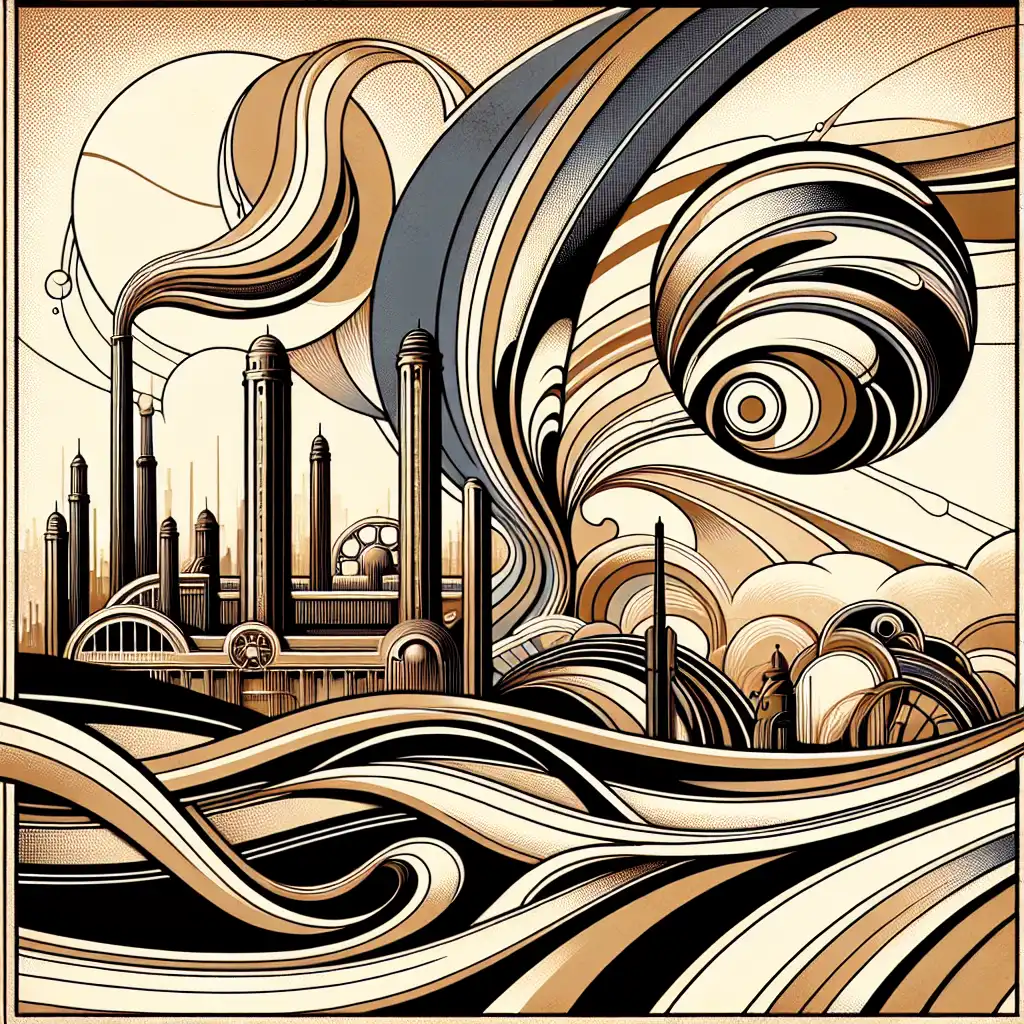
A style in art, literature and music from the early 20th century that represents modern ideas, especially the idea that things will get better in the future.
The artist's work shows a clear influence of Futurism.
Audio could not be loaded. Please try again later.
How to use
Futurism refers to a movement or style that emphasizes the future, innovation, and modernity. It can be used in the context of art, literature, technology, and culture. For example, a painting or artwork that shows futuristic elements or themes can be called a futurist piece. The word can also be used to describe a person, idea, or trend that is forward-thinking and incorporates new and innovative ideas. In everyday language, futurism can be used to describe a desire or anticipation for what the future holds, or a focus on progress and development.
Anticipation refers to the act of expecting something to happen or being prepared for something that is likely to happen in the near future.
Anticipation can be applicable in situations where a person is expecting a good or bad outcome, such as waiting for exam results or waiting for a loved one to arrive.
Anticipation is about the feeling of expectation, while futurism is a proactive approach to shaping the future.
Idealism is the belief in the importance of ideas and principles over material reality. It is applicable in the context of philosophy and ethics, as well as political and social movements.
In simpler terms, futurism is about looking forward to a better future through scientific and technological advancements, while idealism is about emphasizing the importance of ideas and principles in guiding society and individuals.
Innovate, on the other hand, means to come up with new ideas or ways of doing things. It's about creating something entirely new or improving upon an existing product or concept.
Futurism is about predicting the future and being prepared for it, while innovating is about creating something new and innovative in the present.
Modernism is a broader movement that encompasses a range of styles and beliefs that emerged in the late 19th and early 20th centuries in response to the changing world of industrialization and urbanization.
It was focused on individualism, abstraction, and experimentation. Modernism was applicable to many fields, including art, literature, architecture, music, and philosophy.
In short, Futurism was a specific artistic movement that celebrated the future and modernity, while Modernism was a broader cultural movement that encompassed many different artistic styles and philosophies.
Utopianism is the idea of a perfect society or world - one without conflict, problems, or limitations. It is based on the belief that things can be made better by human effort, and that we can create a world that is free from all the difficulties we face today.
Utopianism is applicable in areas such as social and political philosophy, where people might consider what kind of society we might create if we could start from scratch.
While futurism seeks to identify areas for improvement in the present, utopianism looks at the ideal future and what we could create if we pursued certain goals.
Visionary refers to someone with the ability to imagine or plan for the future with great insight and creativity. They are often able to see possibilities that others may not and strive for new ideas and solutions.
While futurism is more applicable in art and literature, visionary is applicable in any field where innovative and creative thinking is necessary, including business, technology, and social justice.
From orphanages to space colonies, it was all shallow but endearingly enthusiastic futurism. Gingrich was the kind of person who read a book or two on something and would then be quite afire as to how this was going to fit into some shining future.
Futurism: This was a movement of intellectuals who wanted to replace tradition with the modern world of machinery, speed, violence, and public relations. It proves that we should be careful what intellectuals wish for, because we might get it.
Futurism today is led by science-fiction writers, by sociologists, by historians. Now, I have nothing against them. I'm sure they do great work. But they're not scientists. They're clueless.
Futurism eventually got marred by its link to Fascism, but early on, it was totally avant-garde, and I wanted to dream a phantom link from the early futurists to the politically radical Italy of the 1970s, a time of fun, play, subversion - if also violence and mayhem.
Futurism is another American myth: whether Kennedy, Johnson, Reagan or Obama, American presidents all come into office with a new program, and the conviction that the country is going to be better than ever.
I think there can be a positive sort of futurism even in a presentist society. But I think it's a kind of futurism that envisions augmenting human ability and intellect rather than creating some artificial machine intelligence that displaces us.