geological
adjective geological
ˌdʒiːəˈlɑːdʒɪkl
Related to the study of the Earth's physical structure and its history.
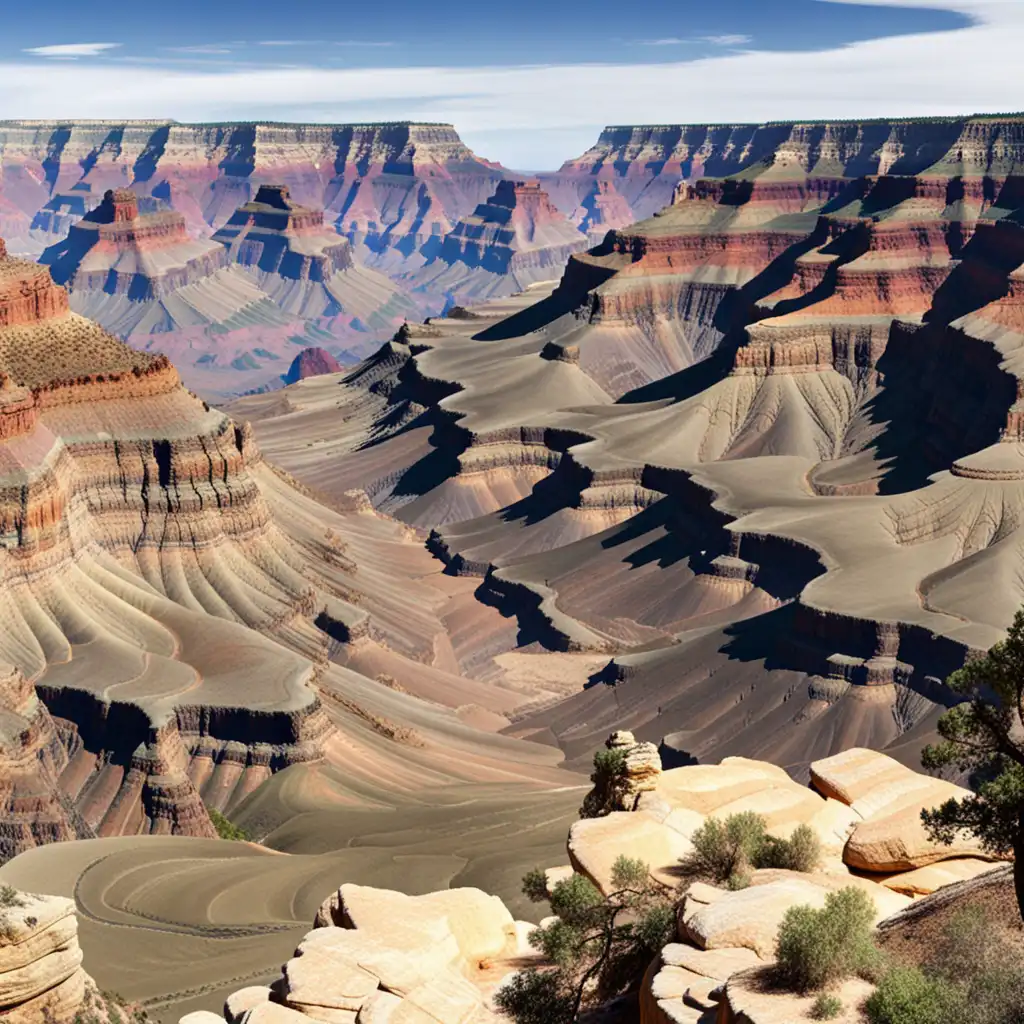
The Grand Canyon offers some of the best geological views on the planet.
geological
ˌdʒiːəˈlɑːdʒɪkl
Loading…
ˌdʒiːəˈlɑːdʒɪkl
Related to the study of the Earth's physical structure and its history.
The Grand Canyon offers some of the best geological views on the planet.
ˌdʒiːəˈlɑːdʒɪkl
Caused by natural processes of the Earth.
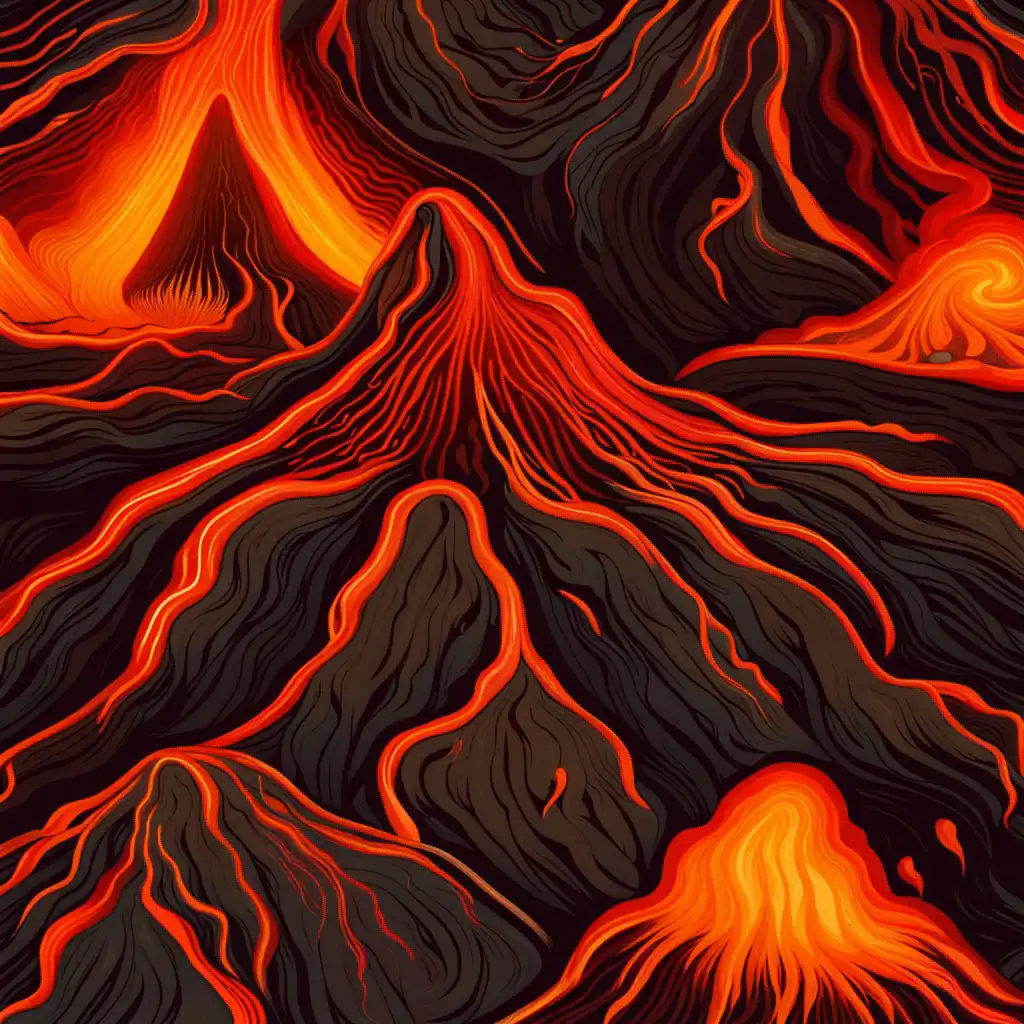
A big geological change that happens naturally is a volcanic eruption.
ˌdʒiːəˈlɑːdʒɪkl
Used in or suitable for geology or geological research.
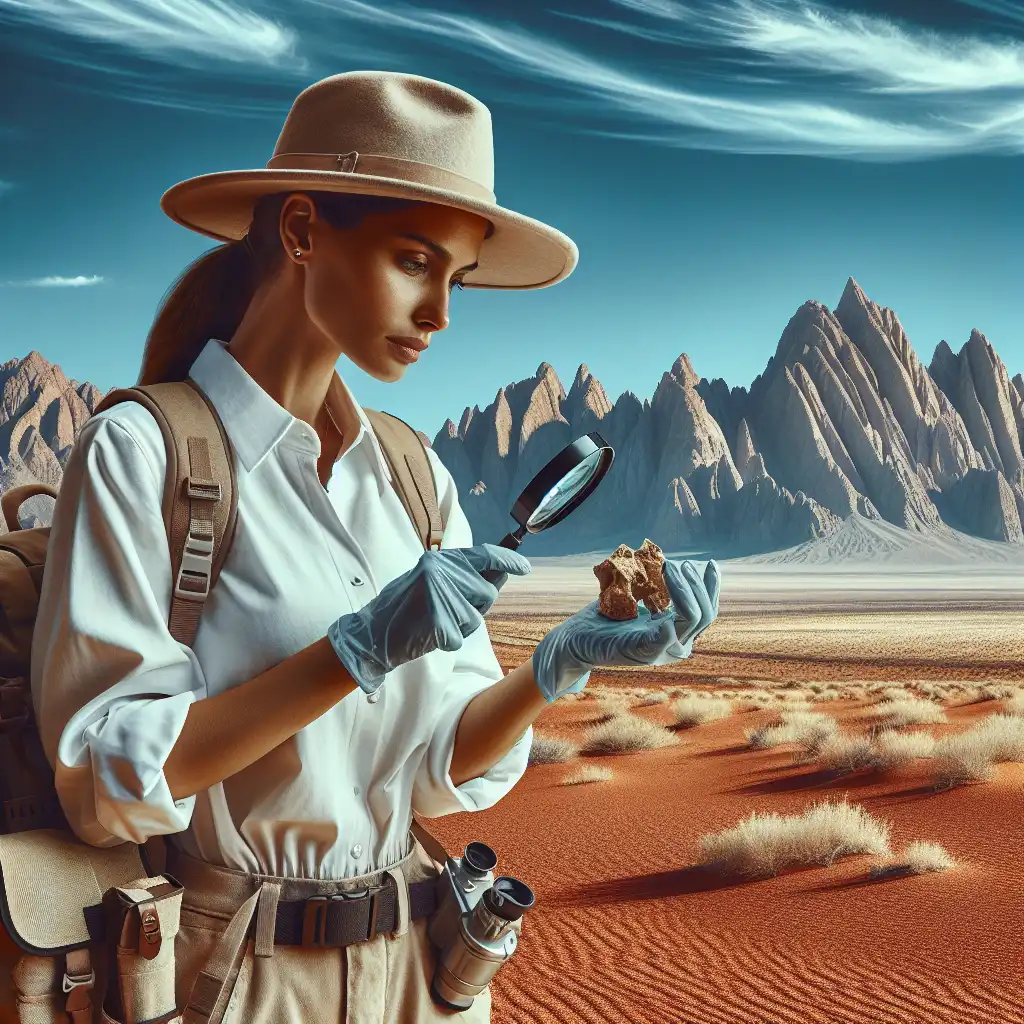
She spent the summer on a geological expedition in the desert.
Audio could not be loaded. Please try again later.
The word 'geological' refers to things that relate to the earth's surface, like rocks, mountains, volcanoes, and earthquakes. It can be used when talking about how these things were formed or how they have changed over time. For example, someone might say "Mount Everest is a geological wonder" or "Scientists study geological movements to better understand earthquakes."
Earth refers to the planet we live on, including its land, water, and atmosphere. It is a broad term used to describe everything related to the planet, such as its history, geography, climate, and ecosystems.
Geological refers specifically to the study of the Earth's physical structure and processes, including its rocks, minerals, and landforms.
It focuses on the science behind the formation and evolution of the Earth, as well as the forces that shape it, like earthquakes, volcanoes, and erosion.
In summary, Earth is a general term that encompasses everything related to our planet, while geological is a more specific term that describes the study of the Earth's physical properties and processes.
Open word: Earth →Geological refers to anything related to geology, which is the study of the Earth's structure, composition, and history.
Geology is the actual study of the Earth's structure, composition, and history.
For example, you might say that a certain rock formation has been shaped by geological forces, meaning that it was formed by natural processes like erosion or tectonic activity.
Geological is a broader term that can refer to anything related to the study of the Earth, while geology specifically refers to the scientific study of the Earth's structure, composition, and history.
Open word: Geology →Mineralogical refers to the study of minerals, which are the building blocks of rocks. It focuses on the chemical and physical properties of minerals, such as their crystal structure, hardness, and color.
Geological is about the big picture of the Earth, while mineralogical is about the tiny details of rocks and minerals. Geological is applicable to understanding things like the formation of mountains, while mineralogical is useful for identifying specific types of rocks and minerals.
Open word: Mineralogical →Sedimentary refers specifically to a type of rock that is formed from the accumulation and compression of sediment over time.
Sedimentary rocks can be made up of various materials, including sand, mud, and organic matter, and are typically formed under water or in areas where there is water flow.
So, while geological refers to a wide range of Earth-related topics, sedimentary is more specific and refers to a specific type of rock.
In other words, sedimentary is a subset of geological. Both words are applicable in the field of geology, with geological referring to the broader aspects of the Earth and sedimentary indicating a specific type of rock.
Open word: Sedimentary →Tectonic refers specifically to the movement and deformation of the Earth's lithosphere (the rigid outer layer that includes the crust and uppermost part of the mantle).
It is associated with the study of plate tectonics, which explains the processes behind earthquakes, volcanoes, and mountain-building.
Geological is a broader term that encompasses all aspects of the Earth, whereas tectonic is more specific to the movement and deformation of the lithosphere.
Open word: Tectonic →causing thousands of species to die off in a geological instant. We call this a mass extinction event, and although such events may be rare, paleontologists have been able to identify several of them through dramatic changes in the fossil record, where lineages that persisted through several geological layers
Watch on YouTube ↗The quantity and quality of consciousness, one may say, have always been growing throughout geological times. In this respect man, in whom nervous organisation and therefore psychological powers have attained an undisputed maximum, may be considered, scientifically, as a natural centre of evolution of the primates.
you still would not have written enough zeros to this day. Evolution in Middle World has not equipped us to handle very improbable events; we don't live long enough. In the vastness of astronomical space and geological time,
Watch on YouTube ↗Civilisations have been destroyed many times, and this civilisation is no different. It can be destroyed. We can think of time in terms of millions of years and life will resume little by little. The cosmos operates for us very urgently, but geological time is different.
powerful that it breaks the Earth's crust this fracturing emits shockwaves through the ground and causes intense vibrations or quakes in fact the world's most earthquake-prone regions are where the most geologically active plates meet
Watch on YouTube ↗The impact of the magazine was very strong. As I said, it portrayed dinosaurs as part of the geological history, part of the story of life on earth. It struck that paleontology was the career for me.
of the different phases through magnifications they realized that the moon was not just a perfect unblemished circle but in fact it was of world and if the moon was world and it had geological features then perhaps the earth was itself a cosmological object
Watch on YouTube ↗Nature is not evil. The world occasionally shrugs its shoulders, and people get knocked off. The earth, for geological reasons that are well known, is a fairly risky place to live. To be evil, you have to have intent. Any remarkable natural happening in which no human will is employed cannot be regarded as evil.
the earth that has oxygen water and also reducing as methane that is the spectral fingerprint for life and of course the earth was different through his geological time and here's just a couple
Watch on YouTube ↗I do believe that enduring geological features are important, though I don't think I can be clear about exactly why.
and tundras. Our impact is so profound most scientists believe humanity has left a permanent mark on Earth’s geological record. So what would happen if suddenly every human on Earth disappeared? With no one maintaining them some of our creations backfire immediately.
Watch on YouTube ↗In my worldview, there are filers, and there are pilers. Filers think alphabetically. Pilers think geologically.
So the ocean is physically massive. It's importance to life is practically unparalleled. It also happens to hold the greatest geological features of our planet. Quickly here are four of the most notable.
Watch on YouTube ↗The deciphering of ancient scripts changed forever the way Europeans were able to imagine the story of humanity, destroying centuries of received authority about the past with repercussions as important for our understanding of time and history as the geological studies of the same period.
and the Sun is our beating heart. But the deep subsurface is like a circulatory system that's completely disconnected from the Sun. It's instead being driven by long slow geological rhythms. There's currently no theoretical limit on the lifespan of one single cell.
Watch on YouTube ↗What does the artist do? He draws connections. He ties the invisible threads between things. He dives into history, be it the history of mankind, the geological history of the Earth or the beginning and end of the manifest cosmos.
on clay tablets, the Earth's volumes remained inscrutable to humans. We were geologically illiterate, unaware of the antiquity of our own planet and ignorant of our connection to deep time.
Watch on YouTube ↗WorldView-3 goes into the mid-infrared wavelength, allowing you to see very subtle geological differences on the sites at a 0.4-metre resolution.
potentially predicting quakes a week in advance. Of course, none of these technologies would be as helpful as simply looking deep inside the earth itself. With a deeper view we might be able to track and predict large-scale geological changes in real time,
Watch on YouTube ↗Geological change usually takes thousands of years to happen but we are seeing the climate changing not just in our lifetimes but also year by year.