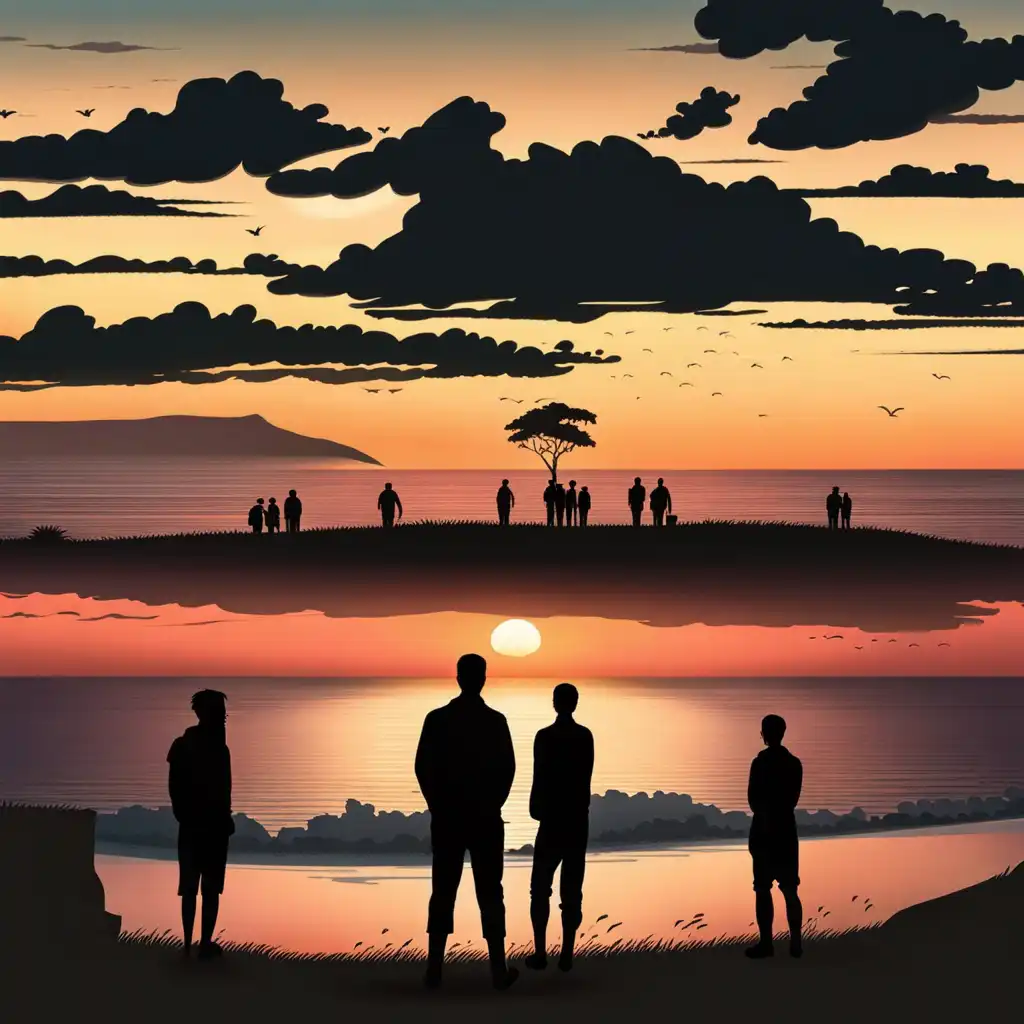
headland
noun headland
ˈhedlənd
A piece of land that goes out into the sea or a lake
We watched the sunset from the headland.
headland
ˈhedlənd
Chargement…
ˈhedlənd
A piece of land that goes out into the sea or a lake
We watched the sunset from the headland.
Impossible de charger l’audio. Réessayez plus tard.
A headland refers to a piece of land that sticks out into a body of water, like the ocean. It is essentially a point or a cliff that stands out from the shoreline. You can use the word when you talk about going for a hike along a headland, or when describing a scenic view of the coastline from a headland. It is also used in nautical and shipping contexts to help sailors navigate and identify particular parts of the coastline.
A bluff typically refers to a steep cliff or bank, often found along the edge of a body of water or river.
Bluffs can be made of various materials such as rock or sand, and are usually created by erosion or the movement of water.
A bluff is a steep bank or cliff, while a headland is a narrow piece of elevated land that extends out into a body of water.
Bluffs are found along the edges of bodies of water, while headlands are found jutting out into the water.
Ouvrir le mot: Bluff →A cape and a headland are both geographic features that stick out into a body of water, but there is a slight difference between them.
A cape is a piece of land that juts out into the water and is usually connected to the mainland.
A headland is a high point of land that extends out into the water and is usually surrounded on three sides by water. It is larger than a cape and has a more rugged, steep shape.
Ouvrir le mot: Cape →A cliff is a steep, high rock face or a vertical drop, usually near the edge of a body of water.
Cliffs can be found along coastlines, next to rivers or lakes, and in mountainous areas.
So essentially, a cliff is a vertical rock face that usually faces the sea.
Ouvrir le mot: Cliff →A headland is typically smaller than a peninsula and is often found along a coastlines.
A peninsula is a piece of land that is almost entirely surrounded by water but is connected to the mainland by a narrow strip of land.
Peninsulas can be formed by erosion and changes in sea level or can be created by volcanic activity or tectonic movement.
A headland is a narrow piece of land that juts out into the water, while a peninsula is a larger land mass that is connected to the mainland by a narrow strip of land.
Ouvrir le mot: Peninsula →A point refers to a narrow piece of land that extends out into the water but is smaller and less prominent than a headland.
A point can also refer to a specific location on a map or chart. Points may be naturally occurring or man-made and can also be found along coastlines or in bodies of water.
In summary, headlands are larger and more prominent pieces of land that extend out into the sea or other body of water, while points are smaller and less prominent but still extend out into the water.
Ouvrir le mot: Point →A headland and a promontory both refer to a piece of land that juts out into the sea or another body of water.
However, a headland is generally a smaller piece of land, while a promontory is usually bigger and more dramatic in shape.
To sum up, a headland is smaller and less imposing, while a promontory is larger and more impressive, and they each have slightly different uses and applications depending on their size and location.
Ouvrir le mot: Promontory →A headland and a spit are both geographical features found in coastal areas.
A spit is a narrow strip of land that extends from the mainland into the sea. It is formed by the action of waves and currents, which deposit sediment along the shore.
A spit is usually made up of sand or gravel and can be several miles long. They can be found in sheltered bays and estuaries and are often popular with beachgoers.
A headland is a high and steep section of land that juts out into the sea, while a spit is a narrow strip of land that extends from the mainland into the sea.
Ouvrir le mot: Spit →Penguins Survival Skills...
Voir sur YouTube ↗The presence of industrial quantities of Byzantine pottery dating from the sixth century AD on the headland at Tintagel, Chinese silk in the tombs around Mecca and 'Arabic' numerals in the 13th-century beams of Salisbury Cathedral tell us we have been interdependent not for decades but across millennia.
Loch Ness Sightings %\PIPE%...
Voir sur YouTube ↗How do you save a shark...
Voir sur YouTube ↗How do you save a shark...
Voir sur YouTube ↗