
jeer
verb jeer
dʒɪr
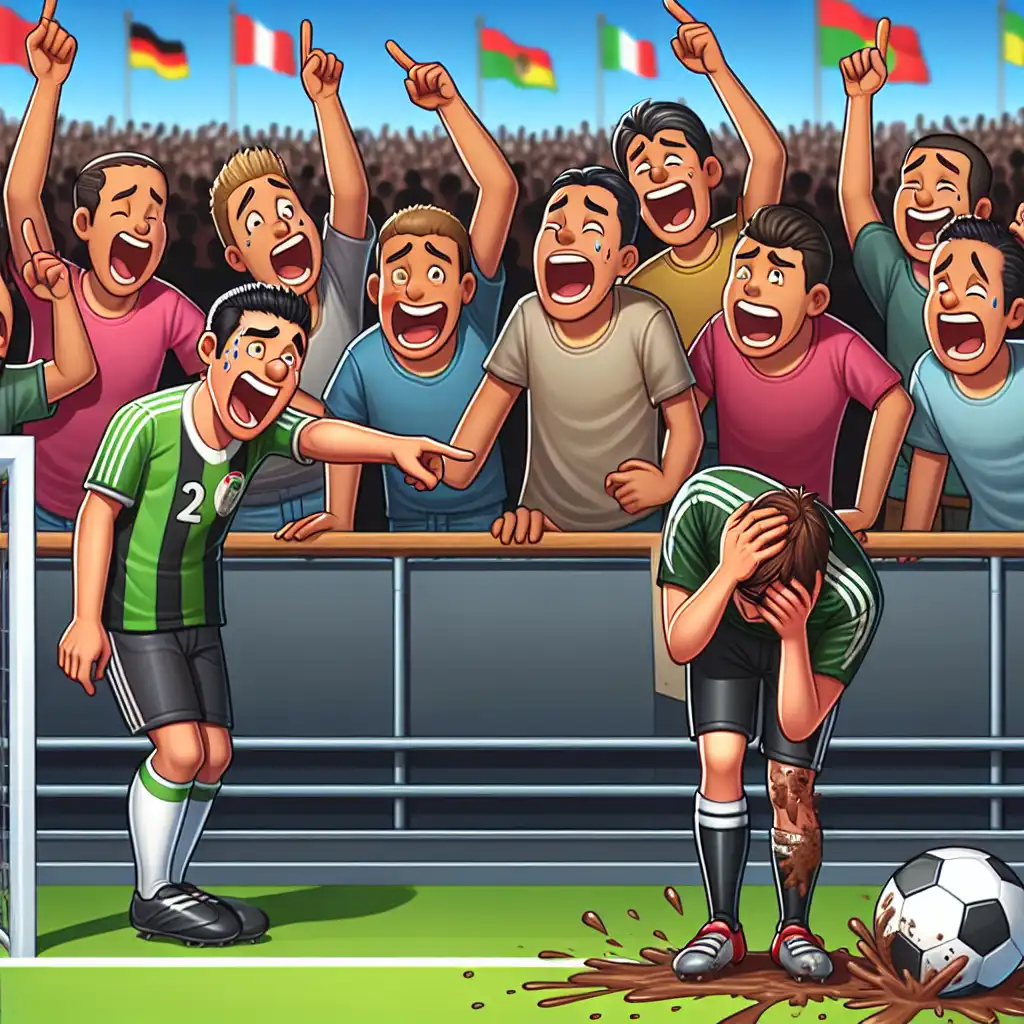
To shout or laugh at someone or something in a mocking or unkind way
The crowd jeered when the opposing team walked onto the field.
jeer
dʒɪr
加载中…
dʒɪr
To shout or laugh at someone or something in a mocking or unkind way
The crowd jeered when the opposing team walked onto the field.
dʒɪr
A rude and mocking remark
He had to endure the jeers of the crowd after his mistake.
音频无法加载,请稍后再试。
The word 'jeer' is used when someone makes fun of another person in a disrespectful and insulting way. It is used in situations where people might be laughing and mocking someone, usually because they find something about that person or what they're doing to be silly, dumb, or unacceptable. Jeering can happen in public places, like at a sports game or a school assembly, or in private situations like a group of friends teasing someone. It's important to remember that jeering is not a polite or kind way to treat someone, and you should try to avoid doing it.
Both deride and jeer mean to make fun of or ridicule someone or something, but deride is more formal and implies contempt or a feeling of superiority, while jeer is more informal and implies mockery or teasing.
For example, you might deride someone's beliefs or opinions if you think they are ridiculous or foolish. You might jeer at someone who trips and falls, or at a comedian who makes a bad joke.
Deride describes serious, disdainful criticism, while jeer describes playful, taunting mockery.
打开单词: Deride →An insult is a statement that is intended to hurt someone's feelings or make them feel inferior.
Insults can be aimed at a person's appearance, abilities, intelligence, or character.
In summary, insults are intended to hurt someone's feelings while a jeer is a mocking comment or gesture aimed at someone to ridicule them.
Insults are applicable in situations where an individual wants to put down another person, while jeers are used when a group of people disapprove of someone or something.
打开单词: Insult →Both jeer and mock involve making fun of someone or something, but there are slight differences in meaning and usage.
Mock means to imitate or mimic someone or something in a way that is intended to be funny or satirical. It may involve exaggerating certain traits or behaviors for humorous effect, but is generally not meant to be hurtful or malicious.
For instance, making fun of a friend's accent or way of speaking by imitating them in a playful manner could be considered mocking.
So, in summary, jeering involves insulting or belittling someone or something, while mocking involves imitating or parodying them for comedic purposes.
打开单词: Mock →Jeer and ridicule are both words used to express mockery or disapproval towards someone or something.
Ridicule refers to making fun of someone or something in a more general sense. This can be done through verbal comments or actions, but can also include things like mimicking someone, making exaggerated faces, or pointing out flaws or weaknesses.
For example, a person might ridicule a friend for wearing unfashionable clothing or using outdated slang.
Overall, both words describe negative attitudes or actions towards someone or something, but jeer is more specific and immediate while ridicule is broader and more generalized.
打开单词: Ridicule →Scorn, on the other hand, means to express strong disapproval or contempt towards someone or something. It is a more serious and intense emotion than jeering.
For instance, if someone lied or cheated, they might be scorned by their friends or colleagues for their unethical behavior.
Overall, jeering is more playful and teasing, while scorn is more serious and harsh.
打开单词: Scorn →Sneer means to express a contemptuous or mocking smile, often by curling the upper lip.
In summary, jeering is more verbal and aggressive, while sneering is more subtle and can be expressed through facial expressions.
打开单词: Sneer →Both jeer and taunt refer to mocking or insulting someone, but there is a slight difference in how they are used.
Taunt is more about provoking or teasing someone in a way that is meant to make them angry or upset. For example, a bully might taunt a classmate by making fun of their appearance or lack of popularity.
Jeer is a broader term that could include taunting, but taunt specifically involves trying to provoke someone emotionally.
打开单词: Taunt →Tease means to playfully poke fun or joke with someone in a lighthearted way.
It is usually used when someone is teasing someone else for something harmless, like a funny joke or a silly outfit. For example, if someone was teasing their friend for wearing a bright pink shirt, that would be considered teasing.
In summary, jeering is mean-spirited and hurtful, while teasing is playful and harmless.
打开单词: Tease →Everything you think you...
在 YouTube 上观看 ↗If you are going to make a change, don't go halfway. Make it with conviction and stick with your new idea. Ignore the scoffers. Remember, it is a law of nature that if something is different you're going to be taunted, jeered, and told the world is flat. Let the doubters fall off the edge.
Why should you read...
在 YouTube 上观看 ↗You can bring people together around the issue of economic fairness. I don't want to be a mayor that goes into one neighborhood and gets jeered, and goes into another neighborhood and gets cheered.
Trial by Oil %\PIPE% National...
在 YouTube 上观看 ↗It is hard to put aside partisanship. It is hard to give up the easy wisecracking jeer that divides and destroys. It is hard - very hard - to have worked sincerely and wholeheartedly for a cause and to have lost. Most of all, it is hard to put aside personal prejudices. And yet we must put these things aside.
Definitely, as an Indian, I'm seen as an outsider, and definitely, the jeers come from that. But I enjoy it; I even encourage it. Whatever noise they make when I'm in the ring, it motivates me, drives me to do better.
When your own fans whistle and jeer, then you have a big problem.
The day you decide to pursue your dreams, don't forget that this is a game you don't enter to compete, but to win. And there will always be someone booing you in the stands, and everything you accomplish could be jeered and hissed at. This is a game between two that you have to win for the people who came to watch you be triumphant.
Perhaps I have written fiction because everything unambiguously expressed seems somehow crass to me; and when the subject is myself, I want to jeer and weep.
Contempt is a dangerous emotion, luring us into believing that we understand more than we do. Contempt causes us to jeer rather than speak, to poke at rather than touch.
The fans are always right. If they whistle or jeer someone, it's because they want him to be effective.
Where there had been only jeers or taunts at first, crowds come to listen with serious and sympathetic men.