
wordiness
noun wordiness
ˈwɜːrdinəs
The quality of being long and dull in expression
Despite his powerful argument, his presentation was criticized for its wordiness.
wordiness
ˈwɜːrdinəs
Đang tải…
ˈwɜːrdinəs
The quality of being long and dull in expression
Despite his powerful argument, his presentation was criticized for its wordiness.
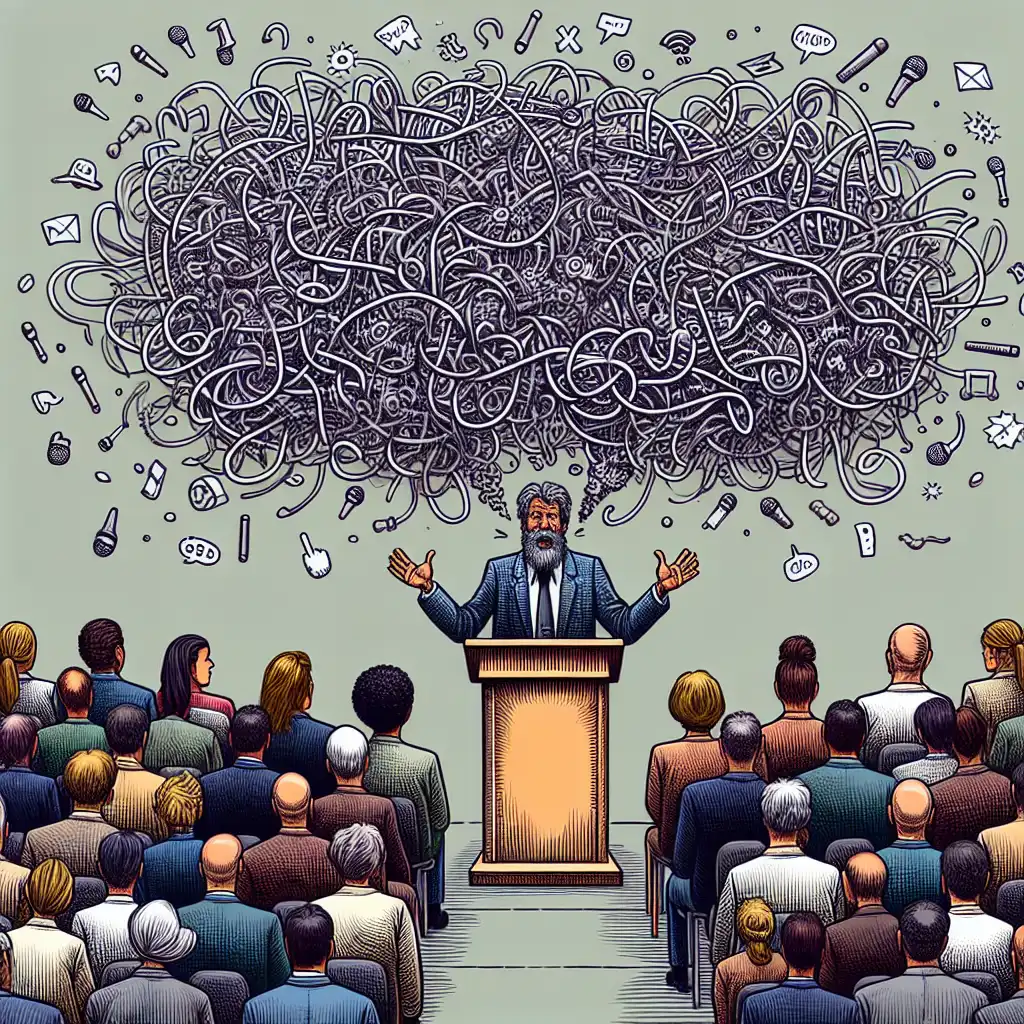
ˈwɜːrdinəs
Manipulation or use of excess words to avoid expressing an intended point or idea clearly
Politicians resort to wordiness that obscures the intended meaning of their message.
Không tải được âm thanh. Vui lòng thử lại sau.
'Wordiness' is a word we use when we want to say that someone is using too many words to say something that could be said in a simpler way. For example, if someone says "I am in possession of a large quantity of red apples", instead of simply saying "I have a lot of red apples", we might say that their language is wordy. It's important to try to avoid wordiness because it can make it harder for people to understand what you're saying.
Circumlocution refers to a way of expressing something by using more words than necessary, often to avoid being direct.
In simpler terms, circumlocution means using more words than necessary to avoid being direct, while wordiness means using too many unnecessary words that can make the writing/speech less clear.
Mở từ: Circumlocution →Gab and wordiness are both related to talking too much, but they have slightly different meanings.
Gab refers to casual or idle talk that doesn't have much substance. It's often used to describe conversations that are light and friendly, but not particularly deep or meaningful.
Both words are applicable in situations where people are talking too much, but gab is more appropriate for informal or social situations, while wordiness is more applicable in professional or academic contexts where clarity and conciseness are valued.
Mở từ: Gab →Loquacity refers to the quality of talking too much or too often. It implies that someone is very talkative and enjoys speaking at length about various topics.
Loquacity describes someone who speaks frequently, while wordiness describes the excessive use of words.
Mở từ: Loquacity →Periphrasis refers to using more words than necessary to convey an idea or express something. Wordiness refers to using too many words that may not add any value or meaning to what is being expressed.
Periphrasis usually describes a rhetorical device or a figure of speech while wordiness is used more informally to indicate someone has used too many unnecessary words in their speech or writing.
For example, periphrasis could be seen in Shakespeare's writing, where he often used complicated phrases to convey simple ideas.
Mở từ: Periphrasis →Pleonasm means using more words than necessary while conveying the same meaning. Wordiness also means the same thing, but it can also refer to a piece of writing that has too many unnecessary words, making it long and difficult to understand.
Pleonasm is more about the redundancy of the words used, while wordiness is more about the excessive use of words. Both can be applicable in different situations, such as in academic writing, speeches, or even casual conversations.
Mở từ: Pleonasm →Both prolixity and wordiness refer to the excessive use of words, but prolixity refers to using too many words to express something, while wordiness refers to using too many words without adding anything useful to what is being said.
Prolixity is applicable when someone is trying to say something but is using too many words that can make the message unclear or confusing.
Mở từ: Prolixity →Redundancy refers to repeating or including unnecessary information in a sentence or text. For example, saying "the tall giraffe stood up on its long legs" is redundant because giraffes are already known for being tall and having long legs.
Mở từ: Redundancy →Tautology is when unnecessary repetitions are used to express the same idea multiple times in different ways, whereas wordiness is the use of too many words to express an idea or thought.
For example, "I saw it with my own eyes" is a tautology because 'seeing' already implies that it was with the eyes.
Tautology can be avoided by being mindful of the words used, while wordiness can be eliminated by choosing simpler and more concise language.
Both tautology and wordiness make for ineffective communication and may cause confusion or boredom in the reader or listener.
Mở từ: Tautology →However, verbosity is often used to describe the quality of language, like the use of long or complex sentences, while wordiness focuses on the quantity of words used.
For example, a writer may be accused of verbosity if they use words that sound impressive but don't add much to the meaning of the text, while they may be accused of wordiness if they use many unnecessary adjectives or adverbs.
Mở từ: Verbosity →I did television for a very long time, but if you're on television, words don't count. What the eye sees beats the words. If you switch sides, from radio to television, you learn that the wordiness that you learn on the radio is useless or not nearly as powerful, and you have to learn to trust that the eye will just beat the ear.
If you consistently write 'The sun set' rather than 'The sun sank slowly in the bright western sky,' your story will move three times as fast. Of course, there are times you want the longer version for atmosphere - but not many. Wordiness not only kills pace; it bores readers.