
disavow
verb disavow
ˌdɪsəˈvaʊ
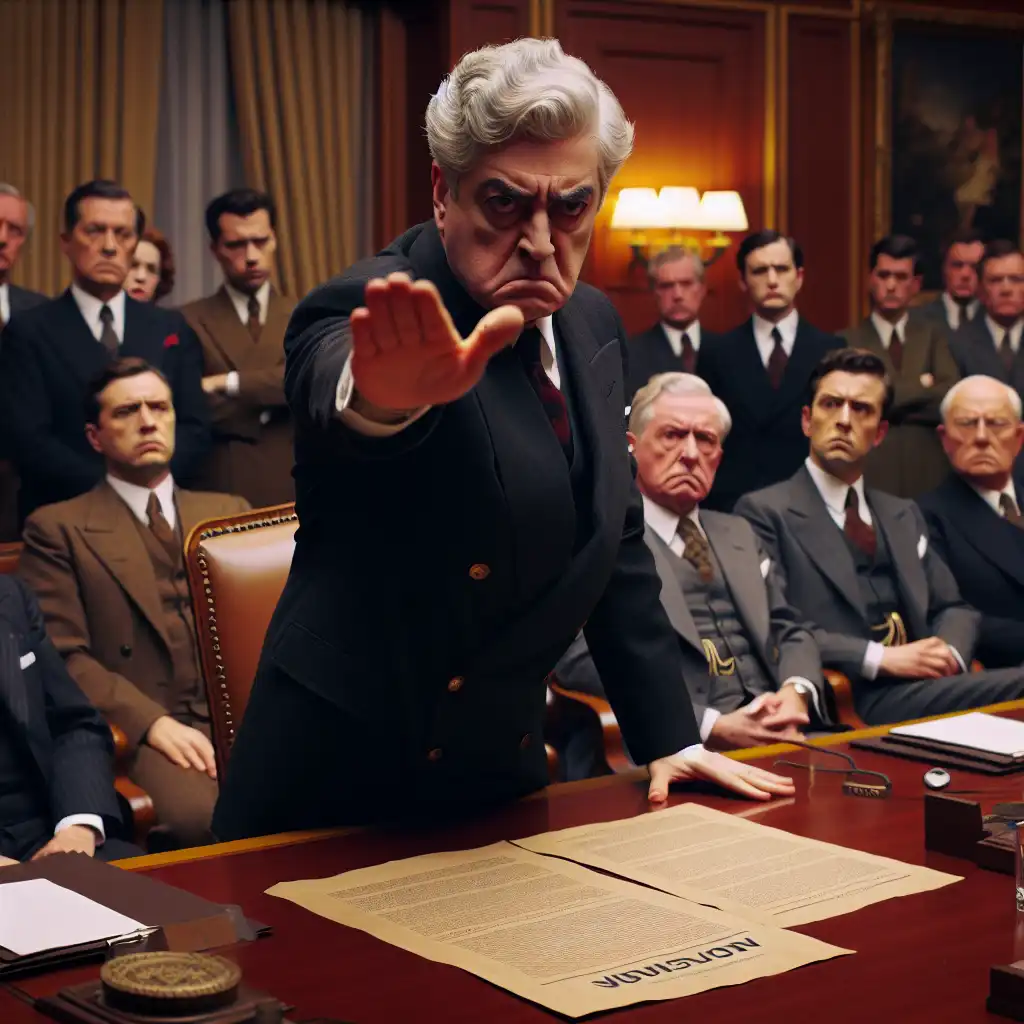
To say that you are not responsible for something or reject any connection with it
He disavowed any knowledge of the illegal transactions.
disavow
ˌdɪsəˈvaʊ
Cargando…
ˌdɪsəˈvaʊ
To say that you are not responsible for something or reject any connection with it
He disavowed any knowledge of the illegal transactions.
ˌdɪsəˈvaʊ
To refuse to support or accept something
The politician was quick to disavow the radical statements made by his party member.
No se pudo cargar el audio. Inténtalo de nuevo más tarde.
The word 'disavow' means to refuse to accept or acknowledge something, or to deny any relation or responsibility towards it. For example, you might disavow any involvement in a crime or disavow a statement made by someone who claims to represent you. It is a formal and strong way of saying that you are not associated with something or someone. It is often used in legal or political contexts.
Abjure means to renounce or reject a belief, claim or opinion that one had previously held.
Abrir palabra: Abjure →Denounce means to publicly condemn or criticize someone or something, while disavow means to reject or disown a belief or association.
Denouncing is applicable when there is an action, behavior or statement that you strongly disagree with and want to make it clear that you do not support it.
For example, you might denounce an act of injustice or discrimination that you find abhorrent, while disavowing a former friend who now holds extremist views that go against your own values.
Abrir palabra: Denounce →Disclaim means to reject or give up ownership or responsibility for something. For example, if a company disclaims liability for any damage caused by their product, it means that they are not responsible for any harm that may result from using it.
Essentially, disavow is used when you want to distance yourself from someone or something that you don't want to be associated with, while disclaim is used when you want to make it clear that you are not responsible for something.
Abrir palabra: Disclaim →Both disavow and disown mean to reject or renounce something or someone.
Disown is more personal and emotional, and is usually used when someone wants to distance themselves from a family member or friend for personal reasons.
If a parent is angry with their child's behavior and wants to break all ties with them, they may choose to disown them.
Abrir palabra: Disown →Negate means to nullify or make something ineffective. It's applicable when someone wants to completely cancel out something, show that it's false or doesn't exist, or make it have no effect.
Negate - "The evidence presented in court negated the defendant's claim of innocence."
Abrir palabra: Negate →Reject means to refuse to accept or consider something. For example, a person may reject a job offer because they don't think it's the right fit for them.
Both words have similar meanings, but disavow implies a sense of disassociation, while reject implies a sense of judgment.
Disavow is applicable when someone wants to distance themselves from something, while reject is applicable when someone wants to refuse something.
Abrir palabra: Reject →Both disavow and renounce refer to a person or group publicly denying or rejecting something.
Renounce is a stronger term and is used when someone or a group completely rejects or gives up something. It implies a complete condemnation of the thing being renounced.
For example, a country might renounce its nuclear weapons program, indicating a full and permanent rejection of this activity.
Disavow implies a partial rejection, while renounce implies a complete and permanent rejection.
Abrir palabra: Renounce →Repudiate means to reject or refuse to accept something.
It is used when someone wants to make it clear that they don't accept something as true, valid, or acceptable. For example, a company might repudiate claims that their product is unsafe.
Disavow is used when someone wants to distance themselves from something, while repudiate is used when someone wants to reject or refuse to accept something.
Abrir palabra: Repudiate →How to deal with...
Ver en YouTube ↗I never disavow things I've said.
Laura Carstensen: Older...
Ver en YouTube ↗History is hereditary only in this way: we, all of us, inherit everything, and then we choose what to cherish, what to disavow, and what to do next, which is why it's worth trying to know where things come from.
Older people are happier...
Ver en YouTube ↗I think it becomes incumbent upon a candidate to essentially disavow some of the things that are in that party platform. Otherwise, I think the assumption is that you are a true believer.
Neil and Bill Talk...
Ver en YouTube ↗I often find that writers who disavow the importance of an ending are just not very good at endings.
Today, it is research with human embryonic stem cells and attempts to prepare cloned stem cells for research and medical therapies that are being disavowed as being ethically unacceptable.
I wanted to write a book about people who have the best intentions and think - really, truly think - that they're doing the right thing. And then they realize that when those ideals come knocking at their windowsill, a lot of times they will suddenly disavow those ideals.
I was enrolled in divinity school and thought I was going to become a minister - I'm Episcopalian - but I was disavowed of that notion pretty quickly while working at the hospital. I found myself really unfulfilled by the answers that are traditionally offered to questions of why some people suffer and why others suffer so little.
Capitalism does not require us to hold a particular set of cognitive beliefs; it only requires that we act as if certain beliefs (about money, commodities etc) are true. The rituals are the beliefs, beliefs which, at the level of subjective self-description, may well be disavowed.
Now that he has disavowed as outright lies many of the stories he told himself, it's hard to know what to make of those who still insist that David Brock had it right the first time.
Over the years, I'd hear Jon Stewart disavow being a journalist and say, 'No, I'm a comedian.' I'd be like, 'Stop pretending. You know you're a journalist.