demagogy
noun demagogy
ˈdeməɡɑːɡi
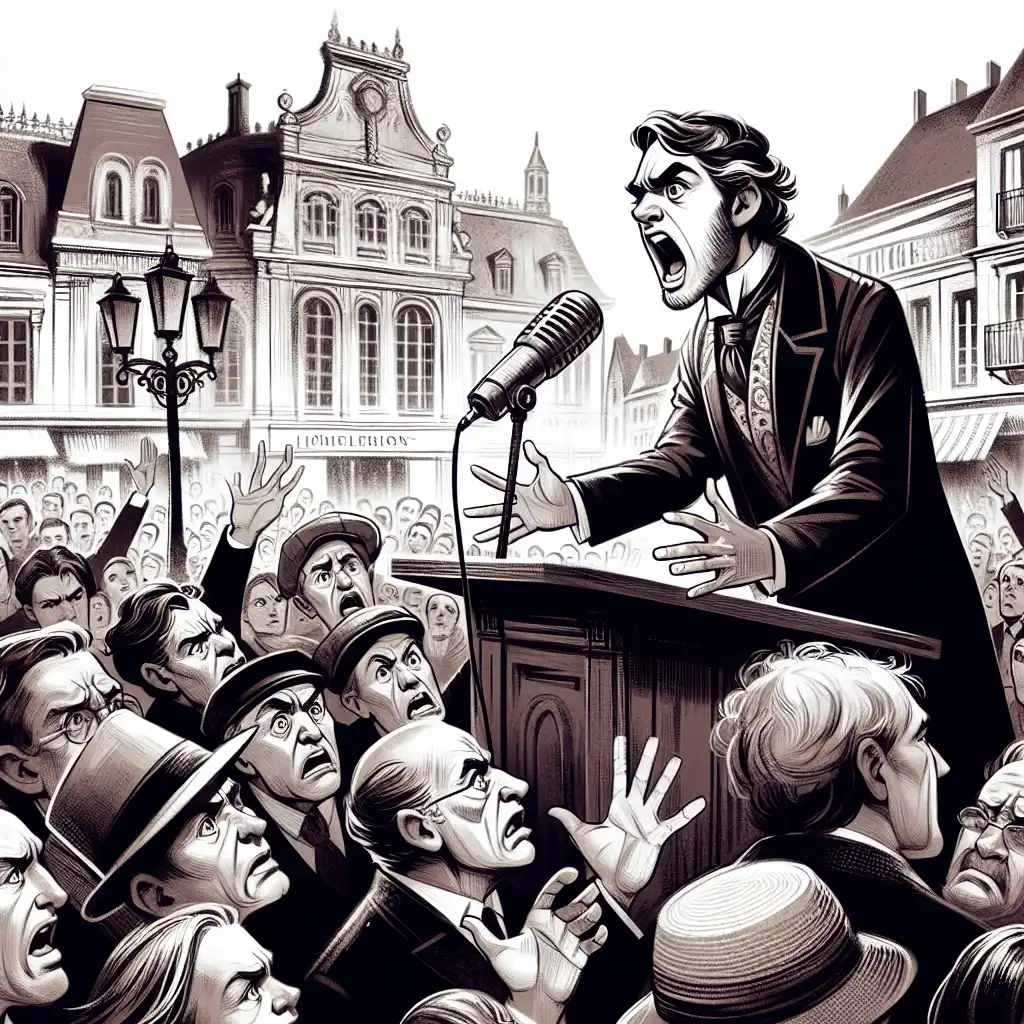
The act of using fear or emotions to control or influence people's opinions
He accused his opponent of demagogy for trying to stir up fear and misunderstanding.
demagogy
ˈdeməɡɑːɡi
Loading…
ˈdeməɡɑːɡi
The act of using fear or emotions to control or influence people's opinions
He accused his opponent of demagogy for trying to stir up fear and misunderstanding.
Audio could not be loaded. Please try again later.
The word 'demagogy' is used to describe a politician or leader who uses manipulative or misleading tactics to gain support from the people. It is often associated with appealing to people's emotions rather than reasoning. The word is usually used in a negative way and is a form of critique towards a politician's approach.
Agitation refers to the act of stirring up public sentiment or excitement about a particular issue. It involves creating awareness and motivating people to take action towards a particular cause or objective.
Agitation is usually done in a peaceful and constructive manner, and it aims to bring about positive change.
Agitation is a positive force for change, while demagogy is a negative force that seeks to exploit people's vulnerabilities for personal gain.
Agitation is applicable in situations where there is a need to bring about positive change, such as advocating for social justice or environmental protection.
Open word: Agitation →Deception refers to intentionally misleading people by withholding or presenting false information. It is a deliberate act of hiding or distorting something to trick someone.
Deception can be used in various contexts such as personal relationships, businesses, politics, and advertising.
Deception involves hiding or presenting false information, while demagogy involves using emotional appeals to manipulate people.
Open word: Deception →A demagogue is a person who gains power and popularity by appealing to the emotions and prejudices of the people, often by making false claims or promises.
Demagogy refers to the strategies, methods, or practices used by a demagogue to achieve their aims. It is the use of emotional appeals, often in the form of propaganda, to manipulate and control a group of people.
Demagogue describes a person, while demagogy describes the tactics or strategies they use.
Open word: Demagogue →Demagogy and incite are both words that refer to using language to persuade people.
Incite means to encourage or provoke someone to take action, often of a violent or illegal nature.
Demagogy refers to a style of speech that seeks to manipulate people's beliefs and emotions, while incite refers to encouraging people to take action, often in a forceful or confrontational way.
Open word: Incite →Manipulate means to subtly or deceptively influence or control someone or something to one's advantage. This can include using tactics such as gaslighting or guilt-tripping to achieve a desired outcome.
Both terms involve the idea of influencing or persuading others, but demagogy specifically refers to using emotional appeals and misinformation, while manipulate is a broader term that can include a variety of tactics.
Demagogy is applicable in contexts where political leaders or other figures may be using emotional rhetoric to gain power, while manipulate can apply to any situation where someone is trying to influence others to their own advantage.
Open word: Manipulate →Populism is an approach in which political leaders claim to represent the common people against the elite. Populism emphasizes the need to protect ordinary people from powerful interests and can be based on a range of political ideologies.
Populism can be used by politicians on both the left and right of the political spectrum, with the common theme being appeals to the interests of everyday people.
While both demagogy and populism can be problematic, the key difference is that demagogy is focused on manipulating the emotions and fears of people, while populism focuses more on representing their interests.
Open word: Populism →Propaganda refers to the use of information or media to promote a particular point of view or ideology.
It can be used for various purposes, including political, religious, or commercial. Propaganda often involves unverified or biased information and is designed to influence people's beliefs or behaviors.
So, while both demagogy and propaganda involve manipulation of public opinion, demagogy is specifically associated with political rhetoric, whereas propaganda can be used in a variety of contexts.
Open word: Propaganda →Trickery refers to the act of deceiving someone by using cunning or deceitful methods. It is a broader term that can refer to any act of deceit, whether it is political or personal.
For example, a person might use trickery to cheat in a game or lie to get out of trouble.
Demagogy is more specific to politics and refers to the use of manipulative tactics to obtain power, while trickery is a broader term that can apply to any situation where someone uses deceitful methods to deceive others.
Open word: Trickery →Those who consider the Devil to be a partisan of Evil and angels to be warriors for Good accept the demagogy of the angels. Things are clearly more complicated.
Many writers are radical. I am not, because of my age and because of my terrible fear of demagogy.
In Cuba, taking into account the long fight for our independence and sovereignty, we will defend the one-party system in the face of the games, demagogy and the marketing of politics.
In Germany, a country that for obvious reasons is far more attuned than most to the dangers of demagogy, populism, and nationalism, lawmakers have already proposed taking legal measures against fake news. When populist, nationalist fake news threatens the liberal democratic center, other Europeans may follow suit.