symptom
noun symptom
ˈsɪmptəm
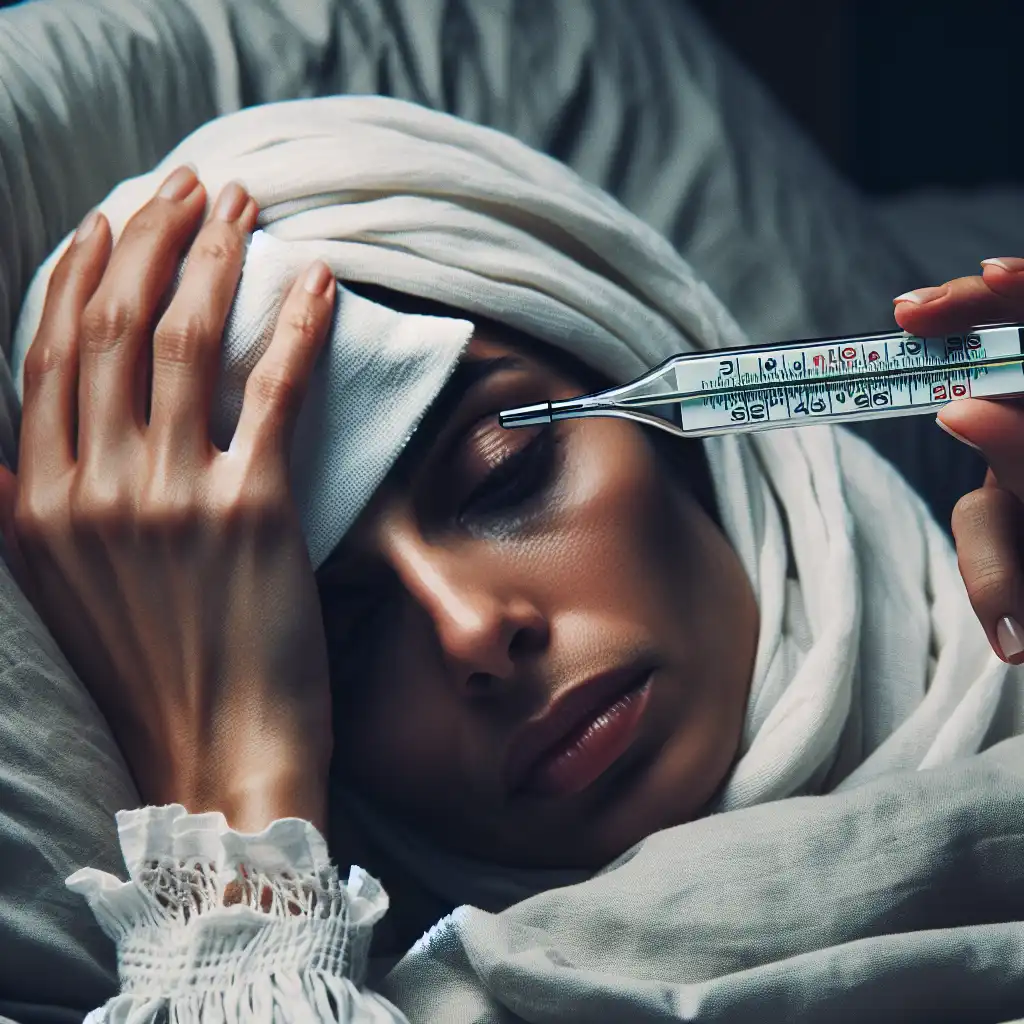
A sign that something is not right, usually related to health.
A fever is a common symptom of many illnesses.
symptom
ˈsɪmptəm
Loading…
ˈsɪmptəm
A sign that something is not right, usually related to health.
A fever is a common symptom of many illnesses.

ˈsɪmptəm
An indication of an underlying problem or situation.
Their constant arguing was just a symptom of deeper relationship issues.
Audio could not be loaded. Please try again later.
The word "symptom" refers to a sign or indication that something is wrong or not working well in the body. It is used to describe the physical or emotional changes that occur when a person is experiencing an illness, disorder or diseases. Some common symptoms include pain, fever, fatigue, cough, and nausea. It is important to seek medical attention if you experience any symptoms that might be a sign of a more serious condition.
Cue usually refers to a signal or sign that is used to prompt someone to do something, while the word symptom refers to an indication or manifestation of a medical condition or illness.
For example, in theater, a director might give an actor a cue to begin their performance. In this case, the cue is a prompt that tells the actor when to start.
Cue is more commonly used when talking about prompts, signals, or reminders, while symptom is used when talking about health or medical issues.
Open word: Cue →Evidence refers to something that is used to support or prove a claim or statement.
Evidence is applicable in situations where one is trying to prove or support a claim or statement with facts, data, or observations.
Open word: Evidence →Expression and symptom are two different words used in different situations.
Expression refers to the way someone conveys or communicates their thoughts, feelings or emotions either through verbal or nonverbal means.
In simpler terms, expression is a way of conveying emotions and feelings, while symptom is a sign of an underlying medical condition or illness.
Open word: Expression →Indication describes something that suggests the presence of a particular condition or disease. For example, a high fever can be an indication of an infection.
An indication is not always specific to one particular condition, and can describe a range of different possible causes.
An indication is more general and can point to a variety of possible issues, while a symptom is a specific sign of a particular condition.
Open word: Indication →Manifestation refers to the outward appearance or expression of something, often a belief or emotion. It is a visible and tangible representation of something that is happening within.
An example is the manifestation of happiness through laughter or smiling.
It is usually not the problem itself, but a manifestation of an ailment. An example is a fever as a symptom of a viral infection.
Manifestation is a display of a belief or emotion while symptom indicates an underlying issue or problem. You use the word manifestation when referring to a character or personality trait of a person, while symptom is commonly used in the context of illnesses and disorders.
Open word: Manifestation →Mark refers to a visible indication or sign that someone or something has been present, like a fingerprint or a scratch.
A symptom is an indication of a disease or a condition that the person is experiencing, like a fever or a cough. Marks are more general and can refer to physical or non-physical indicators, whereas symptoms relate more specifically to health problems.
Open word: Mark →Sign refers to an objective indication of an illness or condition that can be seen or measured by someone else, such as a doctor.
In simpler terms, a sign is something a doctor can observe, while a symptom is something a patient can feel. For example, a cough would be a symptom of a cold, while a fever would be a sign that something is wrong.
Open word: Sign →Token refers to a symbolic representation or gesture of something. It is applicable in social contexts where gestures, words, or actions signify a particular meaning.
For example, giving someone a hug can be a token of affection or gratitude.
Symptom is used in medical contexts to refer to physical or mental signs of illness, while token is used in social contexts to refer to symbolic gestures or representations of something.
Open word: Token →and causes a rise in body temperature. It also makes you sleepy, and you lose your appetite and thirst. But what's the point of all of these unpleasant symptoms? Well we're not yet sure, but some theorize that they aid in recovery.
Watch on YouTube ↗One of the symptoms of an approaching nervous breakdown is the belief that one's work is terribly important.
I hope they were symptom because they will get tired and if a crop grabs them resurrection the poor mothers just don't know what to do they have no way of lifting them out and David can't even help
Watch on YouTube ↗I see all this talk about jobs going overseas as a symptom of the absence of innovation. And the absence of innovation is a symptom of there being no major national priority to advance a frontier.
Now I leave you with three implications of all this. First just as we can misperceive the world, we can misperceive ourselves when the mechanisms of prediction go wrong. Understanding this opens many new opportunities in psychiatry and neurology, because we can finally get at the mechanisms rather than just treating the symptoms
Watch on YouTube ↗A feel-good style can be a symptom of unawareness or lack of caring.
muscles don't support their weight and you will see the symptoms such as fatigue and then they've got problems with a blood transport and that is what kills the animals so those kind of knowledge that has been recorded dead some of them has been taken to the
Watch on YouTube ↗The most important practical lesson that can be given to nurses is to teach them what to observe - how to observe - what symptoms indicate improvement - what the reverse - which are of importance - which are of none - which are the evidence of neglect - and of what kind of neglect.
been wrestling with the symptoms and the stigma the truth about bipolar disorder and mental illness really is no one really talks about it I've shared my condition with a few friends
Watch on YouTube ↗It's very important to learn quick lessons from your failures, very important to recognize symptoms of failure pretty early, and it is very, very important to not to be attached too much to the idea - you have to know when to give up an idea.
Worldwide about one to three percent of adults experience the broad range of symptoms that indicate bipolar disorder. Most of those people are functional contributing members of society, and their lives choices and relationships aren't defined by the disorder,
Watch on YouTube ↗Then after a few years I felt good in daily life but as soon as I started to push my body the symptoms came back and I had no strength at all. I got so tired. After an easy practice session all I wanted to do was sleep for days.
One way is to reduce the presence of triggers. Unfortunately the world is an unpredictable place and exposure to triggers can't always be controlled. This is where inhalers the primary treatment for asthma come in. These medications help asthmatics both control and prevent their asthma symptoms.
Watch on YouTube ↗My own life was filled with so much love and joy that when depression struck, it was like a prison door slamming shut and I was being placed in an isolation cell. No one else could possibly be feeling what I was. I hated my depression and all of its symptoms.
the virus replicates within helper T cells, destroying many of them in the process. During this stage patients often experience flu-like symptoms, but are typically not yet in mortal danger. However for a period ranging from a few months to several years,
Watch on YouTube ↗Every few weeks, I'd really be worn down. The doctor said just take time off, but it became apparent that the exercise you need to be a top-level athlete brought the symptoms on.
We found samples in mummies. Today about a third of the world's population is infected, and most of them never even know it. In healthy people symptoms often don't show up at all. When they do they're mild and flu-like.
Watch on YouTube ↗Probably most dying patients, even when suffering greatly, would choose to live as long as possible. That courage and grace should be protected and honored, and we should put every effort into treating their symptoms.
Have you ever sat in a doctor's office for hours despite having an appointment at a specific time? Has a hotel turned down your reservation because it's full? Or have you been bumped off a flight that you paid for? These are all symptoms of overbooking,
Watch on YouTube ↗In medical school, it's quite possible to get taught that you can diagnose everybody and treat everything. But then you get out in the real world and find that for most patients walking through your door, you have no idea what's causing their symptoms.