
plaid
noun plaid
plæd
A pattern of different colored lines crossing at 90 degrees usually made on cloth.
He was wearing a plaid shirt.
plaid
plæd
加载中…
plæd
A pattern of different colored lines crossing at 90 degrees usually made on cloth.
He was wearing a plaid shirt.

plæd
A type of long cloth which men from Scotland wrap around their lower body.
He wore his plaid with pride on the Burns Night.
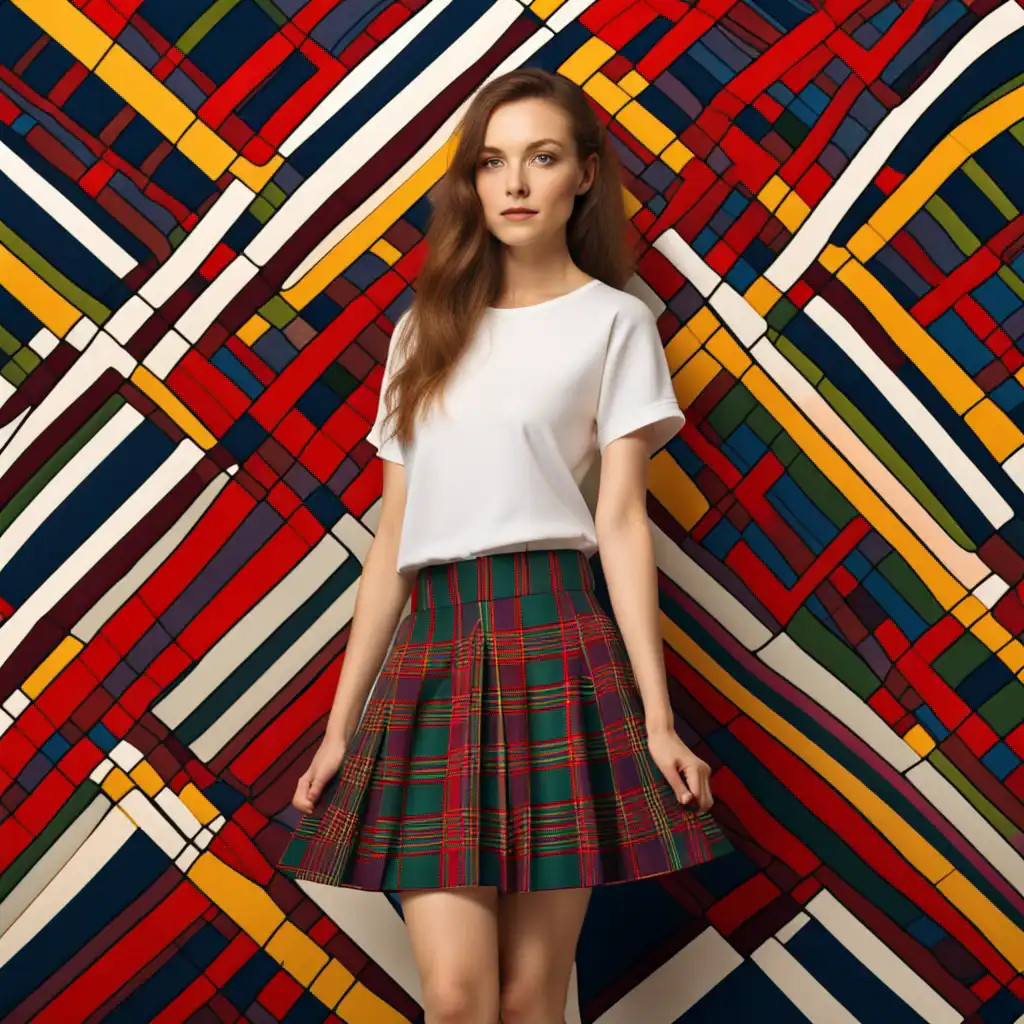
plæd
Having a pattern of intersecting colored lines, like on Scottish tartans.
She was wearing a plaid skirt.
音频无法加载,请稍后再试。
Plaid refers to a pattern of fabric that has criss-crossed lines and squares in different colors. You might see plaid on a shirt, scarf or blanket. It's often associated with Scottish culture and can be used casually or in a more formal setting.
A check pattern consists of intersecting lines that form squares or rectangles of the same size and shape. This pattern is often used in fabrics for clothing and home décor.
Examples of check patterns include gingham and tartan.
Plaid, on the other hand, is a specific type of check pattern that is made up of lines that cross each other at right angles, creating a box-like pattern that is sometimes referred to as a "tartan." Plaid patterns often have a specific color scheme associated with them, such as the red and green of a Christmas plaid or the blue and gray of a Scottish clan tartan.
Check refers to a general pattern of intersecting lines, while plaid refers to a specific type of check pattern that is characterized by its box-like appearance and often has a specific color scheme associated with it.
打开单词: Check →Pattern refers to any design or decoration that is repeated or recurring, whereas plaid specifically refers to a pattern characterized by stripes of varying width and color that cross each other at right angles, forming a checkered or criss-crossed pattern.
Patterns can come in many forms such as stripes, polka dots, florals, and more, and can be used in various applications such as clothing, home decor, and artwork.
Pattern is a general term for any repeated design or decoration, whereas plaid specifically refers to a type of pattern characterized by checkered, intersecting stripes.
打开单词: Pattern →Plaid refers to a pattern consisting of crisscrossing horizontal and vertical stripes of different colors, usually with a repeating pattern.
Strip refers to a long, narrow piece of material or a pattern consisting of parallel lines of different colors. It is applicable to clothing such as shirts, pants, and skirts, as well as some textiles like wallpaper and curtains.
Plaid is a pattern with crossing lines of different colors, while strip refers to parallel lines. Plaid is more commonly associated with clothing such as kilts, while strip can be seen in a variety of clothing and textiles.
打开单词: Strip →Plaid and tartan are similar but there is a small difference between them. Plaid refers to a checked pattern that can be made up of any color combination and is often used for clothing or blankets.
Tartan is a specific pattern consisting of stripes of different colors that represent a Scottish clan or family.
Tartan is often worn as a symbol of Scottish heritage and is commonly used for kilts and other traditional clothing.
打开单词: Tartan →Plaid refers to a specific pattern of intersecting lines, usually of different colors, while texture refers to the surface quality or feel of a material - whether it's rough, smooth, bumpy, or something else.
Plaid is applicable when describing a pattern on fabric or other materials, while texture is applicable when describing how a material feels or looks.
For example, a plaid shirt might have a smooth texture, while a bumpy textured sweater might not have a plaid pattern.
打开单词: Texture →Weave refers to the process of interlacing threads or fibers to create a fabric or textile.
In other words, plaid is a specific pattern that can be seen on woven fabrics, but weave refers to the way the fabric itself is constructed.
Plaid is applicable when describing the appearance of a fabric or design, while weave is more appropriate when discussing the production process of the fabric itself.
打开单词: Weave →that has nothing on its mind but the grubs and insects that will allow it to live another day. It wants only to be here tomorrow, dressed perhaps in the sleeve of a plaid shirt, nose pressed against the page,
在 YouTube 上观看 ↗I don't do well in plaid.
serves me correctly this is a flakey barked acacia and you should be able to see these white spines here now these spines are modified sleep so the plaid has to do you get them behind
在 YouTube 上观看 ↗I don't wear plaid shirts.
Nobody needs an abundance of plaid.
Never wear plaid.
I love a good plaid situation. A plaid blouse or shirt paired with jeans is a no-brainer outfit - it takes me back to grade school.
I like throwing on shorts and a plaid button up with messy hair and last night's eyeliner and sunglasses and wandering the town. And if there's a guy I dig with his arm around me, too, that's pretty nice.
Why was I going around in rhinestones before, and am now wearing a plaid shirt and glasses? It's not a question of fashion. It's a question of time and yourself. The country changed, I grew up, life changed. It's normal.
I wear whatever makes me comfortable on stage, so that I feel confident. Some days it's a plaid skirt with a button-up and other days it's jeans with a hockey jersey and platforms.
I remember opening my dad's closet and there were, like, 40 suits, every color of the rainbow, plaid and winter and summer. He had two jewelry boxes full of watches and lighters and cuff links. And just... he was that guy. He was probably unfulfilled in his life in many ways.
I loved Catholic school. I didn't like being beeped at by old pervs at the gas station because I was wearing a plaid skirt, though. It's like, do you think I'm going to stop and give you my phone number?