inhibitor
noun inhibitor
ɪnˈhɪbɪtər
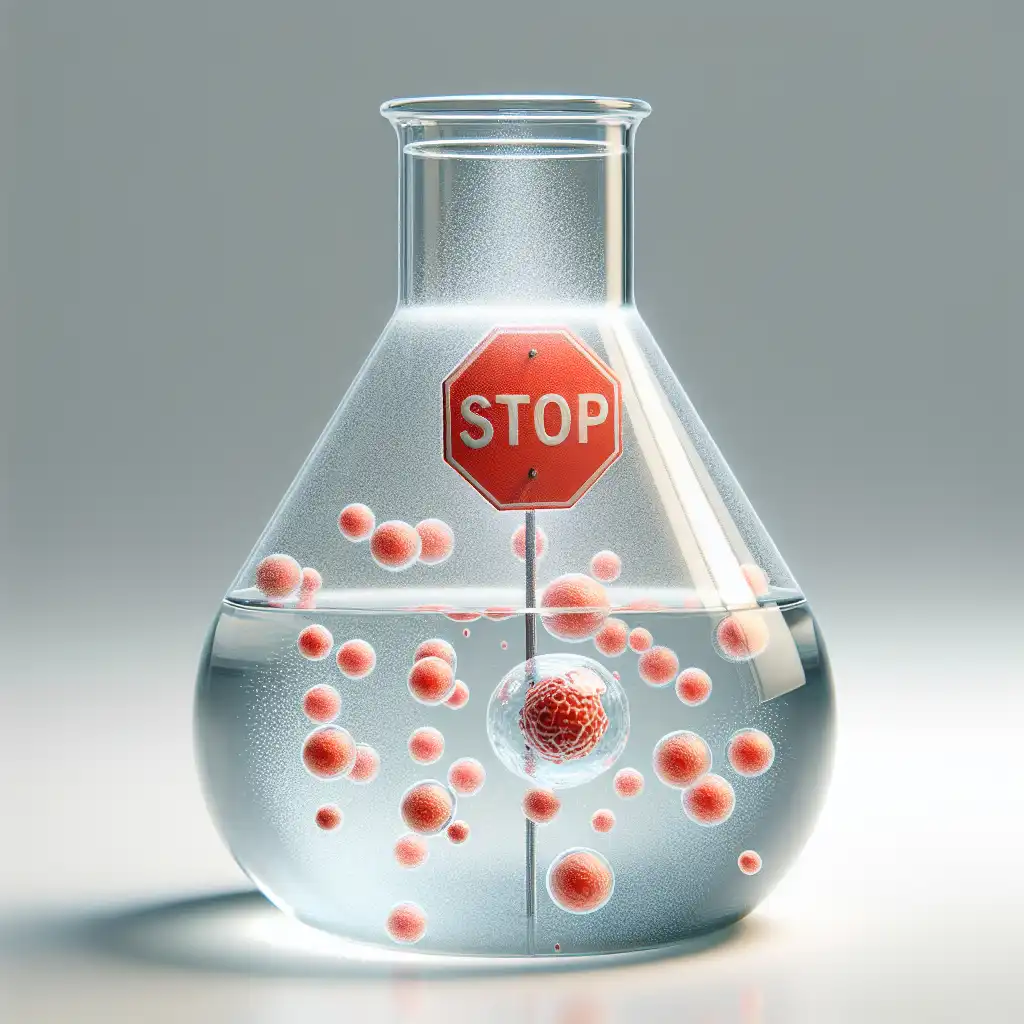
A thing that slows down or prevents a particular action or process.
This substance acts as an inhibitor of cell growth.
inhibitor
ɪnˈhɪbɪtər
लोड हो रहा है…
ɪnˈhɪbɪtər
A thing that slows down or prevents a particular action or process.
This substance acts as an inhibitor of cell growth.

ɪnˈhɪbɪtər
A substance that slows down or stops a chemical reaction.
Enzyme inhibitors are substances which alter the catalytic action of the enzyme and consequently slow down, or in some cases, stop catalysis.

ɪnˈhɪbɪtər
A drug that slows down or stops the activity of a certain part of the body.
He was prescribed a proton-pump inhibitor to reduce stomach acid.
ऑडियो लोड नहीं हो सका। कृपया बाद में फिर कोशिश करें।
The word 'inhibitor' is commonly used in science and medicine. It refers to a substance or chemical that slows down or stops a particular process or reaction. For example, in medicine, inhibitors are used to slow down the growth of cancer cells. In chemistry, inhibitors are used to prevent reactions from happening too quickly or to prevent unwanted reactions from occurring. It's important to use the word 'inhibitor' in the correct context to avoid confusion.
A barrier is something that physically prevents or blocks movement, such as a wall or fence. For example, a barrier could be a gate that stops people from entering a certain area or a wall that prevents water from flowing into an area.
A barrier physically blocks movement while an inhibitor slows down or stops a chemical process. Barriers are applicable in situations where physical separation or confinement is needed, while inhibitors are used in situations where the control of chemical reactions is necessary.
शब्द खोलें: Barrier →Constrain implies limiting or restricting something from moving or behaving in a certain way.
It is often used in the context of physical movement or behavior. For example, a person may constrain their arm movement to avoid hitting someone accidentally.
In brief, constrain limits movement or behavior while inhibitor refers to preventing a chemical reaction. The former is used in more general contexts, while the latter is used in scientific and medical applications.
शब्द खोलें: Constrain →Interference is the disruption or obstruction of a process or system.
It can be caused by external factors, such as electromagnetic or radio frequency interference, or by internal factors, such as cross-talk between electronic devices.
Interference is often unwanted and can cause problems in communication, electronic devices, and other systems.
To sum up, an inhibitor decreases the rate or blocks a chemical reaction or process, while interference disrupts or obstructs a process or system.
Inhibitors may be applied in industrial processes, while interference can be encountered in various aspects of daily life, such as electronic devices and communication systems.
शब्द खोलें: Interference →Obstacle refers to something that blocks or prevents progress, advancement or movement. It is something that gets in the way of achieving a goal or completing a task.
For example, a roadblock on a highway is an obstacle because it prevents traffic from moving forward.
The main difference between the two words is that an inhibitor slows down a process, while an obstacle blocks progress entirely.
Inhibitors are most commonly used in science and medicine, while obstacles can apply to any area where progress can be impeded.
शब्द खोलें: Obstacle →Restraint refers to the act of holding back or controlling one's actions or behavior. For example, a person who exercises restraint by not eating junk food or spending money impulsively.
Inhibitor is more commonly used in a scientific or medical context, while restraint is more commonly used in a social or personal context.
Inhibitors are often used in medications or chemical processes, while restraint describes self-control or discipline.
शब्द खोलें: Restraint →Both inhibitor and suppressor refer to something that stops or slows down a process.
A suppressor refers to something that stops the expression of a gene or a certain behavior. For example, a suppressor gene can stop the growth of cancer cells by preventing the expression of genes that drive their growth.
An inhibitor works on a specific molecule or enzyme while a suppressor can affect genes or behaviors.
शब्द खोलें: Suppressor →To summarize adenosine inhibits your neurons. Caffeine inhibits the inhibitor so it stimulates you. Caffeine can also boost positive feelings. In some neurons the adenosine receptors
YouTube पर देखें ↗I do believe that reading can help you understand what you're writing and see what others are doing. But sometimes the desire for more information can act as an inhibitor.
that eats nonstop until it turns fat, like this furry tennis ball. And the bottom curve is the weight of a normal mouse. If you take the obese mouse and give it an angiogenesis inhibitor it loses weight.
YouTube पर देखें ↗Check your ego at the door. The ego can be the great success inhibitor. It can kill opportunities, and it can kill success.
the right and so what that chemistry did was it changed the signal molecule the word into an inhibitor so we changed the molecule that turns on quorum sensing into a molecule that shuts down quorum sensing so what happens if you have such a molecule so first I'll talk about biofilms
YouTube पर देखें ↗In 1970, I had begun work on the basic pancreatic trypsin inhibitor which has later become the model compound for the development of protein NMR, molecular dynamics, and experimental folding studies in other laboratories.