
fetter
noun fetter
ˈfetər
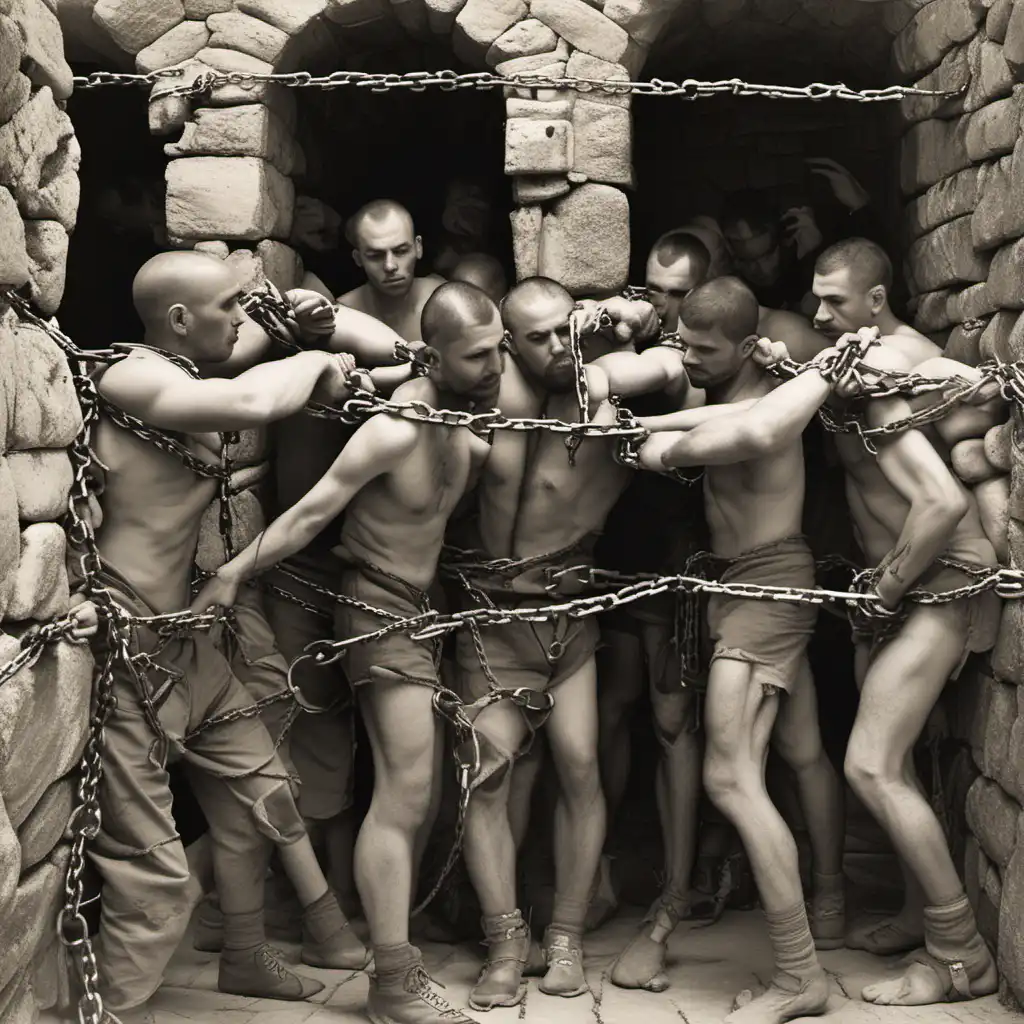
A chain or shackle for the feet
He was kept in fetters in the small, dank cell.
fetter
ˈfetər
Chargement…
ˈfetər
A chain or shackle for the feet
He was kept in fetters in the small, dank cell.
ˈfetər
To restrict or bind with chains
The prisoners were fettered to the wall.

ˈfetər
To prevent from progressing, be a hindrance
Her low confidence fetters her ability to speak publicly.
Impossible de charger l’audio. Réessayez plus tard.
The word 'fetter' means a chain or a shackle that is used to tie someone up, usually to prevent them from moving around freely. It can also mean anything that restricts or limits a person's freedom or progress. For example, you can use the word 'fetter' to describe a situation where someone is held back by a lack of education or resources. You might say, "The poverty and lack of access to resources were a fetter on their ability to achieve their goals." The word 'fetter' is usually used in a negative context to describe things that limit a person's potential or prevent them from doing what they want.
However, bond generally means a connection or tie between people or things, while fetter usually refers to a physical restraint, such as shackles or chains.
For example, a bond could be a strong emotional connection between two friends, while a fetter could be a pair of handcuffs used by police to restrain someone who is under arrest.
Bond is used more for abstract concepts, like relationships or ideas, while fetter is used for physical constraints.
Ouvrir le mot: Bond →Both chain and fetter refer to a type of restraint, but there are some subtle differences between the two.
A chain can refer to a series of metal links or rings that are connected together.
Chains can be used for many purposes, such as holding something in place or securing something down.
Sometimes chains are used as a form of restraint, such as chaining up a prisoner or locking a bicycle to a pole.
In general, chains are more versatile and can be used in a wide variety of ways.
A fetter is a type of shackle that is specifically designed for restraining limbs. Fetters are often made of metal and have a loop for the leg or ankle, with a chain or other connector to join them together.
The main difference between chain and fetter is that chains are more versatile and can be used for many purposes, while fetters are specifically designed for restraining limbs and restricting movement.
Ouvrir le mot: Chain →Confine means to restrict or limit someone or something within certain boundaries or limits. For example, a prisoner might be confined to a cell, or a store might confine their dog to a certain area.
Confine describes physical restrictions on movement or space, while fetter describes more metaphorical limitations or restrictions on freedom or action.
Ouvrir le mot: Confine →Handcuff is a specific type of restraint that is specifically designed to lock someone's wrists together. It is a much more focused and direct form of restraint than a fetter.
Handcuffs are typically used by law enforcement officers to restrain suspects who are being arrested.
A fetter is a general term for a type of restraint that limits someone's freedom of movement. Handcuffs are a specific type of restraint that are designed to lock someone's wrists together.
Fetter can be used in a historical context whereas handcuffs can be used in a present-day context.
Ouvrir le mot: Handcuff →Fetter means to restrain or tie up someone's feet, like when a prisoner is chained to a wall. Hobble means to make someone or something move with difficulty or in a awkward way, like when a horse's legs are tied together.
Fetter is more about physically restraining someone's movements, while hobble is more about making their movements difficult or awkward.
Fetter is usually applicable in prisons or captivity situations, while hobble can be used in situations like agriculture or to describe someone walking with difficulty due to an injury or pain.
Ouvrir le mot: Hobble →Both fetter and manacle refer to restraints or shackles used to bind a person's hands or feet.
However, fetter typically refers to a restraint used to keep someone from moving their legs, such as a chain around an ankle, whereas manacle typically refers to a restraint used to keep someone from moving their hands, such as handcuffs.
Ouvrir le mot: Manacle →Restrain usually means to hold something back or prevent it from moving forward in a particular direction, without necessarily using physical restraints.
For example, you might use fetter to describe a prisoner who is physically chained or bound, while you might use restrain to describe police officers who are holding someone back from entering a dangerous area.
Ouvrir le mot: Restrain →Both fetter and shackle mean to restrain or restrict someone or something. Fetter specifically refers to a chain or shackle for the feet, while shackle can refer to any type of restraint, including handcuffs, chains or ropes.
Fetter is typically used to describe being physically restrained, while shackle can describe physical or even metaphorical restraints.
For example, you may shackle your emotions or be shackled by debt.
Ouvrir le mot: Shackle →Self-Assembling Robots...
Voir sur YouTube ↗Peace, for us, is an asset and in our interest. It is an absolute human asset that allows an individual to freely develop his individuality unbound by any regional, religious, or ethnic fetters.
Imprisoned in Pakistan %\PIPE%...
Voir sur YouTube ↗Timber extraction provides big profits at the expense of local communities. Providing communities with unfettered access to harvest a forest that is protected in perpetuity provides better and more reliable incomes.
One of my greatest times of inspiration is when I'm traveling or living in a new country - there's a tremendous freedom that comes from being unfettered by your own, familiar culture, and by seeing the world from a different point of view.
If we were left to ourselves, unfettered by legislative enactments, we should gradually withdraw our capital from the cultivation of such lands, and import the produce which is at present raised upon them.
Until Japan's economy drove off a cliff, there was a running argument in Asia about whether it would be wiser to follow the 'Japan model' - with its megacorporations, jobs for life, state control of strategic industries - or the 'American model' of largely unfettered markets.
In order to effectively protect our loved ones, we must provide the American public with unfettered access to know who these dangerous criminals are and where they are living.
I'm not part of any movement; I don't like being fettered.
Poetry fettered, fetters the human race. Nations are destroyed or flourish in proportion as their poetry, painting, and music are destroyed or flourish.
Civil rights leaders, including my husband and Albert Turner, have fought long and hard to achieve free and unfettered access to the ballot box. Mr. Sessions has used the awesome power of his office to chill the free exercise of the vote by black citizens in the district he now seeks to serve as a federal judge.
There's no reason for your imagination to be fettered by money.