verisimilitude
noun verisimilitude
ˌverɪsɪˈmɪlɪtuːd
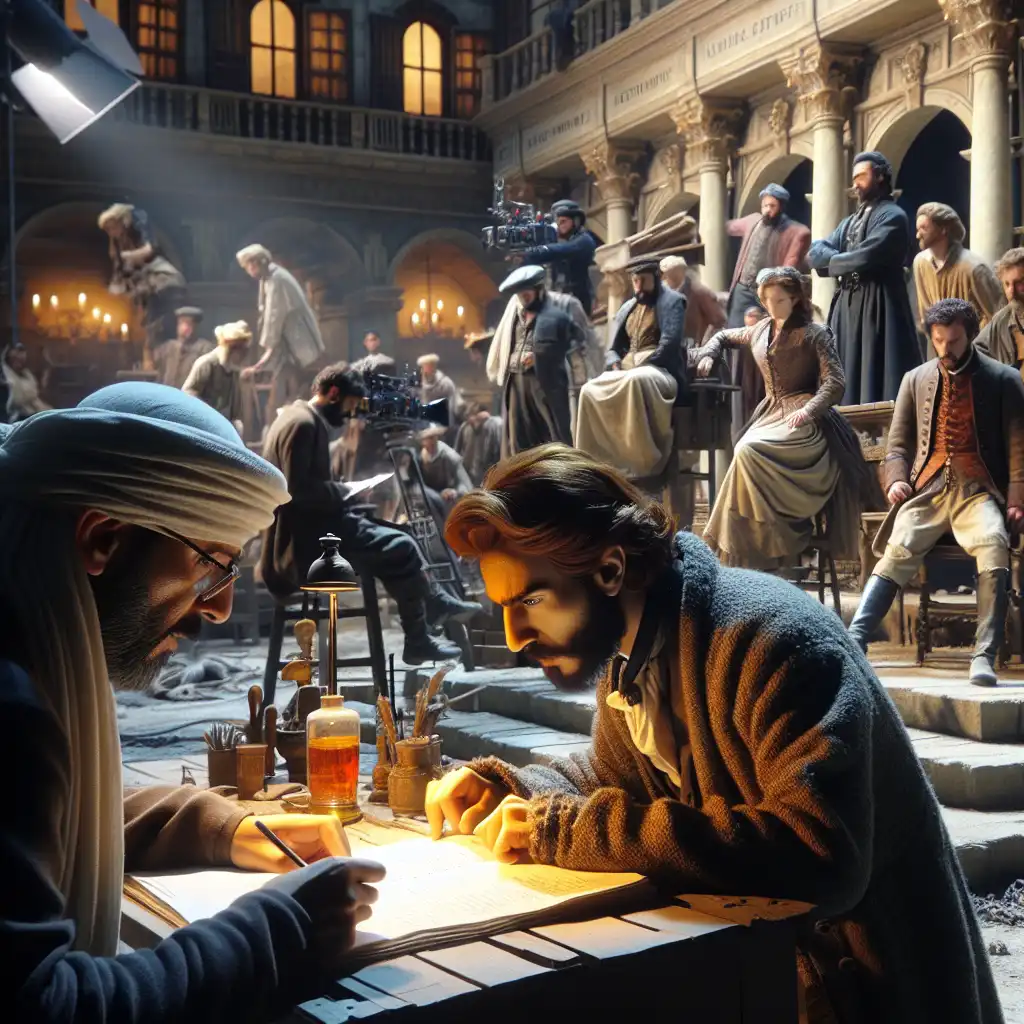
The appearance of being real, often used in the context of a work of fiction.
The verisimilitude of her screenplay was praised by the critics.
verisimilitude
ˌverɪsɪˈmɪlɪtuːd
Cargando…
ˌverɪsɪˈmɪlɪtuːd
The appearance of being real, often used in the context of a work of fiction.
The verisimilitude of her screenplay was praised by the critics.
No se pudo cargar el audio. Inténtalo de nuevo más tarde.
Verisimilitude is a fancy word that means something is very realistic or believable. You can use it when describing a book, movie or play that is very good at making you feel like you are really there and that everything in the story could really happen in real life. It's like when you see a scary movie and it feels like the monsters might jump out of the screen - that's because there's a lot of verisimilitude in the movie!
Authentic means that something is true, genuine, and accurate to what it represents. It often refers to something that is real or original.
In simpler terms, something that is authentic is real, while something that has verisimilitude appears to be real. Authenticity is applicable in situations where the truthfulness of something is important, while verisimilitude is more applicable in situations where something needs to look or feel realistic or believable, even if it isn't necessarily true.
For example, a historical artifact needs to be authentic to be valuable, while a movie needs verisimilitude to make the story believable.
Abrir palabra: Authentic →Credibility refers to how believable something is, whether it is trustworthy and reliable.
Credibility is about whether we believe something based on our previous knowledge or experience, while verisimilitude is about how well a new world or situation is crafted to be believable or realistic.
Abrir palabra: Credibility →Likelihood refers to the chance or probability that something is true or will happen. It is commonly used when discussing statistics or predictions.
For example, "there is a high likelihood of rain tomorrow."
Likelihood focuses on probability and statistics, while verisimilitude focuses on creating a sense of truth or realism in literature and art.
Abrir palabra: Likelihood →Plausibility refers to something that's believable or possible. Verisimilitude is the appearance or quality of being true or real.
Plausibility can be applied to both everyday life situations and fictional stories.
Abrir palabra: Plausibility →Realism is a style of artwork or literature that tries to represent things in a truthful way, often depicting things as they really are in the world.
Realism is applicable in creating pieces of art and literature that portray things in a truthful manner, while verisimilitude is applicable in creating pieces that evoke a feeling of realism, even if they may not be entirely accurate.
Abrir palabra: Realism →Resemble means to be similar or have a likeness to something else, whereas verisimilitude means something that has the appearance of being true or real.
For example, if you say that a painting resembles a photograph, it means that the painting looks like the photograph in some way.
Resemble refers to similarities in appearance, while verisimilitude refers to the appearance of truth or reality in something.
Abrir palabra: Resemble →Semblance refers to the outward appearance or behavior of something or someone that may be misleading or deceptive. It's like a mask or a facade that gives the impression of something, but it may not necessarily be true.
In simpler terms, semblance is about appearances, while verisimilitude is about credibility. Semblance is applicable when something appears to be one thing but is actually something else, like a fake smile.
Abrir palabra: Semblance →Similarity refers to the quality of being similar or alike in appearance, nature or character. For example, two fruits may have a similarity in their size or color.
Similarity can be used in many contexts, such as in comparing two people, things or situations to identify shared characteristics.
Similarity refers to the quality of being alike or similar, while verisimilitude refers to the quality of appearing true or realistic.
Abrir palabra: Similarity →Rob Legato: The art of...
Ver en YouTube ↗It's not just that reporting gives you a bigger slice of life, gives - lends verisimilitude to what you are doing - it's that it feeds the imagination.
Understanding Simulated...
Ver en YouTube ↗In some ways, writing a novel, especially a novel set in the past and about characters who once lived, is about amassing enough details and arranging them properly in order to offer the reader a verisimilitude that satisfies his or her curiosity about the story at hand.
The art of creating awe...
Ver en YouTube ↗Scale is not just something that a director wants so as to play with all the toys. Scale also lends verisimilitude, to put together a real world.
The paradox of modernism is, writers make the decision to work with the continuous present, and to work with... stream of consciousness, as it's called, for emotional reasons, and the main emotional reason is verisimilitude. I mean, this is what surprises people: Life is not in the simple past.
I do crazy amounts of research. I want this stuff to 'work,' so to speak. I need to be, at least to me, believable - because if I feel - if I cannot invest some element of verisimilitude, the reader is absolutely not going to buy in.
In fiction workshops, we tend to focus on matters of verisimilitude largely because such issues are so much easier to talk about than the failure of imagination.
Call Of Duty' initially cut its teeth on World War II simulation stuff, and then we gradually advanced to the end of the Cold War, but you can't keep doing the same thing over and over again. And I think that because 'Call Of Duty' cut its teeth on presenting 'realism,' in quotes... verisimilitude.
Verisimilitude is something I am constantly seeking in fiction. I am looking for surface detail that makes something seem real.