Impossible de charger l’audio. Réessayez plus tard.
Comment l’utiliser
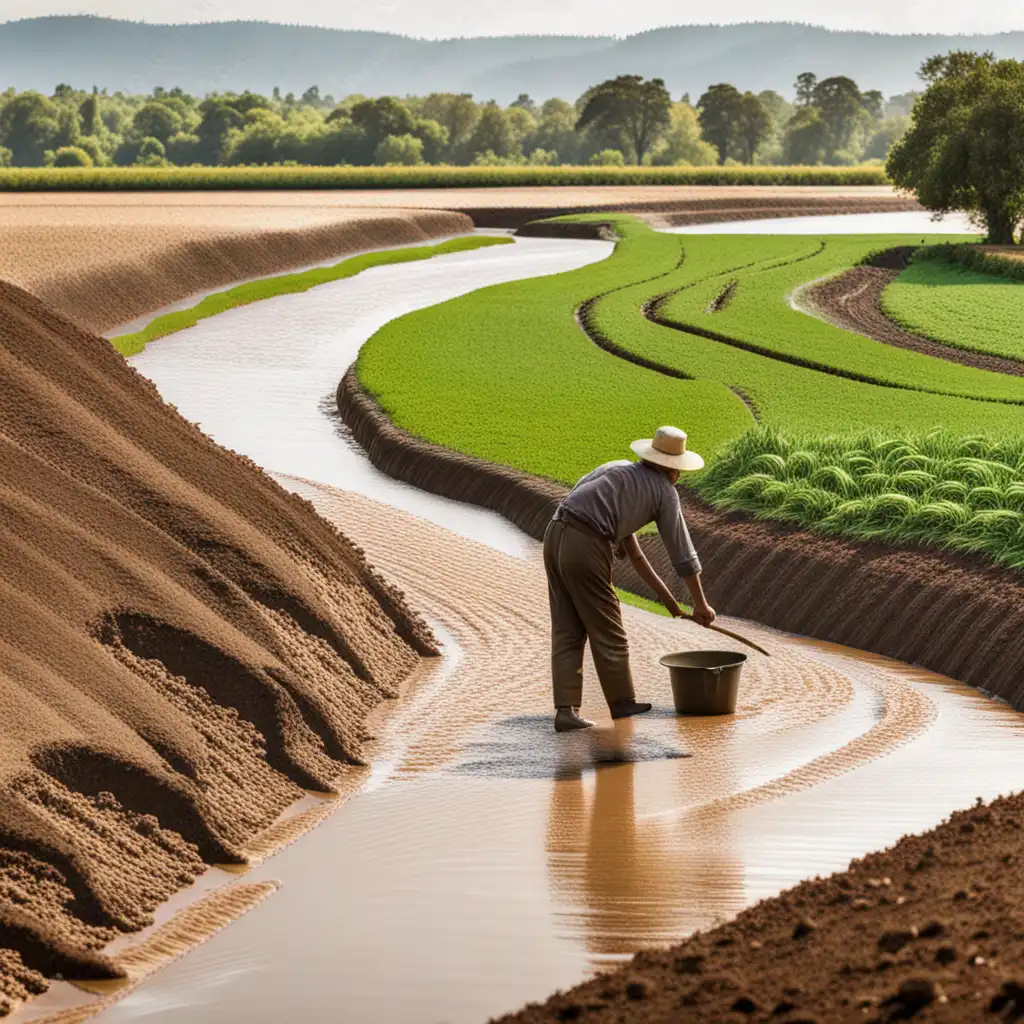
The word 'alluvial' refers to something that is made up of soil, sand, or gravel that has been deposited by a river or other body of water. It is often used to describe areas of land that have been formed by these deposits, such as riverbanks or floodplains. In everyday language, you might hear the word used when talking about gold mining, as gold is often found in alluvial deposits.
Both words, alluvial and fluvial relate to rivers, but they describe different things. Alluvial refers to sediment that is deposited by a river, while fluvial refers to the processes and features of the river itself, such as the movement of water, erosion, and the formation of channels.
Fluvial describes the workings of the river itself. For example, a 'fluvial landscape' refers to the land that has been shaped by the actions of a river over time, such as its erosion of rock and formation of meanders.
Alluvial talks about the sediment left by the river, while fluvial talks about the river itself and how it shapes the land it flows through.
Levee is a man-made embankment that is built along the sides of rivers and streams. The purpose of a levee is to prevent flooding by raising the level of the riverbank.
Levees are often made of materials such as sandbags, earthen mounds, or concrete walls.
Alluvial refers to soil that is naturally deposited by running water while levee is a structure that is built to protect against flooding.
Alluvial and sedimentary are both terms used to describe rocks or soils that have been formed by the accumulation of sediment, but they are not interchangeable.
Sedimentary refers to any type of rock or soil that has been formed by the deposition and consolidation of sediment over time.
Alluvial describes sediments that have specifically been deposited by flowing water, while sedimentary is a broader term that encompasses all types of rocks and soils that have been formed through the accumulation and consolidation of sediment.
The 'Desert' sweeps up to the walls of Baghdad, but it is a misnomer to call the vast level of rich, stoneless, alluvial soil a desert. It is a dead flat of uninhabited earth; orange colocynth balls, a little wormwood, and some alkaline plants which camels eat, being its chief products. After the inundations, reedy grass grows in the hollows.
The white spruce forest along the banks is most inspiring, magnificent here. Down the terraced slopes and right to the water's edge on the alluvial soil it stands in ranks.
The Tigris is so fierce and rapid, and swallows its alluvial banks so greedily, that it is probable that some of the buildings described by the Hebrew traveller Benjamin of Tudela as existing in the twelfth century were long since carried away.