
nitrogen
noun nitrogen
ˈnaɪtrədʒən
A colorless, tasteless and odorless gas that exists in the air and forms part of all living things.
The air we breathe is made up mostly of nitrogen
nitrogen
ˈnaɪtrədʒən
Cargando…
ˈnaɪtrədʒən
A colorless, tasteless and odorless gas that exists in the air and forms part of all living things.
The air we breathe is made up mostly of nitrogen
ˈnaɪtrədʒən
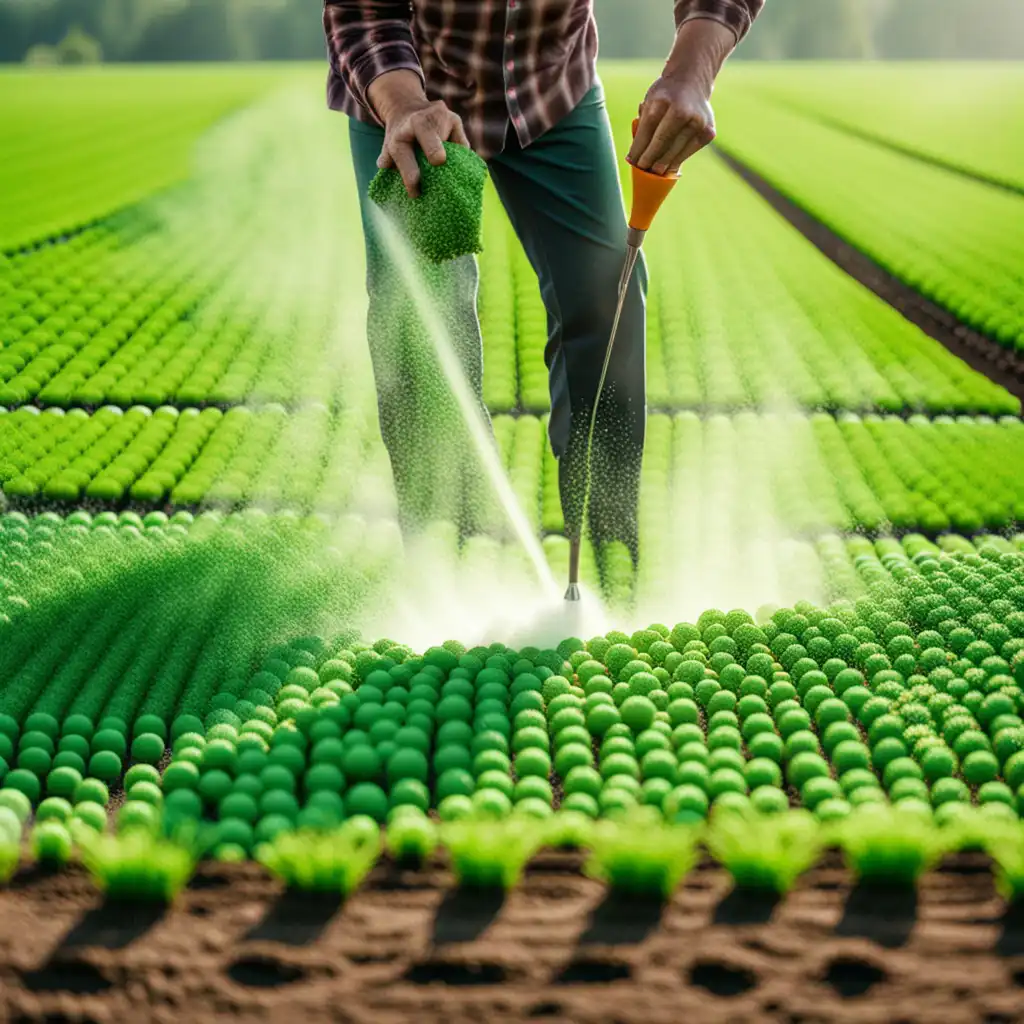
A chemical element used in making fertilizers, explosives and other products.
Farmers often add nitrogen to the soil to help plants grow.
No se pudo cargar el audio. Inténtalo de nuevo más tarde.
Nitrogen is a type of gas that is found in the air we breathe. It makes up about 78% of the air around us. Nitrogen is also used in many important things we use in our daily life, including fertilizer for plants to grow, food packaging to keep food fresh, and metal manufacturing. It is an important element for life on Earth.
Gas is a general term used to describe any substance that is in a gaseous state i.e. not a solid or liquid. Nitrogen is a specific gas that makes up about 78% of the Earth's atmosphere.
Nitrogen has many important applications, including being used in the production of fertilizers, as a coolant for computer chips, and as an inert gas to prevent oxidation in processes such as welding.
In contrast, the term gas is much more general and can refer to a wide variety of substances such as oxygen, methane, or carbon dioxide, each with their own unique properties and applications.
Essentially, nitrogen is a kind of gas, but not all gases are nitrogen.
Abrir palabra: Gas →So you ask just how small are atoms? To understand this let's ask this How many atoms are in a grapefruit? Well let's assume that the grapefruit is made up of only nitrogen atoms, which isn't at all true but there are nitrogen atoms in a grapefruit. To help you visualize this let's blow up each of the atoms
Ver en YouTube ↗All we are is a lot of talking nitrogen.
And to someone who loves science It feels like I'm looking at magic. I want to know how close we are. Ta-da! So I've got in touch with YouTube creators across the world -What's that? -Liquid nitrogen superconductor. and together we're going to try and find
Ver en YouTube ↗Under natural conditions, the soil does not lose its fixed nitrogen.
We've doubled the flows of nitrogen and phosphorus around the world simply by using fertilizers, causing huge problems of water quality from rivers, lakes and even oceans and it's also the single biggest driver of biodiversity loss. So without a doubt agriculture is
Ver en YouTube ↗Why, for example, should a group of simple, stable compounds of carbon, hydrogen, oxygen and nitrogen struggle for billions of years to organise themselves into a professor of chemistry? What's the motive?
With polar ice caps valleys planes and craters. It even has glaciers made of frozen nitrogen and frozen water on the surface makes giant floating mountains. Such varied terrain is influenced by the presence
Ver en YouTube ↗In order to 'go out the door' safely, we go through a pretty thorough process called pre-breathe. This is the process of flushing all the nitrogen out of our systems by breathing higher concentrations of oxygen.
emissions on phosphorus depletion on nitrogen pollution on biodiversity loss on ecosystem degradation the list goes why is this I think this is because we really haven't paid enough attention to
Ver en YouTube ↗Excess nitrogen from the fertilizers can cause eutrophication in the ocean, which can lead to harmful algae blooms or hypoxia - reduced levels of oxygen that create conditions in which organisms can't survive.
Cyanobacteria are still around in almost every environment on oceans, fresh water, soil, antarctic rocks, sloth fur. They still pump oxygen into the atmosphere, and they also pull nitrogen out to fertilize the plants they helped create.
Ver en YouTube ↗We sometimes freeze the specimen with liquid nitrogen, which is extremely cold, you know. This is another technique we use now - but the specimens are not alive.
they create burrow systems in the sides of river banks this dries out the surrounding soil and helps regulate nitrogen a vital nutrient for plant growth and what are the main signs if you think you've got water voles living near you what what signs can people look out for
Ver en YouTube ↗All of my dishes kind of have the same thing going on - I'm always going to give you the same things that I grew up with or that my mom used to make. I'm not going to use nitrogen in my tacos.
and our power our gadgets around the clock. And for 40% of the world that fuel is cheap plentiful, and it's called coal. But coal also releases pollutants into the air, like sulfur dioxide, nitrogen oxides, soot, and toxic metals like mercury.
Ver en YouTube ↗Many years ago it was taught that plants and animals were composed of different materials: plants, of a chemical substance of three elements,- carbon, hydrogen, and oxygen; animals of one of four elements, nitrogen being added to the other three.
Some plants added desulfurizing scrubbers to their smokestacks, or switched to low-sulfur coal and natural gas. Oxides of nitrogen emissions were also reduced with relatively low-cost technologies. These advances allowed the power sector to grow
Ver en YouTube ↗I've been experimenting more and more with LN2, liquid nitrogen. I've used it in battle on 'Iron Chef America,' but have also made some great ice creams at home for my family. Since it freezes basically on contact, you can have ice cream ready in mere minutes.
Elements and compounds essential to life include hydrogen methane nitrogen, carbon dioxide phosphates and ammonia. In order for these ingredients to comingle and react with each other, they need a liquid water. And in order to grow and reproduce,
Ver en YouTube ↗The more the relationships of the nitrogen-rich substances to the cell nucleus were recognized, the more the question of the arrangement of the nitrogen and carbon atoms in the molecule came to stand out.